






 Business
Banking & Finance
Cash remittances hit $3 billion in January despite post-holiday dip
Business
Banking & Finance
Cash remittances hit $3 billion in January despite post-holiday dip
Cash remittances hit $3 billion in January despite post-holiday dip
By Derco Rosal


At A Glance
- Money sent home by overseas Filipinos (OFs) amounted to $3.02 billion in January 2026, easing from December's high as the holiday surge faded.
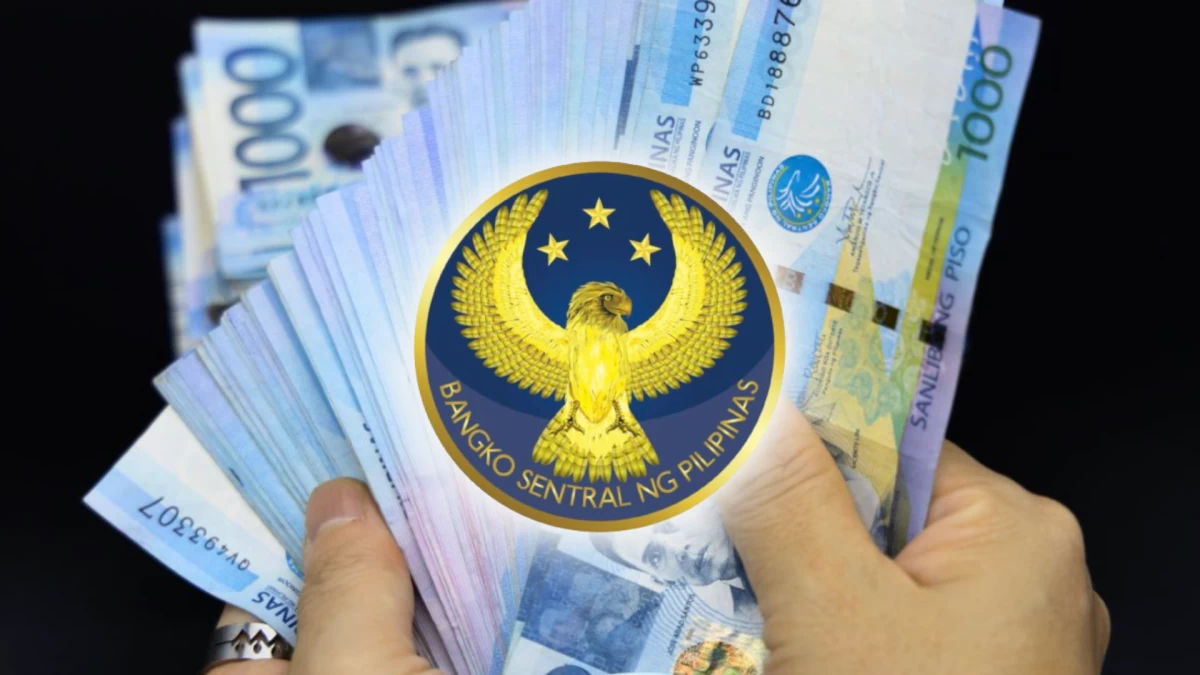
Money sent home by overseas Filipinos (OFs) amounted to $3.02 billion in January 2026, easing from December’s high as the holiday surge faded.
The latest data from the Bangko Sentral ng Pilipinas (BSP) released Monday, March 16, showed the January figure represented a 3.5-percent increase compared to the $2.92 billion recorded in January 2025. However, it declined from December 2025’s inflows of $3.52 billion.
January remittances followed the record posted in 2025, when holiday spending and year-end bonuses pushed cash inflows to an all-time high of $35.63 billion, surpassing the central bank’s $35.5-billion forecast.
As of January, the United States (US) remained the top source of cash remittances, accounting for over two-fifths of total. This was followed by Singapore (7.6 percent), Saudi Arabia (6.7 percent), Japan (5.8 percent), and the United Kingdom (4.6 percent).
Of the total cash remittances during the month, land-based workers contributed $2.41 billion, while sea-based workers sent $610 million. Both sectors posted year-on-year growth of 3.5 percent.
Personal remittances—a broader category that includes cash sent through informal channels and remittances in kind—also rose 3.5 percent to $3.36 billion in January 2026, from $3.24 billion in the same month a year earlier.
This followed the record $39.62 billion in personal remittances recorded throughout 2025.
According to the BSP, the dominance of the US as a source is partly due to the use of US-based correspondent banks by money transfer centers and the fact that many money couriers are headquartered there.
Consequently, banks often attribute the origin of funds to the most immediate source rather than the actual country of origin.
Remittances remain a key driver of the Philippine economy. Last year, cash remittances accounted for 7.3 percent of the country’s gross domestic product (GDP), although this was lower than the 7.7 percent in 2023 and 7.5 percent in 2024.
For this year, the BSP has forecast cash remittances to reach $36.6 billion, marking 2.7-percent growth from the actual 2025 figure.
Jonathan Ravelas, senior adviser at Reyes Tacandong & Co., said the month-on-month drop could be attributed to the usual peak in December driven by the holiday surge.
Despite the easing, Ravelas stressed the positive growth from the same month in 2025, mirroring the resilience of overseas Filipino workers’ (OFWs) income.
“A weaker peso and steady overseas employment continue to support flows,” he said.
Ravelas expressed confidence in the continued stability of remittance inflows despite the destabilizing effects of the ongoing military clash in the Middle East. However, he warned that remittances could be affected if the war leads to massive job losses and payment disruptions.
“For households, the priority is to use remittances wisely—rebuild savings, reduce debt, and be cautious with spending given ongoing global risks,” Ravelas said.