







House gives final nod to fuel excise tax suspension bill
Published Mar 16, 2026 05:08 pm


At A Glance
- The House of Representatives overwhelmingly passed on third and final reading on Monday afternoon, March 16 the bill granting President Marcos the authority to temporarily suspend or reduce excise tax on fuel products during national or global economic emergencies.
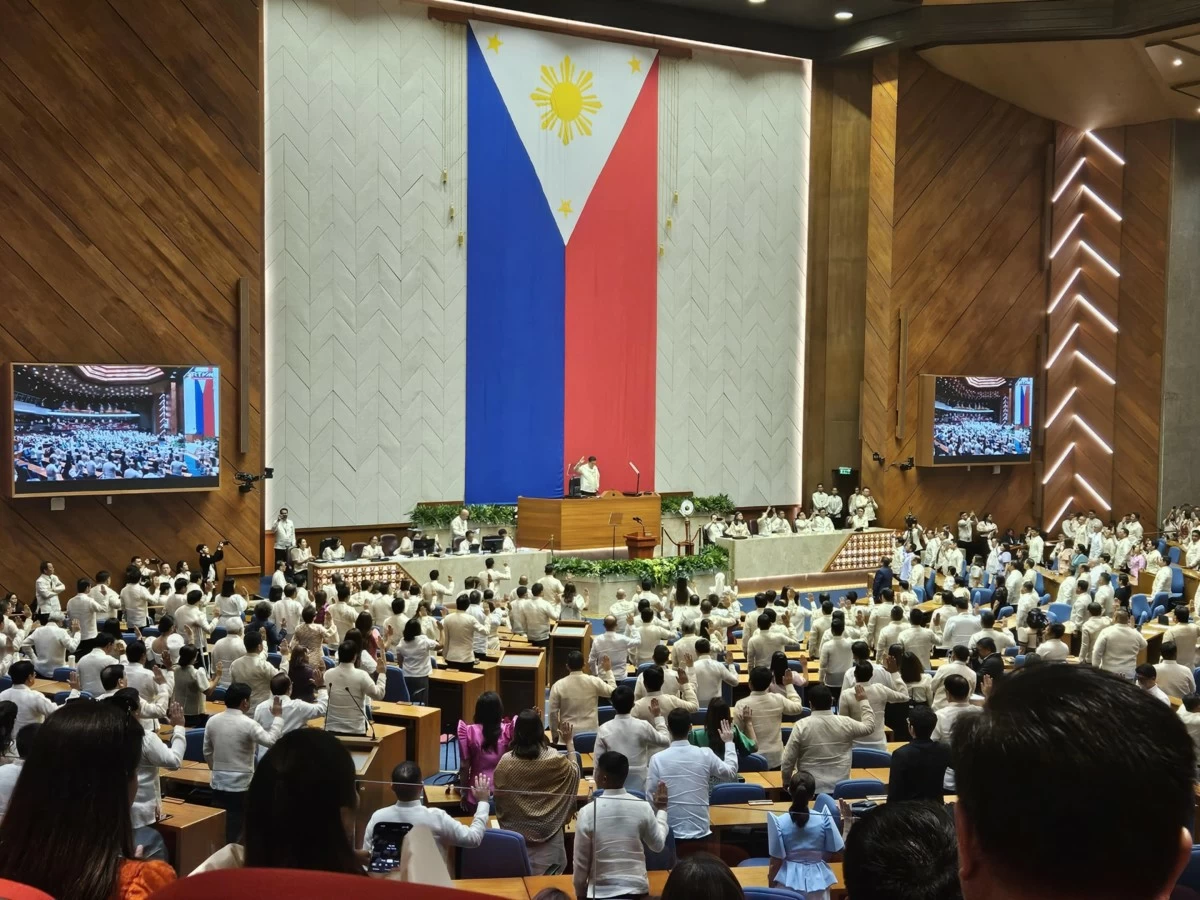
The House plenary (Ellson Quismorio/ MANILA BULLETIN)
The House of Representatives overwhelmingly passed on third and final reading on Monday afternoon, March 16 the bill granting President Marcos the authority to temporarily suspend or reduce excise tax on fuel products during national or global economic emergencies.
Embodied in House Bill (HB) No. 8418, the meaaure is viewed as the legislature and the executive's best intervention to the Middle East conflict-triggered fuel price crisis.
The pesiding officer, Deputy Speaker TUCP Party-list Rep. Raymond Democrito Mendoza declared HB No.8418 as approved on third reading during plenary session Monday during a nominal vote result of 247-3-0 (yes-no-abstain).
Malacañang earlier cerified the bill as an urgent piece of legislation. Proponents of the measure said that excise tax suspension could result to a price reduction of P10 per liter on pump fuel.
It was last Wednesday, March 11 when the 300-plus strong legislative chamber approved HB No.8418 on second reading.
The measure amends Section 148 of the National Internal Revenue Code to allow the President to suspend or reduce fuel excise taxes, subject to strict conditions and time limits, so relief can be achieved without waiting months for a new law in the middle of a crisis.
Under the bill, the President may exercise the authority only upon recommendation of the Development Budget Coordination Committee (DBCC) and in coordination with the Department of Energy (DOE) secretary, and only if one of two conditions is present.
The first trigger is when the Dubai crude oil price, based on the Mean of Platts Singapore, reaches or exceeds $80 per barrel for one month immediately before the order to suspend or reduce is issued.
The second trigger is when there is a declared state of national emergency or calamity and it results in extraordinary increases in domestic pump prices, as certified by the energy secretary, establishing a formal basis for action beyond ordinary market movements.
“The House is moving to address an oil price crisis. This bill gives the President a lawful and time-bound way to cut or suspend fuel excise taxes so relief can reach the public before higher oil prices trigger a wider increase in fares, food and other basic expenses,” Majority Leader Ilocos Norte 1st district Rep. Sandro Marcos said ahead of HB No.8418's final passage.
“The proposal offers real relief, especially for workers, drivers, small businesses and families who feel the impact of every peso added to the cost of fuel,” Rep. Marcos added.
The President’s suspension or reduction may be applied to specific petroleum products and may be calibrated as a full suspension or partial reduction, depending on the conditions that caused the price surge and the scope of relief needed.
To prevent abuse and to protect government revenues, the measure sets a firm duration limit of up to six months per suspension or reduction, unless Congress extends or terminates earlier through a joint resolution, and it caps the aggregate period at not more than one calendar year.
The bill also requires that the suspension or reduction be lifted once the extraordinary conditions no longer exist, and it provides for the automatic reinstatement of the excise tax rates after the period ends without need of further government action.
To ensure transparency, the bill requires the President, through the Department of Finance (DOF) secretary, to report to both chambers within 15 days from issuance of the order and every month thereafter, stating the factual basis for the action, the estimated foregone revenues and the expected effects on inflation, fuel prices and other economic activity.
The measure also mandates the issuance of implementing rules within 15 days from effectivity by the DOF, the Department of Budget and Management (DBM), the Department of Economy, Planning, and Development (DEPD), the DOE and the Bangko Sentral ng Pilipinas (BSP), in coordination with the Bureau of Internal Revenue (BIR) and the Bureau of Customs (BOC), to ensure consistent enforcement and clear administrative procedures.
The approved bill, principally authored by House Speaker Faustino “Bojie” Dy III and Rep. Marcos, was a consolidation of 15 related measures and two joint resolutions.
“Another big-time fuel increase is set to take effect tomorrow (Tuesday). This should prompt us, members of the House and the Senate, to expedite the final approval of this measure, which PBBM (President Bongbong Marcos) has certified as urgent,” said Leyte 1st district Rep. Martin Romualdez, who authored one of the joint resolutions.
Romualdez said once the President signs the bill into law, he can already declare a state of national emergency and suspect fuel excise levies.
“That will provide much-needed relief to motorists and consumers in terms of a fuel price reduction of P6 to P10. The amount may be small, given that pump prices will increase again, but the government is providing other forms of assistance," the former two-time House Speaker noted.