






Manila Bulletin
 Philippines
National
Fuel crisis in the Philippines: Students warn against shift to online classes as teachers protest oil price hikes
Philippines
National
Fuel crisis in the Philippines: Students warn against shift to online classes as teachers protest oil price hikes
Philippines
National
Fuel crisis in the Philippines: Students warn against shift to online classes as teachers protest oil price hikes
Fuel crisis in the Philippines: Students warn against shift to online classes as teachers protest oil price hikes
SCAP says weekly online classes could deepen inequality while ACT pushes PERA increase and salary relief for educators
Published Mar 16, 2026 02:14 pm


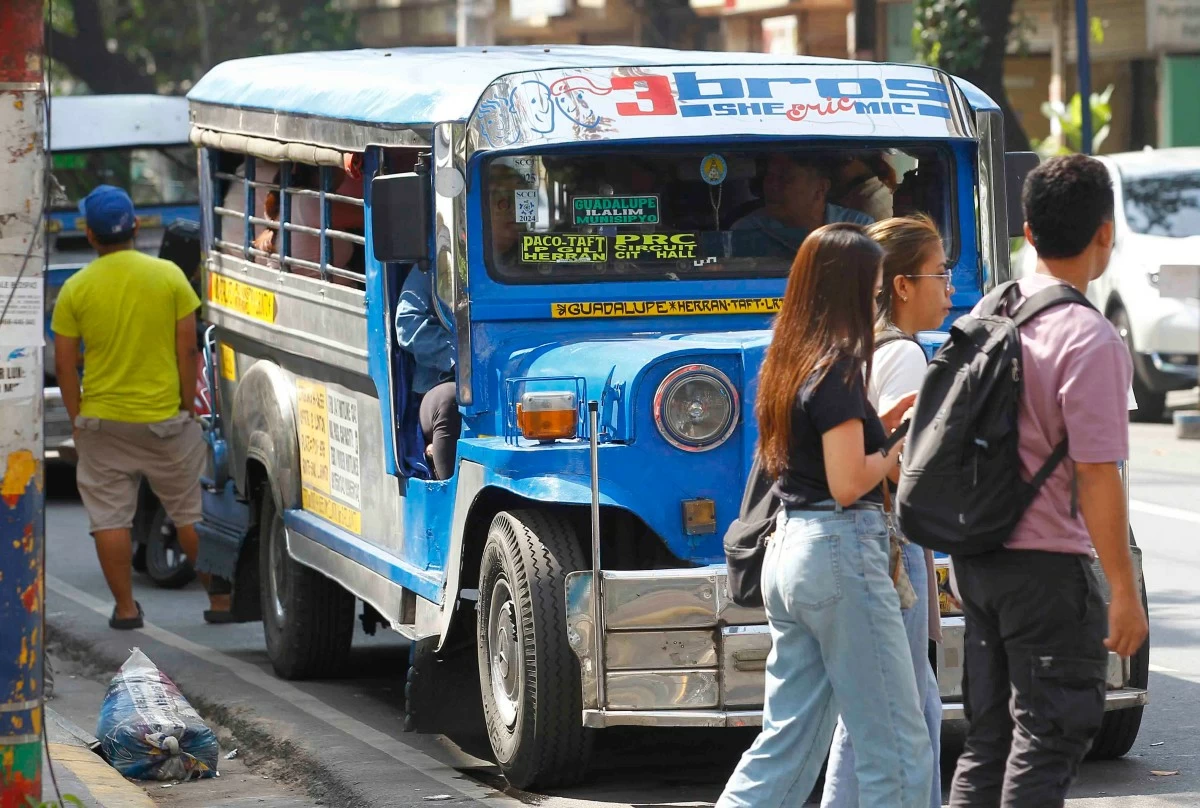
Student leaders and teachers urge the government to address rising fuel prices without compromising access to quality education.(MARK BALMORES / MANILA BULLETIN)
Student leaders and education workers on Monday, March 16, urged the government to ensure that measures addressing the country’s rising fuel prices do not undermine access to quality education, as transport costs continue to burden students, teachers, and school personnel.
In a statement released on March 16, the Student Council Alliance of the Philippines (SCAP) called on the Department of Education (DepEd), the Commission on Higher Education (CHED), and academic institutions to carefully assess proposals such as once-a-week online classes intended to ease transportation expenses amid the ongoing fuel crisis in the Philippines.
In a separate statement, the Alliance of Concerned Teachers (ACT) said it joined drivers, commuters, peasants, fisherfolk, and other sectors in a protest on Monday morning to condemn continuing oil price hikes, which they said are worsening the hardships faced by Filipino workers and ordinary families.
Fuel crisis may 'deepen' digital divide
SCAP acknowledged that the increasing cost of fuel has placed additional pressure on students and educators who commute daily to schools and universities.
While initiatives to reduce transportation expenses are worth exploring, the group warned that institutionalizing regular online classes could create new barriers for learners.
“Efforts to ease transportation costs deserve serious consideration,” the group said, emphasizing that solutions should not come at the expense of equitable access to education.
SCAP National Chairperson Angela Diamartin said policies expanding online learning must take into account persistent inequalities in access to technology and connectivity.
“We understand that the fuel crisis is affecting many sectors, including the education community. But we must make sure that the solutions we pursue do not deepen the inequalities that already exist in our education system,” Diamartin said.
The student alliance emphasized that many Filipino learners continue to rely on shared devices at home, unstable internet connections, or prepaid mobile data. In addition, crowded home environments can make it difficult for students to focus on academic tasks outside the classroom.
“We are not against online and alternative learning,” Diamartin said. “What we are saying is that before these arrangements are institutionalized, the government and education institutions must ensure that students and teachers have the tools, connectivity, and support systems necessary for them to work,” she added.
Because of these realities, SCAP said blended learning policies should only be institutionalized once adequate infrastructure, digital resources, and teacher training are in place.
Call for investment in digital access
SCAP emphasized that any move toward regular blended learning must be accompanied by concrete government investments in reliable internet connectivity, expanded access to devices, improved learning materials, and support for teachers conducting digital instruction.
Diamartin also highlighted the importance of involving students in education policy discussions, noting that the pandemic exposed significant gaps in the country’s distance learning systems.
“Students are not just recipients of education policy… our experiences during the pandemic showed where the real challenges lie,” Diamartin said.
“If we are serious about improving our education system, students must be part of the conversation,” she added.
SCAP also called on DepEd, CHED, higher education institutions, and technical and vocational education institutions to ensure that responses to the fuel crisis protect both the accessibility and quality of education.
Teachers protest oil price hikes, call for economic relief
Meanwhile, teachers and education workers joined drivers, commuters, peasants, fisherfolk, and other sectors in a protest outside the headquarters of an oil company to denounce continuing increases in oil prices.
ACT noted that escalating fuel costs are worsening the economic strain on educators who are already dealing with low wages and rising living expenses.
Protesters symbolically threw crude-looking black clay at Petron’s logo to express anger over what they described as oil industry profiteering amid the fuel crisis.
ACT Chairperson Ruby Bernardo said the latest price hikes are occurring even though the country reportedly still has sufficient oil reserves, raising concerns that pump prices are being driven by market speculation and corporate profit.
The group also criticized the Oil Deregulation Law, which removed state control over fuel pricing and allowed private oil companies to adjust prices based on international market benchmarks.
ACT also called on the government to provide immediate economic relief to teachers and other public sector workers affected by rising transportation costs and increasing prices of basic goods.
The group renewed its demand to increase the Personnel Economic Relief Allowance (PERA) for government employees from the current P2,000 to at least P5,000, noting that the allowance has remained unchanged since 2009.
ACT also reiterated its long-term proposal to raise the entry-level salary of Teacher I to at least P50,000, with P36,000 for other government employees, arguing that higher compensation is necessary to keep pace with the cost of living.
Education sector calls for balanced solutions
Both student leaders and teachers emphasized that solutions to the fuel crisis should not compromise the accessibility and quality of education.
SCAP urged education agencies and institutions to ensure that policies responding to economic pressures do not further disadvantage Filipino learners.
“Policies meant to address economic pressures must not leave Filipino learners further behind,” SCAP said.
ACT, meanwhile, affirmed that teachers will continue to stand in solidarity with other sectors in demanding accountability from oil corporations and the government while advocating for policies that safeguard the Filipino people against recurring crises.
“Hindi dapat ang mga manggagawa, guro, tsuper, at karaniwang mamamayan ang magbayad sa krisis na pinapakinabangan lamang ng malalaking kumpanya ng langis (It should not be the workers, teachers, drivers, and ordinary citizens who pay for a crisis that only benefits the big oil companies),” Bernardo alleged.
“Ang kailangan ay agarang ginhawa para sa mamamayan at mga patakarang tunay na nagtatanggol sa kanilang kapakanan (What is needed is immediate relief for the people and policies that genuinely protect their welfare),” she added.