ADVERTISEMENT

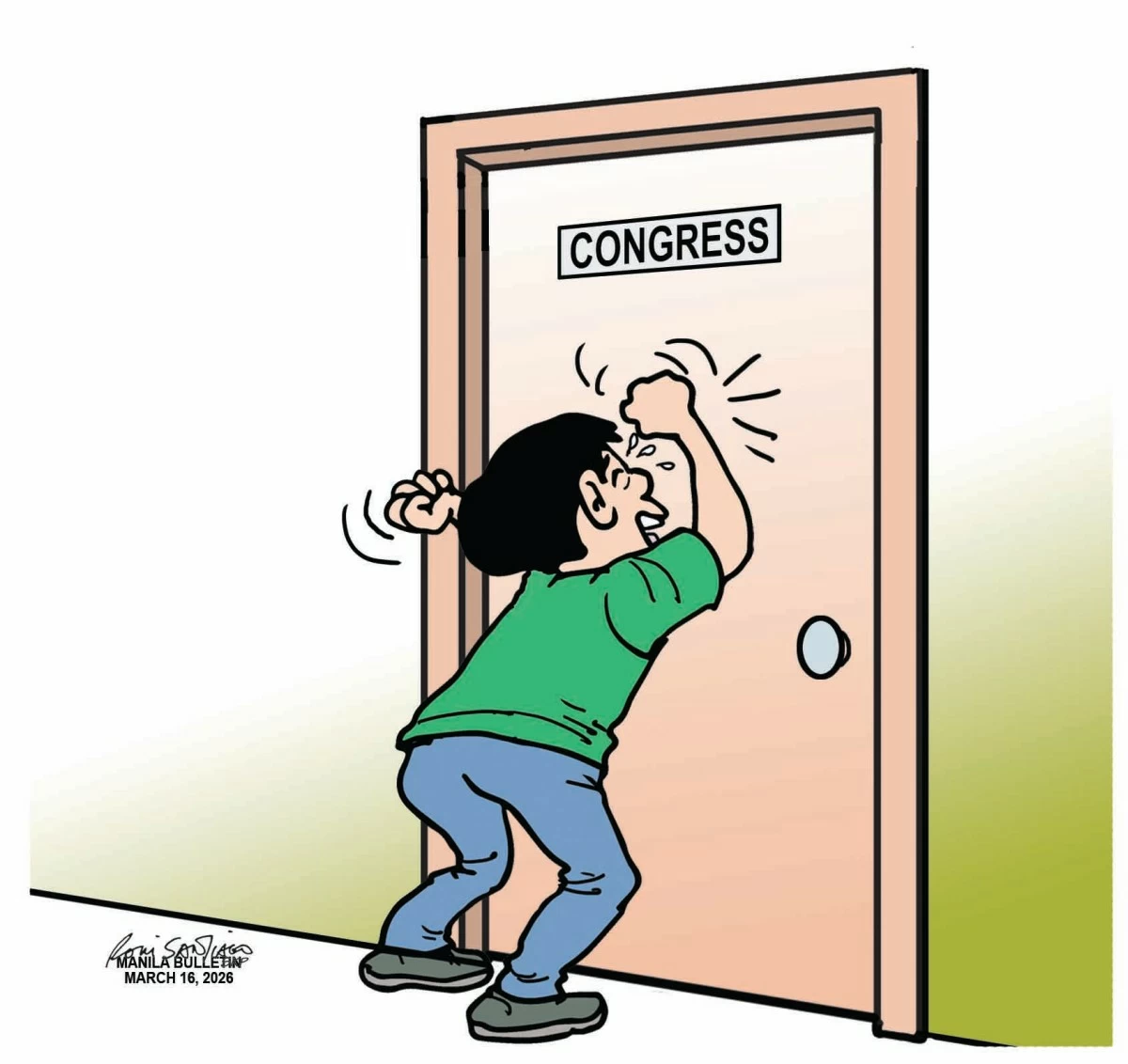
Congress must heed public clamor for an anti-dynasty law

Published Mar 16, 2026 12:05 am  |  Updated Mar 15, 2026 02:47 pm
Nearly forty years after the ratification of the 1987 Constitution, Congress has not yet passed an anti-dynasty law. A most recent public opinion poll conducted by Pulse Asia from Feb. 27 to March 2, 2026 shows that 64 percent – or almost two-thirds of the citizenry – agree that it is high time for such law to be enacted.
Seventeen percent of respondents disagreed with the proposal, while 19 percent said they were undecided.
Pulse Asia disclosed that majority support for a legislative ban on political dynasties was recorded in several areas and socioeconomic groups, including Metro Manila (69 percent), the rest of Luzon (74 percent), and the Visayas (73 percent).
Other salient findings are as follows:
First, the proposal is supported by 70 percent of respondents from Class ABC, or the upper-to-middle class; and 66 percent from Class D or what is popularly known as “masa.”
Second, among respondents from Class E or “the poor,” the survey found nearly equal levels of agreement and disagreement, with 36 percent supporting the ban and 41 percent opposing it.
Third, among those in Mindanao, opinion was more divided, with 32 percent agreeing, 39 percent disagreeing, and 29 percent undecided.
Pulse Asia also noted that among those who either support or remain undecided about banning political dynasties, 76 percent or more than three-fourths of the population, said the prohibition should apply to both national and local elective positions.
In summary, the predominant public sentiment is for the immediate enactment of an anti-dynasty law.
However, some of the bills filed in Congress do not seem to be fully responsive to the public clamor. There is a growing impression that incumbent legislators are not yet prepared to pass a truly meaningful anti-dynasty.
In a joint statement issued last Feb. 26, some 31 civil society organizations, including the Management Association of the Philippines (MAP) and the Makati Business Club, called for strict bans on family members' succession up to the fourth degree. In case Congress fails to act, they raised the possibility of launching a digital People’s Initiative.
Hence, the essential elements of a more comprehensive and responsive anti-dynasty law need to be appreciated and understood by the citizenry.
The civil society coalition has proposed that the law should ban relatives up to the second degree of consanguinity or affinity (parents, children, siblings, spouses, grandparents/grandchildren) from holding office.
They want to impose a “one local, national rule” whereby only one family member may be elected to a local position, and only one will be elected to a national position.
Finally, the ban on hiring of relatives should cover party-list nominees to prevent the sector from being used as a "backdoor" for political dynasties.
Evidently, there is a wide divergence between what conservative elements in Congress are willing to consider and what the civil society groups are clamoring for the legislators to consider. It is hoped that their leaders engage in purposive dialogue to bridge their differences and forge a common ground upon which to build agreement.
Congress must move decisively toward heeding the public clamor for a truly responsive anti-dynasty law.
ADVERTISEMENT
.most-popular .layout-ratio{ padding-bottom: 79.13%; } @media (min-width: 768px) and (max-width: 1024px) { .widget-title { font-size: 15px !important; } }

{{ articles_filter_1561_widget.title }}

.most-popular .layout-ratio{ padding-bottom: 79.13%; } @media (min-width: 768px) and (max-width: 1024px) { .widget-title { font-size: 15px !important; } }

{{ articles_filter_1562_widget.title }}

.most-popular .layout-ratio{ padding-bottom: 79.13%; } @media (min-width: 768px) and (max-width: 1024px) { .widget-title { font-size: 15px !important; } }

{{ articles_filter_1563_widget.title }}

{{ articles_filter_1564_widget.title }}

.mb-article-details { position: relative; } .mb-article-details .article-body-preview, .mb-article-details .article-body-summary{ font-size: 17px; line-height: 30px; font-family: "Libre Caslon Text", serif; color: #000; } .mb-article-details .article-body-preview iframe , .mb-article-details .article-body-summary iframe{ width: 100%; margin: auto; } .read-more-background { background: linear-gradient(180deg, color(display-p3 1.000 1.000 1.000 / 0) 13.75%, color(display-p3 1.000 1.000 1.000 / 0.8) 30.79%, color(display-p3 1.000 1.000 1.000) 72.5%); position: absolute; height: 200px; width: 100%; bottom: 0; display: flex; justify-content: center; align-items: center; padding: 0; } .read-more-background a{ color: #000; } .read-more-btn { padding: 17px 45px; font-family: Inter; font-weight: 700; font-size: 18px; line-height: 16px; text-align: center; vertical-align: middle; border: 1px solid black; background-color: white; } .hidden { display: none; }
function initializeAllSwipers() { // Get all hidden inputs with cms_article_id document.querySelectorAll('[id^="cms_article_id_"]').forEach(function (input) { const cmsArticleId = input.value; const articleSelector = '#article-' + cmsArticleId + ' .body_images'; const swiperElement = document.querySelector(articleSelector); if (swiperElement && !swiperElement.classList.contains('swiper-initialized')) { new Swiper(articleSelector, { loop: true, pagination: false, navigation: { nextEl: '#article-' + cmsArticleId + ' .swiper-button-next', prevEl: '#article-' + cmsArticleId + ' .swiper-button-prev', }, }); } }); } setTimeout(initializeAllSwipers, 3000); const intersectionObserver = new IntersectionObserver( (entries) => { entries.forEach((entry) => { if (entry.isIntersecting) { const newUrl = entry.target.getAttribute("data-url"); if (newUrl) { history.pushState(null, null, newUrl); let article = entry.target; // Extract metadata const author = article.querySelector('.author-section').textContent.replace('By', '').trim(); const section = article.querySelector('.section-info ').textContent.replace(' ', ' '); const title = article.querySelector('.article-title h1').textContent; // Parse URL for Chartbeat path format const parsedUrl = new URL(newUrl, window.location.origin); const cleanUrl = parsedUrl.host + parsedUrl.pathname; // Update Chartbeat configuration if (typeof window._sf_async_config !== 'undefined') { window._sf_async_config.path = cleanUrl; window._sf_async_config.sections = section; window._sf_async_config.authors = author; } // Track virtual page view with Chartbeat if (typeof pSUPERFLY !== 'undefined' && typeof pSUPERFLY.virtualPage === 'function') { try { pSUPERFLY.virtualPage({ path: cleanUrl, title: title, sections: section, authors: author }); } catch (error) { console.error('ping error', error); } } // Optional: Update document title if (title && title !== document.title) { document.title = title; } } } }); }, { threshold: 0.1 } ); function showArticleBody(button) { const article = button.closest("article"); const summary = article.querySelector(".article-body-summary"); const body = article.querySelector(".article-body-preview"); const readMoreSection = article.querySelector(".read-more-background"); // Hide summary and read-more section summary.style.display = "none"; readMoreSection.style.display = "none"; // Show the full article body body.classList.remove("hidden"); } document.addEventListener("DOMContentLoaded", () => { let loadCount = 0; // Track how many times articles are loaded const offset = [1, 2, 3, 4, 5, 6, 7, 8, 9, 10]; // Offset values const currentUrl = window.location.pathname.substring(1); let isLoading = false; // Prevent multiple calls if (!currentUrl) { console.log("Current URL is invalid."); return; } const sentinel = document.getElementById("load-more-sentinel"); if (!sentinel) { console.log("Sentinel element not found."); return; } function isSentinelVisible() { const rect = sentinel.getBoundingClientRect(); return ( rect.top < window.innerHeight && rect.bottom >= 0 ); } function onScroll() { if (isLoading) return; if (isSentinelVisible()) { if (loadCount >= offset.length) { console.log("Maximum load attempts reached."); window.removeEventListener("scroll", onScroll); return; } isLoading = true; const currentOffset = offset[loadCount]; window.loadMoreItems().then(() => { let article = document.querySelector('#widget_1690 > div:nth-last-of-type(2) article'); intersectionObserver.observe(article) loadCount++; }).catch(error => { console.error("Error loading more items:", error); }).finally(() => { isLoading = false; }); } } window.addEventListener("scroll", onScroll); });

Sign up by email to receive news.