







With rising seas, Manila Bay reclamation may be a sinking idea
Published Mar 15, 2026 12:05 am
|
Updated Mar 14, 2026 03:50 pm


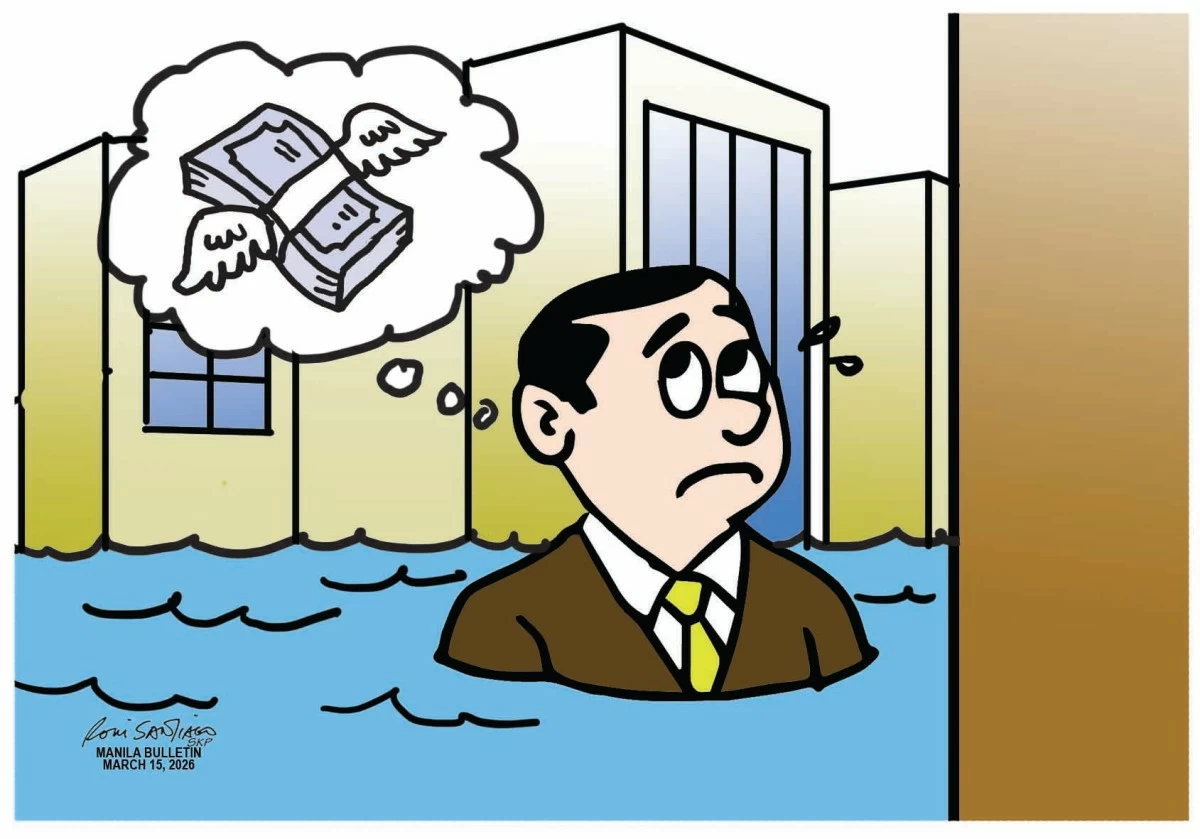
A new study published in the journal Nature has delivered a strong warning—the world may have been underestimating how vulnerable coastal communities truly are. By recalculating baseline coastal water heights, researchers found that nearly 90 percent of past scientific assessments understated how high seas already sit relative to land. The margin—about one foot—may seem small, but its consequences are enormous. If global seas rise by about a meter by century’s end, as many projections suggest, as many as 132 million more people worldwide could face inundation.
For Southeast Asia, the implications are particularly alarming. The region already houses millions living on fragile coastal plains, river deltas, and reclaimed land. Few places illustrate this danger more starkly than Metro Manila.
Manila is, in many ways, a city living below sea level. Large portions of the capital sit barely above sea level. Some areas have even subsided after decades of groundwater extraction and relentless urban development. When heavy rains coincide with high tides, floods creep into streets and neighborhoods with predictable regularity. Now imagine these waters rising even higher than previously assumed.
Against this backdrop, the continued push for large-scale reclamation projects in Manila Bay raises serious questions about priorities, foresight, and public safety.
Proponents—particularly some officials from the Philippine Reclamation Authority—have insisted that reclamation can actually help mitigate flooding. But this claim defies both common sense and growing scientific evidence. Reclamation raises land in the bay by displacing water elsewhere—that is the Archimedes principle. In a shallow, enclosed body of water like Manila Bay, that displacement must go somewhere. More often than not, it ends up pushing water toward already vulnerable shorelines and river mouths, and eventually inland.
Elevating artificial islands while the surrounding metropolis sinks is hardly a recipe for resilience.
The Department of Environment and Natural Resources, together with all agencies bound by the Supreme Court’s Writ of Continuing Mandamus to rehabilitate and protect Manila Bay, plays a crucial role. The mandate is not merely about cleaning the bay’s waters; it is fundamentally about safeguarding the ecosystems and communities that depend on it. Allowing massive reclamation projects that could worsen flooding risks undermining the very spirit of that landmark court order.
Public policy must be guided by science, not convenience or short-term economic gain.
Instead of expanding land into the sea, government planners should be doubling down on climate-resilient strategies—restoring mangroves that absorb storm surges, protecting wetlands that act as natural sponges, upgrading drainage infrastructure, and enforcing land-use planning that discourages development in flood-prone zones. Metro Manila’s long-term survival depends less on engineering marvels than on respecting the limits of geography.
The private sector also has a crucial role to play. Developers and investors should recognize that projects built at the expense of environmental stability are ultimately bad business. Sustainable urban design, green infrastructure, and investments in climate adaptation are not charitable gestures—they are safeguards for economic continuity.
Profit cannot come at the cost of placing millions in greater danger.
Ordinary Filipinos, too, are stakeholders in this struggle. Citizens must demand transparency and accountability from both government and corporations. Communities can support coastal protection efforts, reduce waste that clogs waterways, and champion leaders who treat climate resilience as a national priority rather than a political propaganda.
The rising seas described in the new research represent a future already creeping toward our shores.
Manila Bay has long been called the gateway to the nation’s capital. Whether it becomes a shield against climate disaster—or a channel through which catastrophe enters—will depend on decisions being made today. Profit or public safety? Our decision will spell our future.