







The science behind making 'Project Hail Mary'
Published Mar 15, 2026 12:40 pm


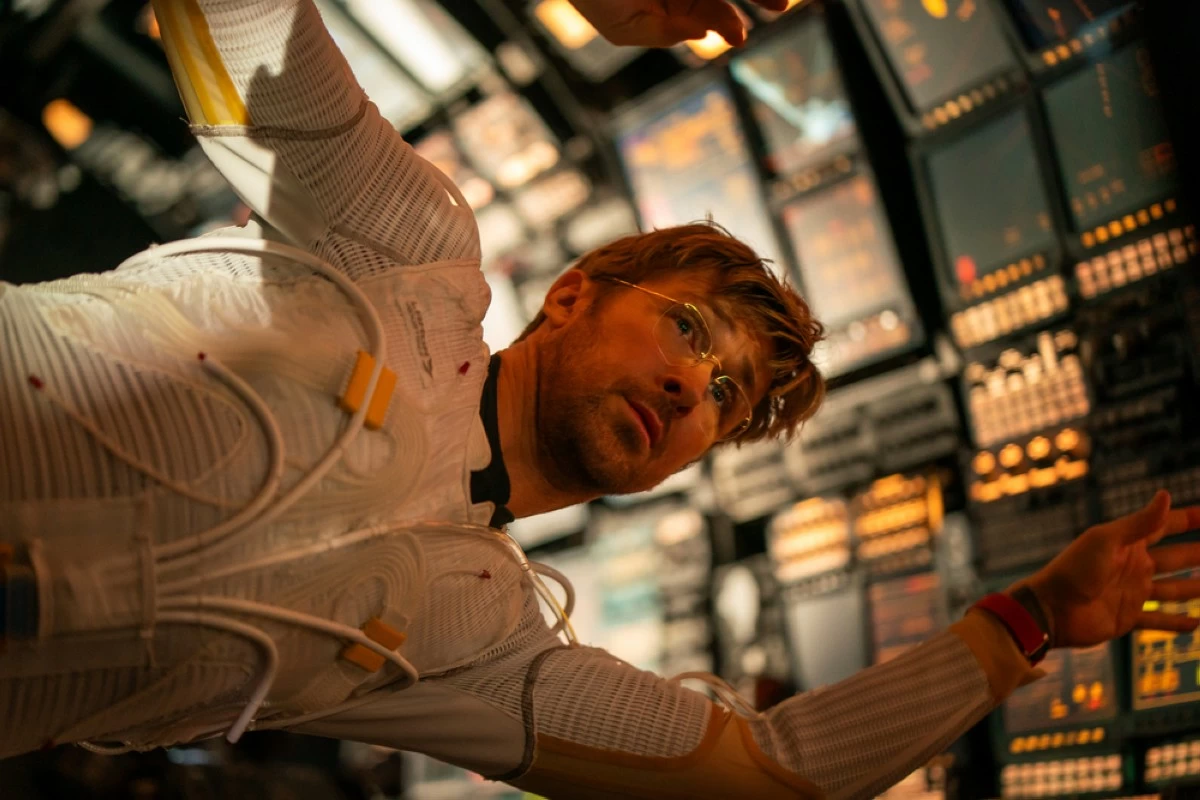
Ryan Gosling as Ryland Grace in 'Project Hail Mary'. Image credit to Columbia Pictures.
“Project Hail Mary” is an upcoming science fiction space-adventure film based on the book of the same name by author Andy Weir, who also wrote “The Martian”. Having read both books,
I am a fan of how Weir marries complex scientific concepts with emotional and thrilling storytelling. It’s a bonus that he infuses his characters with humor and wit.
“Human beings have a remarkable ability to accept the abnormal and make it normal.” -Is a quote from Andy Weir’s “Project Hail Mary” that I highlighted while reading the book.
And you can say that part of that remarkable human ability is movie magic. Which the cast and crew of the film adaptation faced head-on. I mean, how do you create a film about a lone astronaut in a huge, complicated ship, and an alien as they try to save their worlds? That’s a pretty big ask, but something that “Project Hail Mary” directors Academy Award® winners Phil Lord and Christopher Miller (Spider-Man: Into the Spider-Verse, The Lego Movie) were able to deliver. As the rest of the crew, of course.
I have had the privilege to see the film adaptation of the novel. Mild spoiler warning as the article mentions light plot elements from both the novel and the film.
All aboard the ‘Hail Mary’
Grade school Science teacher Ryland Grace, played to an incredibly likable degree by Ryan Gosling (who also serves as an Executive Producer to the film), wakes up aboard a spaceship in outer space, disheveled, disoriented, and without his memories. He slowly pieces together why he is where he is and what he’s supposed to do, and that the survival of humanity ultimately rests on his shoulders.
Grace wakes up to a computer voice, the ship’s operating system, whom he eventually calls “Mary”. It’s kind of like talking to Gemini or Bixby. “We knew we could give the ship a voice, but there’s a tendency in movies like this to jump too far ahead into the future. We wanted it to feel like now,” screenwriter Drew Goddard explained.
Mary is voiced by Priya Kansara, whose credentials include “Bridgerton” and “Polite Society”.
In the midst of Grace’s isolation, he encounters an alien life-form, the adorable and infectious Eridian, whom Grace affectionately christened “Rocky” — because you know, he looks like a rock.
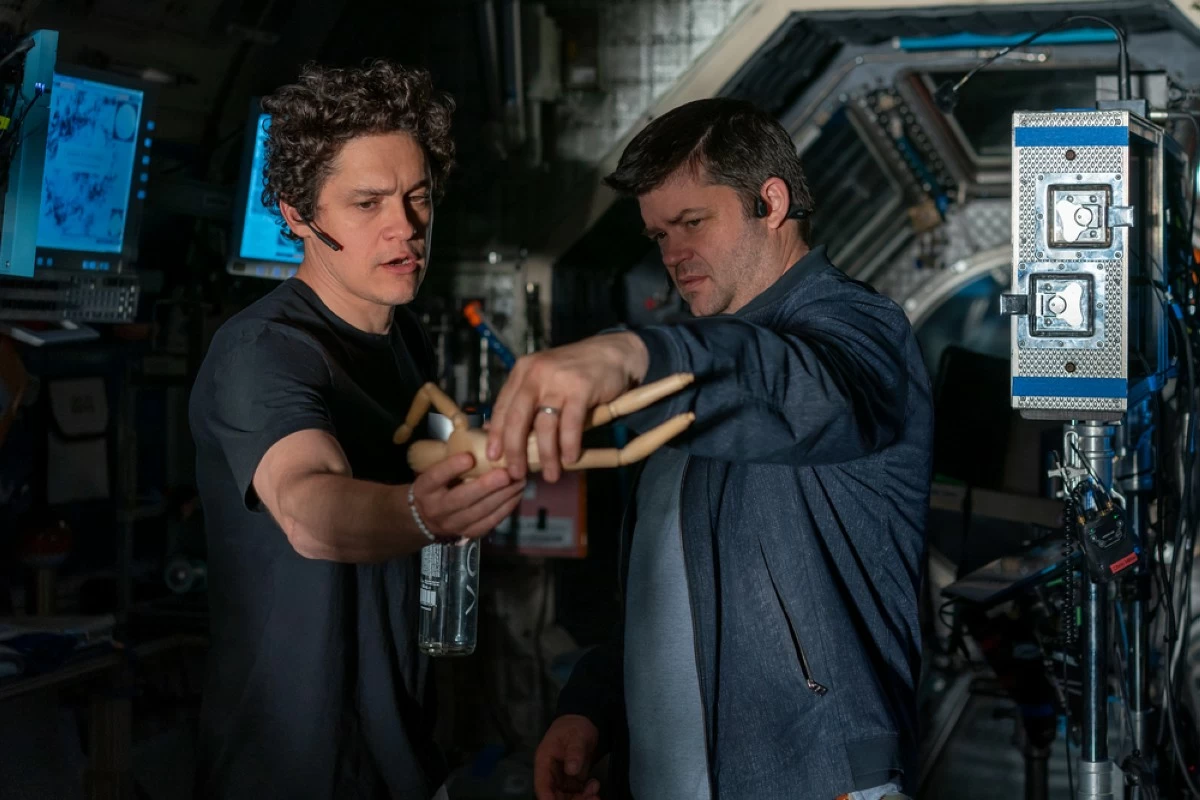
Phil Lord and Christopher Miller on the set of 'Project Hail Mary.' Image credit: Columbia Pictures.
Amaze. Amaze. Amaze.
One of the biggest challenges of filming “Project Hail Mary” would be bringing the Eridian alien Rocky to the screen. Admittedly, it took a bit of imagination to picture Rocky, as he was described as a “rock-like spider” in the book.
Puppeteer and performer James Ortiz is the voice of Rocky; he was also Ryan Gosling’s scene partner on set. To bring Rocky to life, Academy Award® -winning creature effects supervisor Neil Scanlan (Babe, Star Wars: The Force Awakens) was brought on board.
The initial approach to Rocky’s design focused on the silhouette, weight, proportions, and the relationship between the limbs and the carapace (the hard upper shell of a tortoise, or arachnid). The production used both puppetry and advanced animatronics. “The animatronic system pushed the limits of what the team had previously attempted,” Scanlan says.
Weir’s elevator pitch was that “Project Hail Mary” is “a buddy movie with world-shattering consequences,” and Grace and Rocky become more than just buddies. They overcome the boundaries of their own biology, as they are of different species; they would not survive in each other’s environment, so the two had to work around that. They also overcame the complexities of language and communication through math and sound. Grace and Rocky, despite being from different species, are able to communicate, empathize, and work towards a common goal.
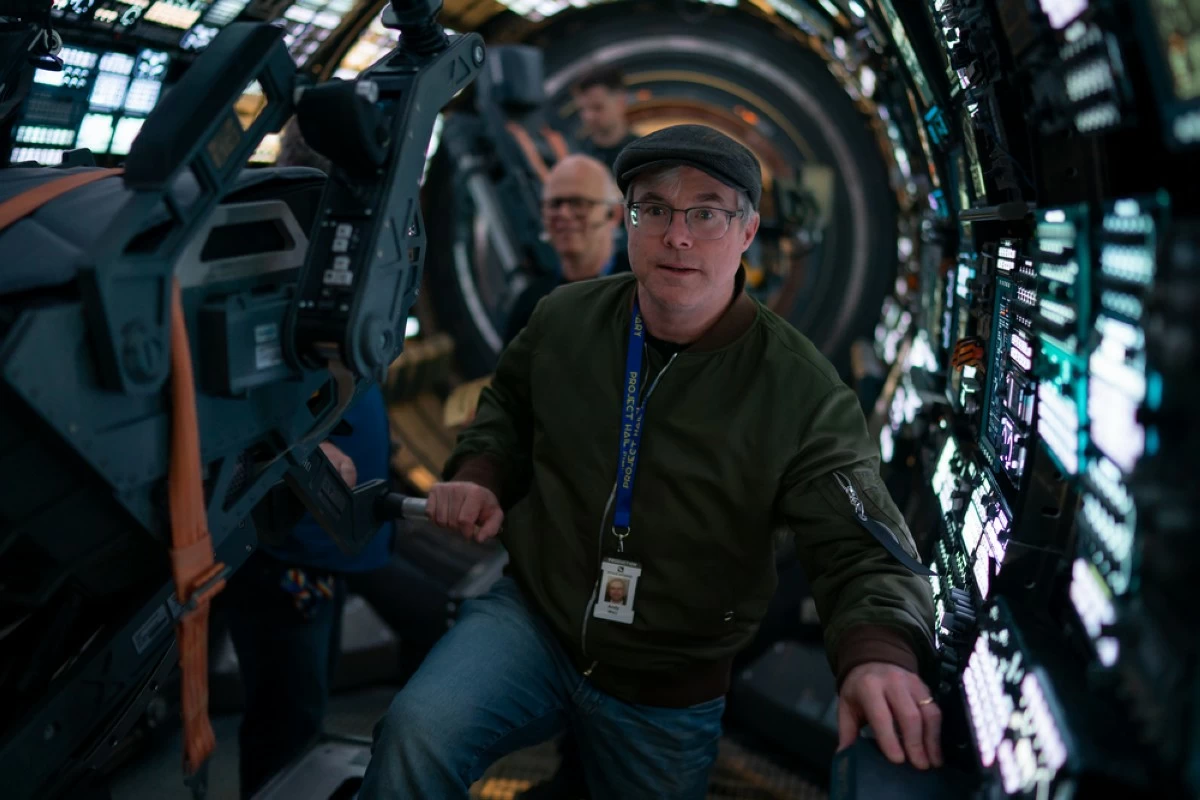
'Project Hail Mary' author Andy Weir on the set of the book's film adaptation. Image credit to Columbia Pictures.
Newton’s law
The production team, led by production designer Charles Wood (Guardians of the Galaxy, Avengers: Endgame), had to consider incorporating gravity into the filming. That meant that different areas of the ship (the Hail Mary) operate under different gravitational states, such as acceleration gravity, centrifugal gravity, and zero gravity, which required that the sets be able to rotate or reorient.
“The cockpit in acceleration gravity would mean that you would climb up into it. But in centrifugal gravity, you climb down,” Wood explains. “This creates strange architectural decisions, such as chairs on walls, ladders on walls – and that’s exciting.” Wood added.
“In Zero-G (gravity), you’re constantly recalibrating. It’s not as graceful as the pantheon of space movies might suggest. That’s interesting because it mirrors Grace’s experience. The environment isn’t stable, and neither is he. Everything is shifting,” Lord and Miller added.
Science and Faith
The stories of Andy Weir have seen the success that they’ve had, because not only are they good examples of science fiction (to a point, that some would even consider them hardcore science fiction), but they also have a lot of heart.
In the song “Science and Faith,” Irish band ‘The Script’ sang: “You won’t find faith or hope down a telescope. You won’t find heart and soul in the stars.” I don’t think that they counted on Grace and Rocky.
“It’s about science, yes,” producer Amy Pascal says. “But it’s also about faith – faith in people, faith in collaboration. We're living in a time where everyone is scared of each other. No one trusts each other. Nobody wants to listen to each other. This movie is about listening. You have to learn someone else's language. You have to understand where they're coming from, or you can't save the world.”
“Project Hail Mary” arrives in Philippine cinemas on March 18 and is distributed by Columbia Pictures.