






Manila Bulletin
 Philippines
National
Salceda recalls how Arroyo admin defeated 'stagflation' as Philippines grapples with fuel price crisis
Philippines
National
Salceda recalls how Arroyo admin defeated 'stagflation' as Philippines grapples with fuel price crisis
Philippines
National
Salceda recalls how Arroyo admin defeated 'stagflation' as Philippines grapples with fuel price crisis
Salceda recalls how Arroyo admin defeated 'stagflation' as Philippines grapples with fuel price crisis
Published Mar 15, 2026 12:47 pm


At A Glance
- Former Albay 2nd district Rep. Joey Salceda has warned that the Philippines is facing the threat of "stagflation", but says it's a familiar foe that has been beaten before.
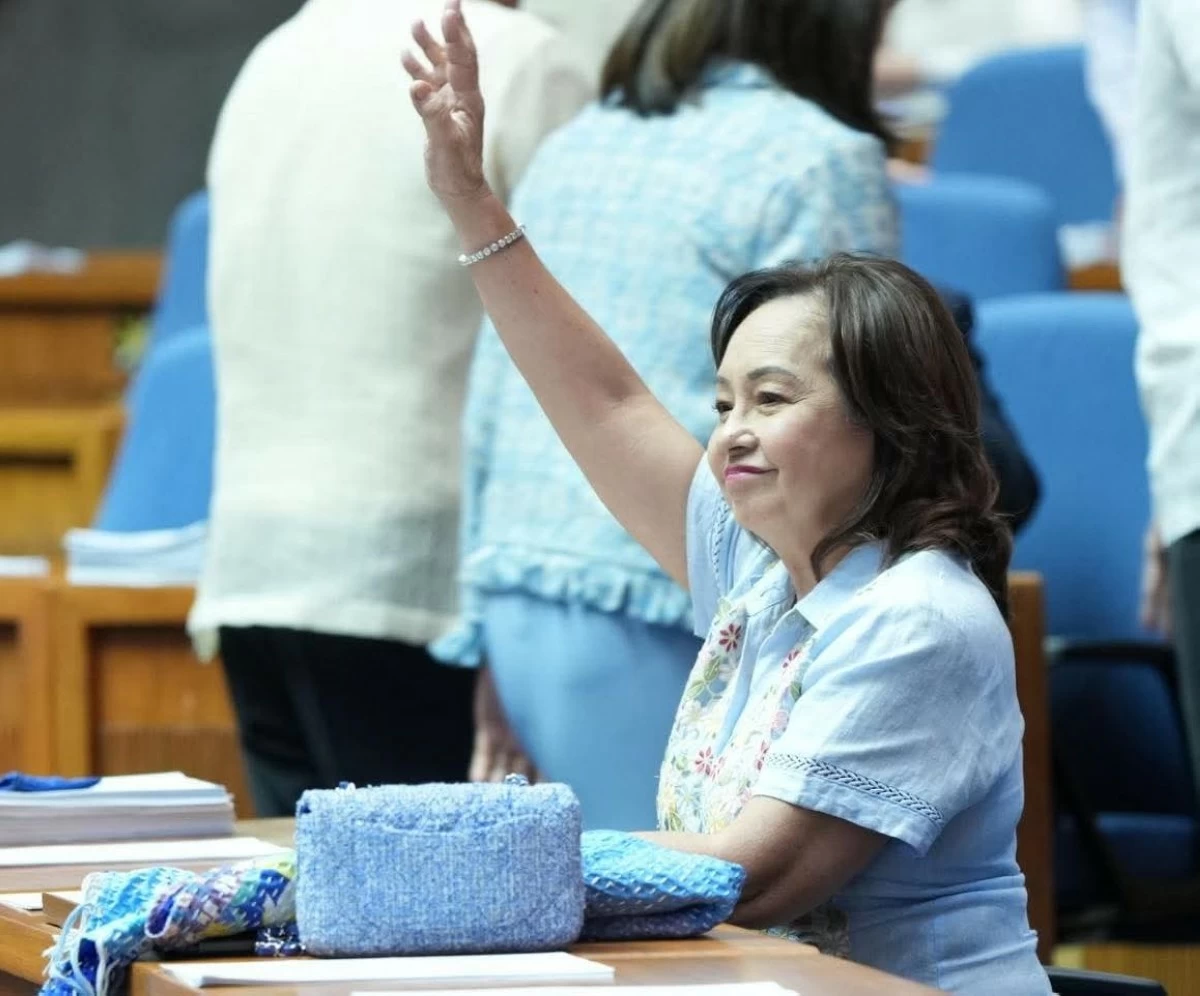
Pampanga 2nd district representative and former president Gloria Macapagal-Arroyo (Facebook)
Former Albay 2nd district Rep. Joey Salceda has warned that the Philippines is facing the threat of "stagflation", but says it's a familiar foe that has been beaten before.
Salceda recalled that it was defeated by the administration of then-president Gloria Macapagal-Arroyo in 2008 to 2009. And this feat can be duplicated by the current government, he said.
"In the first half of 2008, oil climbed from roughly $90 a barrel in January to a record $147 by July, driven by Middle East tension, speculative positioning, and supply disruptions across multiple producing countries," Salceda, an economist, said in an essay over the weekend.
"Philippine inflation, which had averaged 2.8 percent in 2007, surged to 9.4 percent across the first eleven months of 2008 even as GDP growth decelerated from 7.5 percent to 4.6 percent over the same period. Rice at its peak doubled from the prior year. Brent has already moved 40 percent in 14 days. In 2008 it took six months to move 60 percent," he noted.
"The current episode is compressing what took half a year into a fortnight," Salceda said, referring to the effects of the ongoing Middle East crisis on the country.
Stagflation is defined as persistent high inflation combined with high unemployment and stagnant demand in a country's economy. "Stagflation puts policymakers in a trap with no clean exit. Fight the inflation by raising rates and you choke growth further. Defend growth by loosening monetary conditions and you feed the inflation," said the ex-solon.
Salceda, then-governor of Albay and adviser to Arroyo, shared how quick and decisive became the difference for the Philippine economy.
"The more consequential decision, though, was the January 2008 pre-crisis package that President Arroyo asked me to draw up immediately after she returned from Davos. Several respected economists argued that announcing any stimulus while a global recession was still being debated was premature and potentially alarmist. The IMF (International Monetary Fund) had not moved," he recalled.
"The National Bureau of Economic Research would not officially date the recession’s beginning until December 2008. The intellectual case for waiting was not frivolous. The cost of acting early and being wrong is a modest misallocation of productive investment. The cost of acting late and being right is a contraction you could have softened. Those are not symmetric risks. We moved," recounted Salceda.
He said the resulting package did not increase total spending. "It reprioritized what was already in the pipeline toward programs with the highest and fastest productivity impact, with food supply at the top of that ranking."
"The operational criterion for selecting infrastructure was specific: fast, off-the-shelf projects with simple engineering requirements and no right-of-way problems. Projects that could break ground within weeks, not years," he noted.
The result according Salceda: "The Philippines did not post a single quarter of negative growth during the 2008 to 2009 global contraction. No comparable economy in Southeast Asia can say the same."
Salceda in his essay went on to offer specific recommendations to the Marcos administration. These recommendations include: the release of the non-flood control infrastructure appropriations currently tagged "For Later Release" in the 2025 budget, prioritizing projects with simple engineering requirements, no right-of-way problems, and agricultural supply chain relevance.
He also recommended to require oil companies to disclose actual crude acquisition costs to the Department of Energy (DOE) under confidentiality, and allow only cost-plus retail pricing, stopping short of blanket price controls.
He said the Department of Agriculture (DA) must accelerate seed, fertilizer, and crop insurance deployment to major producing provinces before the next planting cycle, and clear fertilizer import bottlenecks at the Fertiler and Pesticide Authority (FPA) and Bureau of Customs (BOC) through agency directive.
Salceda said Bangko Sentral ng Pilipinas (BSP) must continue credit easing but direct it toward productive sectors through the rediscounting facility rather than broad monetary accommodation.
He also said the government must now begin contingency planning for overseas Filipino workers (OFW) remittance deceleration from the Gulf, which in 2008 dropped from nearly 20 percent annual growth to single digits and compounded the external shock through the current account.
Arroyo is currently Pampanga's 2nd district congresswoman.