







Industry players fear nationwide fuel shortage is coming
Published Mar 15, 2026 06:00 pm


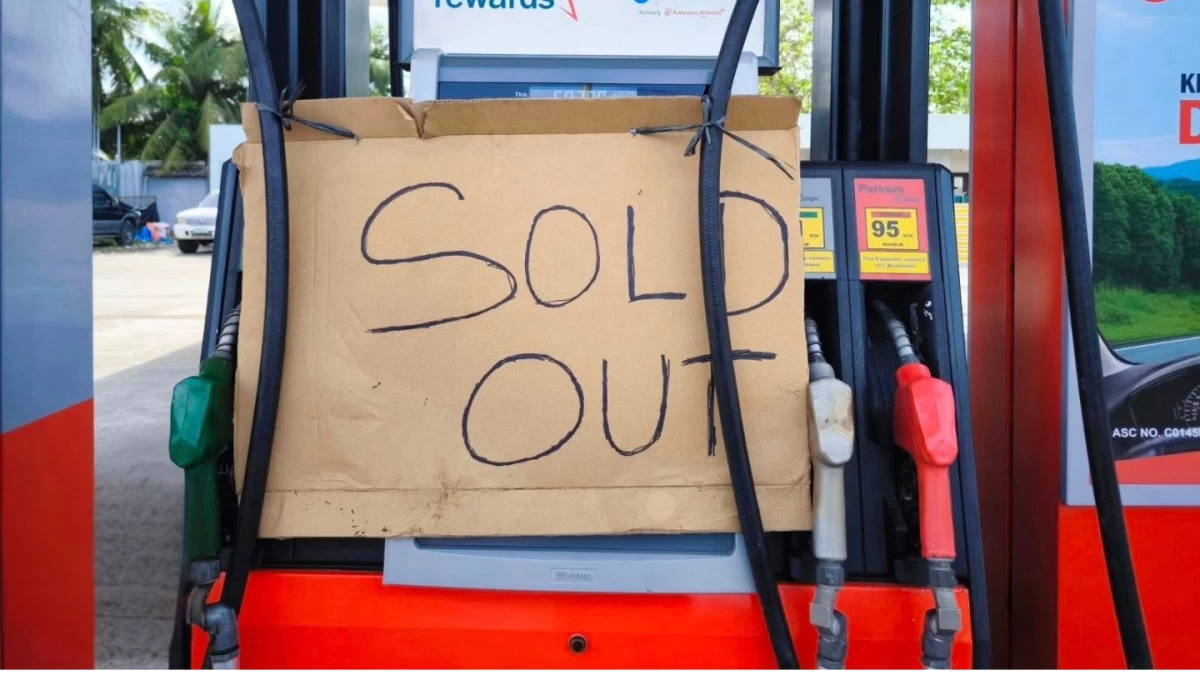
A gas station in Jaro, Iloilo City, displays “sold out” sign on its pump last March 10. The fuel depletion comes as the country faces a historic energy crisis, with industry experts warning that domestic supplies may only last until late April due to escalating conflict in the Middle East and regional export bans.
The Philippines is staring down looming oil supply shortages between late April and May as foreign suppliers cancel contracts and exporting nations shut their taps. Escalating tensions around the Strait of Hormuz—a chokepoint where instability now threatens to squeeze the country’s energy lifeline—have intensified due to the escalating conflict involving the United States (US), Israel, and Iran.
Amid this increasingly precarious fuel outlook, the Department of Energy (DOE) and the Department of Finance (DOF) convened an urgent meeting on Sunday, March 15, with oil industry players. The goal was to assess the country’s vulnerable supply flow, spanning crude imports and finished petroleum products to required biofuel blends.
As the situation developed, it was hinted that this week's price hikes will be staggered over several days—specifically March 17, 18, and 19—at the request of the DOE. Preliminary calculations from oil companies indicate a sharp surge in adjustments: ₱23.90 per liter for diesel, ₱16.60 per liter for gasoline products, and ₱6.90 per liter for kerosene.
Supply window shrinking
A highly placed source warned that despite government assurances of a two-to-three-month inventory, fast-changing developments could slash that window dramatically. This leaves the Philippines on a fragile supply footing in the coming weeks. “We’re actually lucky if we can stretch supply until the last week of April,” the source noted.
Random checks by the Manila Bulletin with several industry players revealed a shared anxiety that current inventories may barely last until late April. Unless new supply deals are secured soon, fuel pumps across the country could begin running dry by May.
The meeting, held at a private condominium in the Ortigas Business District, was called by Energy Secretary Sharon Garin. It required the attendance of oil companies’ chief executives and top supply procurement officials, with Finance Secretary Frederick Go also reportedly in attendance.
“Most contracts beyond April were already canceled, so the country is hurtling toward unavoidable fuel shortages if the war drags on; we’re very close to that perilous energy cliff already,” emphasized a source from an independent oil firm.
Economic impact
A key executive from a major oil company stressed that the government’s supply estimate may prove far too optimistic, noting that the actual timeline for stocks to run out could be much shorter. This is a formidable concern that industry players have already relayed to the DOE, emphasizing that urgent solutions are needed.
Sources further cautioned that the threatening shortage won’t just pinch consumers at the pump; all industries reliant on petroleum products are at risk. Consequently, the crisis could slam the brakes on the Philippine economy unless swift, decisive action is taken. Another industry insider added that Thailand, a critical source of finished petroleum products for the Philippines, has already announced an export ban, further cutting off the country's supply chain.