






Manila Bulletin
 Business
Trade & Industry
Philippines seeks Pax Silica seat to lure mining investment
Business
Trade & Industry
Philippines seeks Pax Silica seat to lure mining investment
Business
Trade & Industry
Philippines seeks Pax Silica seat to lure mining investment
Philippines seeks Pax Silica seat to lure mining investment
Published Mar 13, 2026 02:37 pm


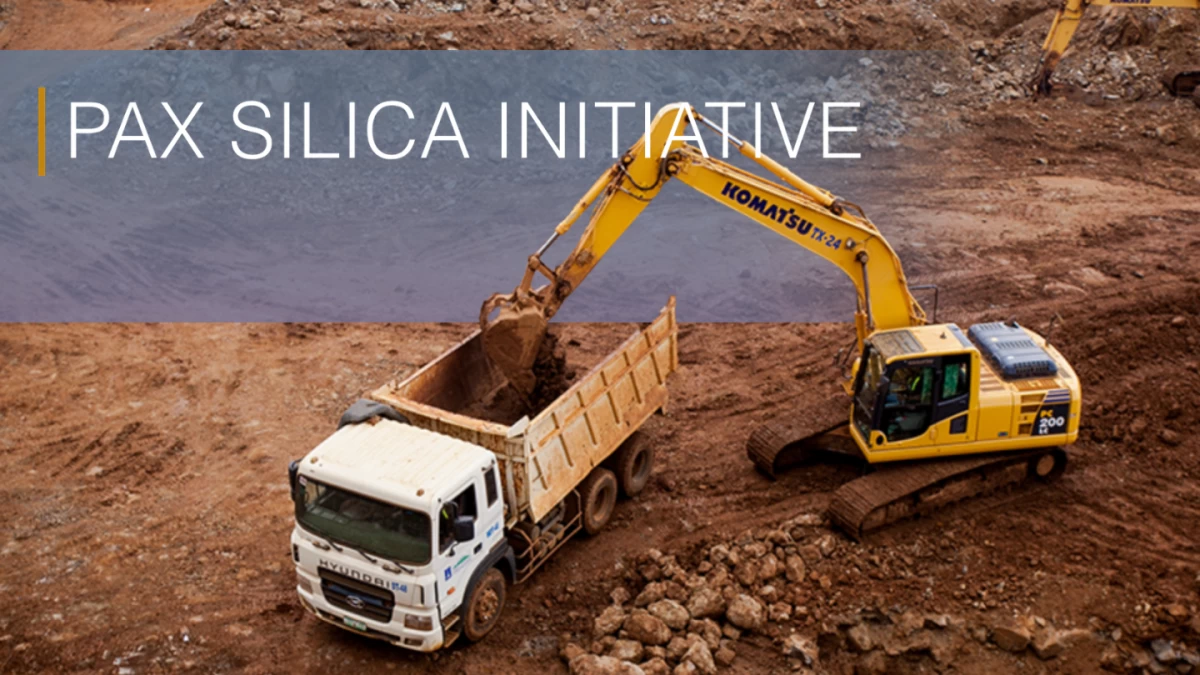
The Philippines is seeking to join a United States-led (US) global technology alliance known as Pax Silica, a move intended to integrate the country into a secure supply chain for semiconductors and artificial intelligence infrastructure.
Following last month’s signing of a critical minerals pact with the US, Trade Undersecretary Ceferino Rodolfo said the country is also “very interested” in being part of Pax Silica.
Formed in December last year, Pax Silica is an international partnership that aims to unite economies to build a secure, innovation-driven ecosystem across the global technology supply chain.
The partnership covers critical minerals and energy inputs, advanced manufacturing, semiconductors, logistics, and artificial intelligence (AI) infrastructure.
Apart from the US, Pax Silica consists of Australia, Japan, South Korea, Singapore, the Netherlands, Israel, the United Arab Emirates, and the United Kingdom.
On the part of the Philippines, Rodolfo said participation in the alliance would particularly help the country advance its development of critical minerals and digital infrastructure.
“That is to be able to have a secure supply of critical minerals that are needed for both defense and high technology industries,” said Rodolfo.
“And you will need the critical minerals for you to be able to produce all of the necessary equipment, components for your digital infrastructure,” he said.
In addition, Rodolfo said the country is also eager to participate in the proposed preferential trade bloc for critical minerals, recently proposed by the US as a means to break China’s dominance over the market.
Rodolfo said the memorandum of understanding (MOU) involving critical minerals signed by the Philippines last month only grants the country “a seat at the table.” As such, joining the regional bloc would help ensure the country’s active participation.
He noted that the country is particularly keen to have an active role in shaping the proposed global floor price for critical minerals and the planned offtake agreements through stockpiling.
“So with an offtake agreement and the [floor] price, we hope that we could attract investments in mineral processing because any investor would be assured that they can sell the volume that they need at the price that would make their project viable,” said Gepty.
There are also talks of building a “special economic security zone” between the Philippines and the US that would leverage the former as a major hub for computing technologies, although this remains under discussion.
Beyond its longtime ally, Gepty said the Philippines is also open to signing a similar MOU on critical minerals with Canada, which he said is “very open” to the proposal.
Should there be similar agreements with other countries, he noted that the government remains willing to participate “as long as we are treated fairly.”
Building relationships with trade partners is part of the Philippines’ multi-pronged approach to unlocking its critical minerals sector for both foreign and local investments and long-term development.
Within the coming weeks, President Ferdinand “Bongbong” Marcos Jr. is expected to sign an executive order (EO) that would significantly reduce the permitting process for mining operations.
Department of Environment and Natural Resources (DENR) Undersecretary Carlos Primo David said the EO would establish a one-stop shop that would expedite the tedious permitting process by eliminating red tape and allowing the simultaneous submission of pertinent documents.
On the part of the DENR, David said this would mean the agency’s current processing time of around two years would be reduced to less than a year.
Rodolfo further said that the government has been implementing measures to make the country’s mining industry more attractive to investors, including the new mining fiscal regime introduced late last year.