






Manila Bulletin
 Philippines
National
Will it work? DepEd pushes '4+1' learning model to ease school congestion
Philippines
National
Will it work? DepEd pushes '4+1' learning model to ease school congestion
Philippines
National
Will it work? DepEd pushes '4+1' learning model to ease school congestion
Will it work? DepEd pushes '4+1' learning model to ease school congestion
Pilot scheme proposes four days of onsite classes and one day of online learning
Published Mar 12, 2026 12:03 pm


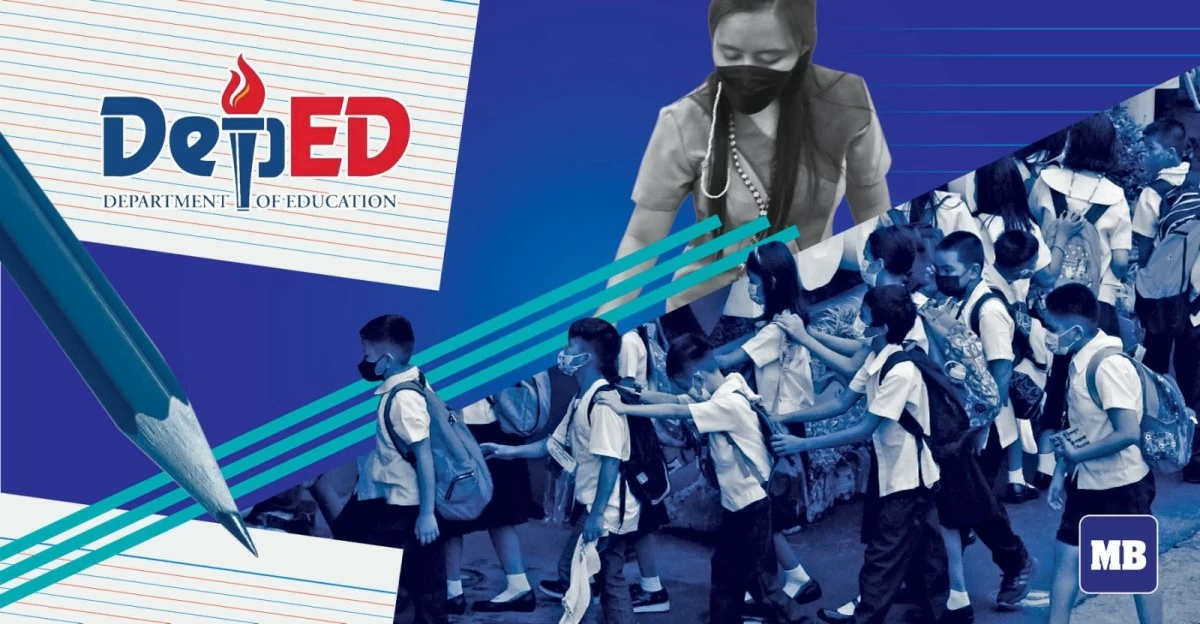
As part of efforts to ease congestion in public schools, the Department of Education (DepEd) is eyeing a “4 1” blended learning model, along with other measures. (DepEd/MB Visual Content Group)
As the Philippines continues to grapple with a nationwide shortage of classrooms, the Department of Education (DepEd) said it is studying a “4+1” blended learning model that could reshape how students attend school each week.
DepEd Secretary Sonny Angara said the proposed setup—four days of in-person classes and one day of online learning—is being considered as a practical solution to help reduce congestion in public schools while the government works to address the country’s 165,000-classroom backlog.
“We are no longer content with the old system,” Angara said. “We are changing the way we deliver education to make it faster, more efficient, more effective, and more transparent.”
Angara made the remarks during the 2026 General Assembly of the League of Municipalities of the Philippines on March 9.
READ:
The model forms part of DepEd’s broader strategy to manage overcrowded campuses while accelerating classroom construction through partnerships with local governments and the private sector.
“Education is a shared responsibility, and our LGUs are the best-positioned partners to ensure these funds are translated into actual, usable classrooms for our learners,” he added.
A flexible response to overcrowded schools
Under the proposed scheme, students would attend school physically for most of the week but shift to remote learning for one day, allowing campuses to accommodate learners more efficiently.
The approach could help schools reduce the daily number of students on-site, easing pressure on facilities that often operate beyond capacity.
Angara said DepEd is exploring the pilot implementation of the model as part of broader reforms aimed at making the education system more responsive to current challenges.
The initiative complements DepEd’s infrastructure programs, which include building new classrooms and adopting faster construction solutions such as modular learning spaces.
Expanding learning access through vouchers
Alongside the blended learning proposal, DepEd is also considering expanding the education voucher program to primary-level learners.
If implemented, the program would allow some elementary students to enroll in participating private schools, helping redistribute learners from overcrowded public schools to available spaces in private institutions.
The combination of blended learning and expanded school choice, DepEd said, could provide immediate relief while longer-term infrastructure projects are rolled out.
Part of a larger education reform effort
The proposed “4+1” model was presented during the General Assembly of the League of Municipalities of the Philippines, where Angara urged more than 1,300 municipal mayors to work with DepEd in addressing the classroom shortage.
The initiative aligns with the broader education modernization agenda of Ferdinand Marcos Jr., which aims to improve learning environments and expand access to quality education across the country.
While still under study, the 4+1 scheme signals DepEd’s willingness to adopt flexible learning arrangements—balancing traditional classroom instruction with digital learning—to ensure students can continue learning despite infrastructure limitations.
RELATED STORY: