






Manila Bulletin
 Environment and Sustainability
Project Niche empowers Pangasinan youth to tackle heat and plastic crisis
Environment and Sustainability
Project Niche empowers Pangasinan youth to tackle heat and plastic crisis
Environment and Sustainability
Project Niche empowers Pangasinan youth to tackle heat and plastic crisis
Project Niche empowers Pangasinan youth to tackle heat and plastic crisis
Published Mar 12, 2026 02:24 pm


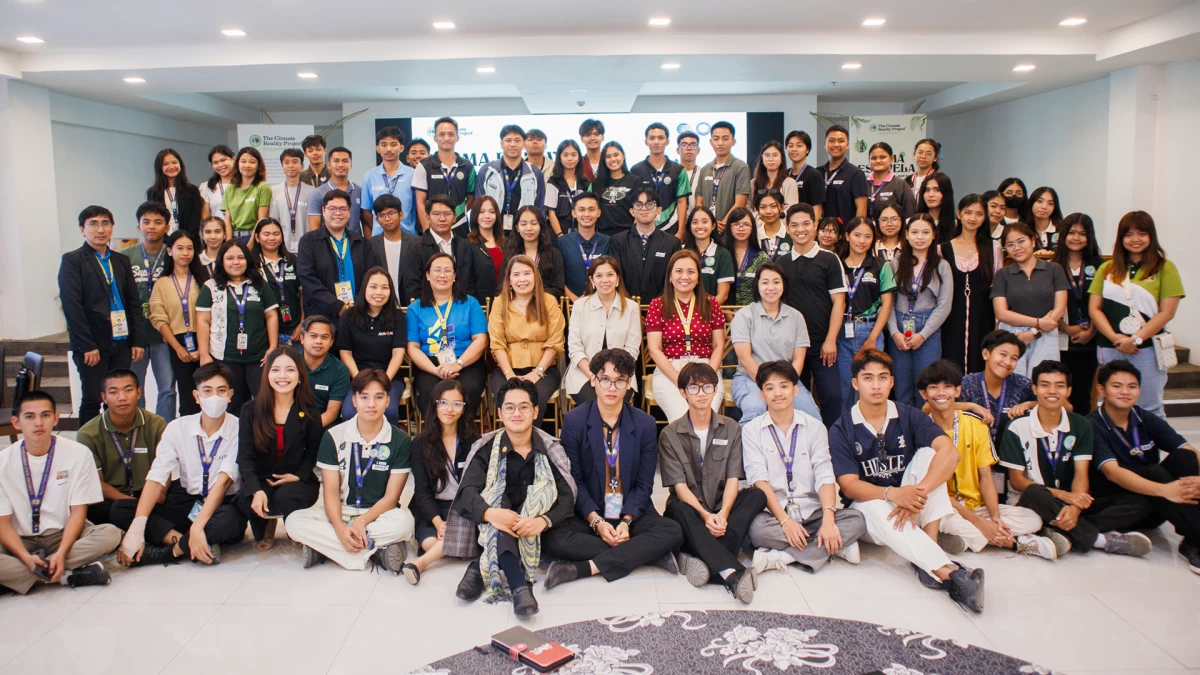
Climate Reality Philippines takes Klima Eskwela: Climate Science, Arts, and Action to Pangasinan State University to teach students about the youth’s power to solve the climate emergency.
Last Feb. 26 to 27, The Climate Reality Project Philippines held a two-day “Klima Eskwela: Climate Science, Arts, and Action” workshop at Pangasinan State University (PSU) Main Campus in Lingayen, Pangasinan.
Held in partnership with the Climate Change Commission (CCC), PSU and the municipal government of Lingayen, the event taught student leaders the fundamentals of the climate and plastic crises, in hopes of encouraging participants to develop innovative ways to promote grassroots solutions to these issues.
“We’re all here to talk about climate change, whose impacts you have much experience with. But we want you to understand not just the impacts but also the solutions,” said Aimee Oliveros, branch manager of Climate Reality Philippines.
Providing seed funds and mentorship to bring these ideas to life is Project Niche, Climate Reality Philippines’ project incubator and capacity-building initiative for the youth.
PSU is the third state university given the opportunity to implement a plastic-free campus initiative with funding through Project Niche. The two others were Caraga State University and Eastern Visayas State University, both of which hosted Klima Eskwela.
“The fight against climate change and plastic pollution will be won not only by policies or international negotiations abroad. It starts in the classroom and in your own homes. It is nurtured in our communities and fostered by the leadership of young people who are committed and willing to act,” said Atty. Rachel Anne Herrera, commissioner of the CCC.
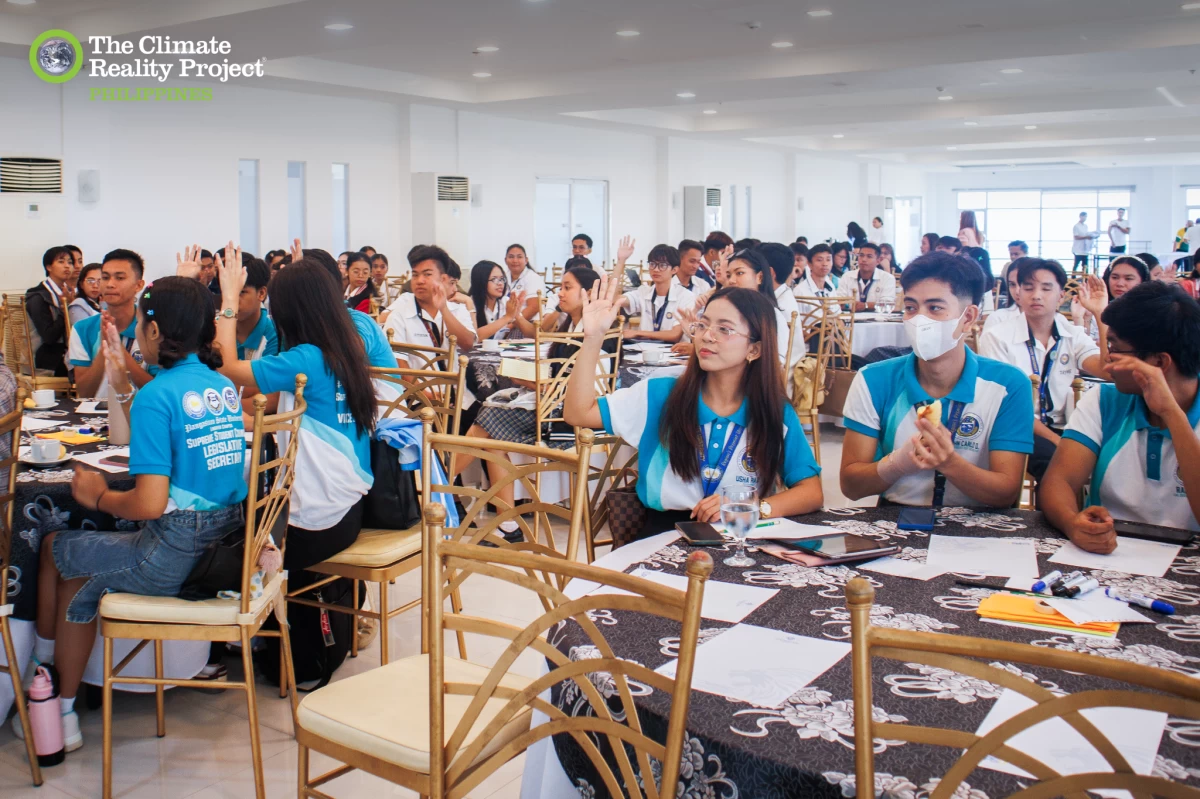
Learners include student leaders and science majors, as well as professors and university administrators.
Located along the Lingayen Gulf, the municipality of Lingayen is prone to a number of climate hazards typical of seaside communities, including coastal flooding and storm surges. But when asked about their own experience of climate change, PSU students said extreme heat is what they feel and observe most immediately.
“During the times na super init [here in Lingayen], it’s humid so yung heat ramdam na ramdam mo na talaga sya; if you’re not in a well-ventilated place, hihingalin ka talaga. It gets to the point na sa sobrang init nya, kahit malapit lang [ang pupuntahan mo], kailangan mong magtricycle because yung init n’ya— you’re gonna get burned,” said Marrian Flor Castro, first-year representative of PSU Lingayen’s Student Alliance of Future Biologists.
(“During the times when it gets extremely hot here in Lingayen, it’s very humid, so you really feel the heat intensely. If you’re not in a well-ventilated place, you can end up short of breath. Sometimes it gets so hot that even if you’re only going somewhere nearby, you still need to take a tricycle because of the heat—you feel like you’re going to get burned.”)
Early this March, the community of Lingayen experienced a heat index of 40°C. In the same month last year, it reached an all-time high of 48°C, according to the state weather bureau, PAGASA. This “danger level” warns of high risks of heat cramps, exhaustion, and heat stroke. In fact, several heat-related medical emergencies were reported in Lingayen.
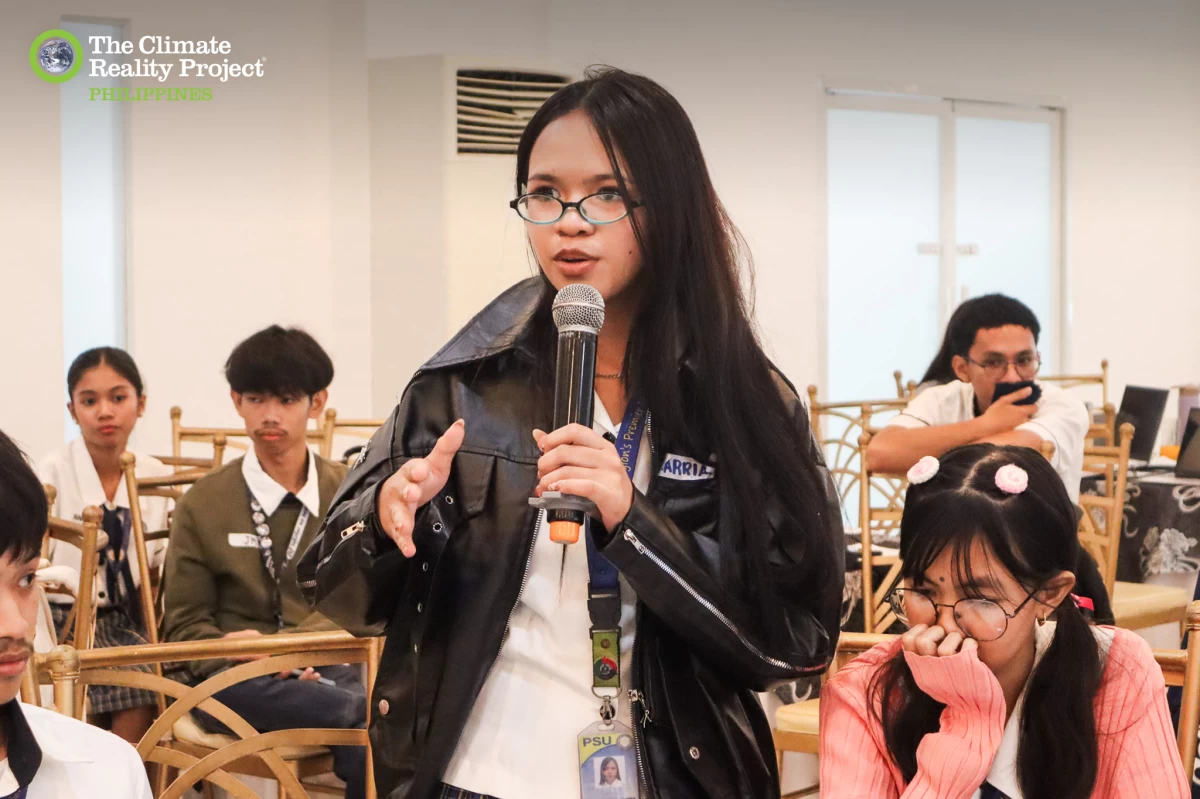
First-year biology student Marrian Flor Castro discusses the impact of climate change in her community, citing the extreme heat often experienced in Lingayen.
In addition to adverse health impacts, climate change has also disrupted the students’ learning. In recent years, the extreme heat has worsened to the point where classes had to be suspended for up to a week.
“Ang naging epekto po sa amin na mga schools na nagpo-produce ng mga isda, may times po na yung mga laboratories po namin, yung mga experiments po namin, yung mga isda—namatay po sila,” said Lance Phillip Urbien, fishery major and Supreme Student Council president of PSU Binmaley Campus.
“Ang nangyari po ay either termination po of the study or uulit kami. Akala po namin masaya na walang pasok— pero ‘yun pala, napabayaan namin. Kasi di rin kami papayagan pumasok ng school so hindi kami nakakapakain ng isda. Halos natuyo na pala ang tubig.”
(“For us in schools that produce fish, there were times when our laboratories and experiments were affected—our fish died. What happened was that our studies were either terminated or we had to start over. At first, we thought having no classes was good, but it turned out that things were neglected. We also weren’t allowed to enter the school, so we couldn’t feed the fish. Eventually, the water had almost dried up.”)
Urbien also connected these experiences with the challenges faced by Lingayen fisherfolk, whose livelihood is vulnerable to rising temperatures.
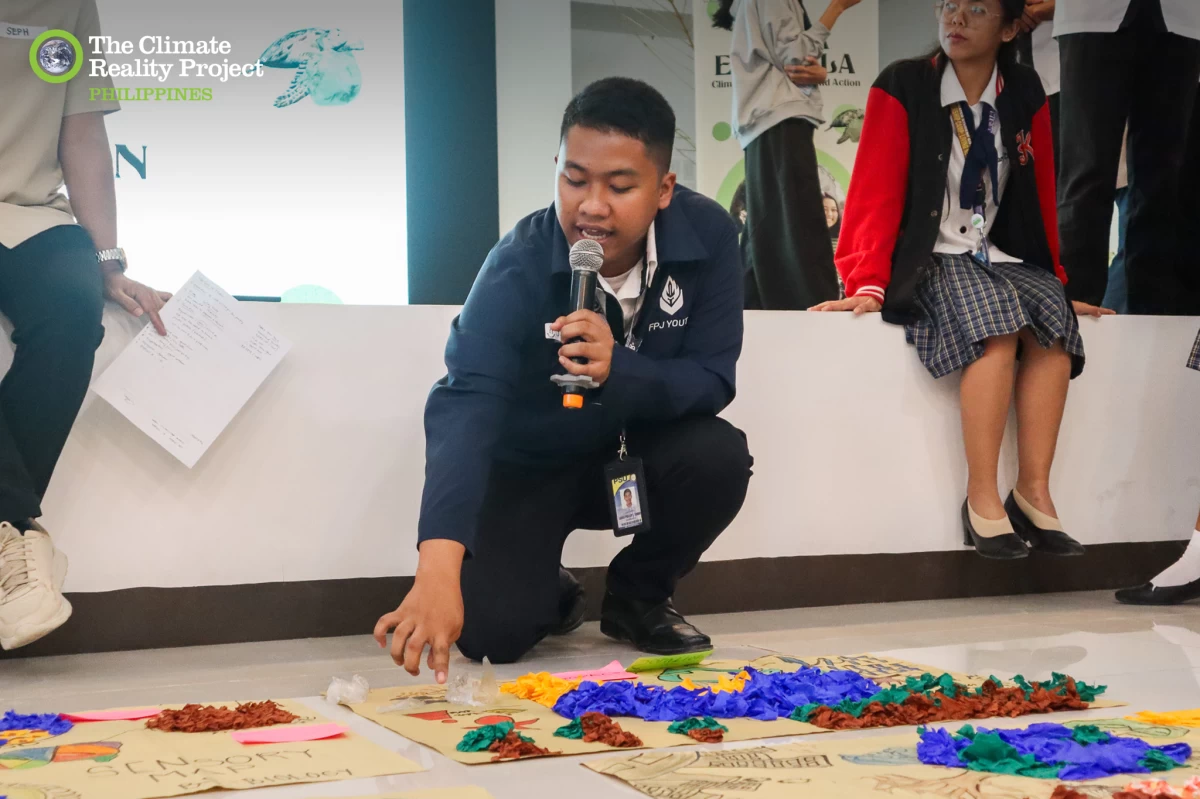
PSU-Binmaley Supreme Student Council President Lance Phillip Urbien presents his group’s sensory map, an artwork that reflects their perspective on climate change.
Their students’ struggles with climate change are not lost on PSU administrators. Lingayen Campus Executive Director Dr. Marie Claire Briones, expressed support for the students’ meaningful participation in Klima Eskwela.
“[Climate change] is a cry for help from nature; [it’s asking us] to be its stewards. This means doing something to address the crisis—using our voice. After all, what’s the sense of having one if we don’t use it?” said Dr. Briones.
A total of 75 participants attended the workshops, comprising science majors, youth organization leaders, and professors from PSU’s Lingayen and Binmaley campuses. By the end of Klima Eskwela, attendees were equipped with skills in project management and policy development.
Klima Eskwela’s lectures on the climate and plastic crises were delivered by Sophia Manzano, development management officer from CCC, and Joseph Pilapil, Climate Reality Philippines’ Plastic-Free Reality program lead.
Local climate action and solid waste management plans were also discussed by guests from local governments: Joe Simon Coloma, climate resiliency staff from the Pangasinan DRRMO; Clark Mamaril, local DRRM officer at the Lingayen Municipal DRRM Office; and Adamson Miña, Jr., an environmental management specialist from the Lingayen Municipal Environment and Natural Resources Office (MENRO).
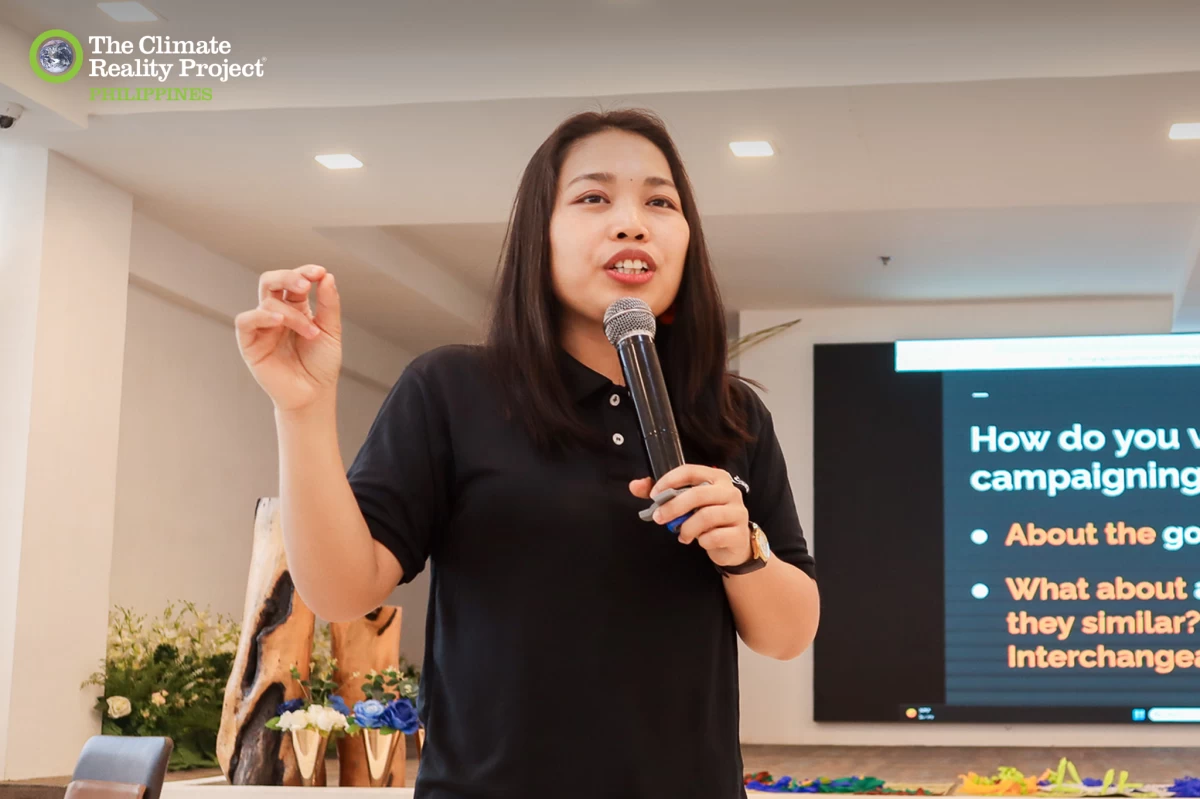
AktivAsia Pilipinas’ Engr. Elainne Lopez discusses the art and science of campaigning for the planet.
AktivAsia Pilipinas’ Engr. Elainne Lopez facilitated the project management workshops, while Atty. Megan Mateo from CCC’s Legal Services Division taught students about policy writing.
These sessions were designed to encourage learners to develop youth-led and community-based solutions to the plastic crisis, to be supported by resources from Project Niche.
For example, Miña discussed previous efforts of the MENRO to engage PSU in addressing its waste problem, including conducting a waste analysis and characterization study (WACS) in the university.
The WACS conducted in PSU showed the types of waste the institution produces, which can guide policies to reduce or eliminate certain types of trash, such as single-use plastics. Based on the study, 42 percent of PSU’s waste was recyclables such as plastic and paper.
Drawing from these insights and the lectures conducted during Klima Eskwela, the students drafted potential policies to address waste in PSU. These include information, education, and communication (IEC) campaigns, banning waste burning, and eliminating single-use plastics on campus through policies and regulations.
“Klima Eskwela opened up opportunities for us—as students, as a small part of the community, the small things we do can help solve problems [like climate change]. Na, even though you’re small, your participation can be part of the solution,” Castro added.