






Manila Bulletin
 Philippines
National
House Bill creating private college voucher program for qualified 4Ps students OK'd on 2nd reading
Philippines
National
House Bill creating private college voucher program for qualified 4Ps students OK'd on 2nd reading
Philippines
National
House Bill creating private college voucher program for qualified 4Ps students OK'd on 2nd reading
House Bill creating private college voucher program for qualified 4Ps students OK'd on 2nd reading
Published Mar 12, 2026 04:47 pm


At A Glance
- The House of Representatives has passed on second reading a measure that seeks to strengthen the celebrated Universal Access to Quality Tertiary Education Act by creating a voucher pathway for qualified Pantawid Pamilyang Pilipino Program (4Ps) beneficiaries who choose to study in private higher education and technical-vocational institutions.
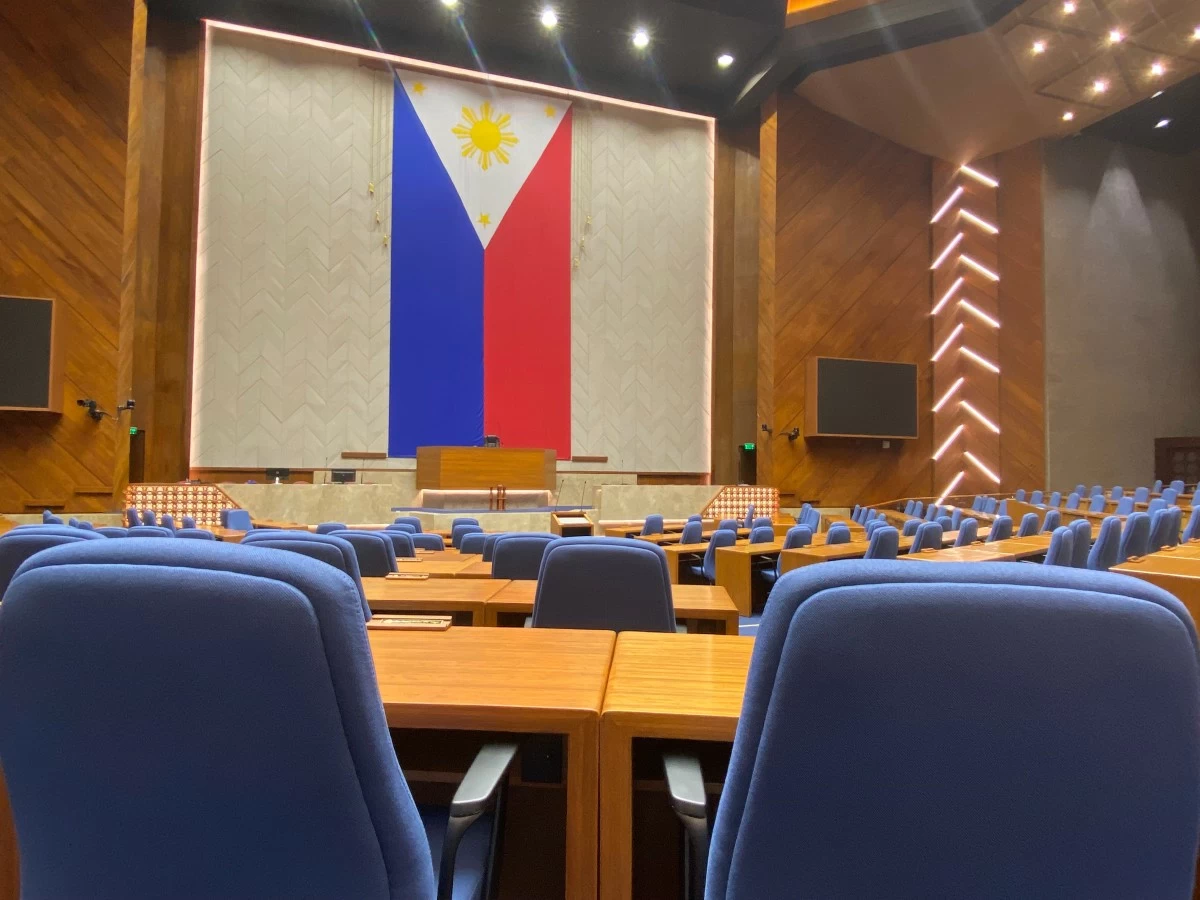
The House plenary (Contributed photo)
The House of Representatives has passed on second reading a measure that seeks to strengthen the celebrated Universal Access to Quality Tertiary Education Act by creating a voucher pathway for qualified Pantawid Pamilyang Pilipino Program (4Ps) beneficiaries who choose to study in private higher education and technical-vocational institutions.
Now one step away to its final passage in the 300-plus strong chamber is House Bill (HB) No. 8476, which was approved through voice vote (ayes vs. nayes) during the marathon plenary session on Wednesday night, March 11.
Majority Leader Ilocos Norte 1st idistrict Rep. Sandro Marcos says the bill seeks to ensure that academic potential among poor households does not stall at senior high school because of tuition.
Marcos says that the measure is part of the Legislative-Executive Development Advisory Council's (LEDAC) Common Legislative Agenda.
“Under [House] Speaker [Faustino "Bojie"] Dy [III], we are pushing bills that speak the language of daily life, ‘yung ginhawang nararamdaman sa bahay, sa eskuwela at sa trabaho [the kind of relief that can be felt at home, at school, and at work),” Marcos said.
HB No. 8476 is a substitute bill that reforms the Tertiary Education Subsidy (TES) program under the Universal Access to Quality Tertiary Education Act. It introduces a voucher system for poor but academically qualified students who opt to study in private schools.
In his sponsorship speech Wednesday, Tingog Party-list Rep. Jude Acidre, chairman of the House Committee on Technical and Higher Education, framed the measure as a practical clean-up of the TES. It is meant to remove the usual hindrance that poor but capable students encounter.
“The substitute bill before us therefore seeks to strengthen the TES program through several key reforms,” Acidre said.
"First, the measure prioritizes and automatically includes students from households under the Pantawid Pamilyang Pilipino Program or 4Ps in the Tertiary Education Subsidy once they qualify for admission to higher education institutions recognized by the Commission on Higher Education," he noted.
His reasoning is that the poorest families should not be made to prove their hardship twice, especially when the point of the program is to spare them from being priced out of school.
“If a student already belongs to a household officially recognized by government as among the poorest in the country, then that student should not have to struggle through additional layers of verification simply to receive support for education.”
For everyone else competing for the remaining slots, Acidre argued the targeting should be updated, local, and anchored on real household data instead of guesswork or outdated lists.
“Second, for the remaining TES slots, the bill introduces a more accurate and updated targeting mechanism by utilizing the Community-Based Monitoring System or CBMS, established under Republic Act (RA) No. 11315," he noted.
Acidre presented CBMS as a way to rank applicants more fairly because it lets government see per capita income at the household level, not just broad categories.
The second-term solon also made room for families who may fall through the cracks of any database, so that the lack of a record does not automatically mean loss of a chance.
"At the same time, the measure ensures that students who may not yet be captured by the CBMS database may still qualify for TES, subject to income verification guidelines to be issued by the UniFAST Board," he explained.
Acidre then shifted to the reality of geography, where a student’s hometown can decide whether college was even an option.
“Third, the bill addresses a geographic inequality that has long been raised by students from underserved areas. Many municipalities still do not have campuses of State Universities and Colleges, Local Universities and Colleges, or public technical-vocational institutions.”
From there, he introduced the voucher feature as a flexibility tool, as he recognized that private schools fill the gaps in access and programs, especially in locations where public options were limited or mismatched.
“In addition, the measure introduces a voucher mechanism that allows academically qualified but economically disadvantaged students to enroll in private higher education institutions or technical-vocational institutions, even in areas where public institutions already exist," he said.
“This recognizes a simple reality: while public institutions remain the backbone of our higher education system, the private sector continues to play an important role in expanding access and offering specialized programs.”
Finally, he addressed the anxiety that eats away at beneficiaries--the fear that support will disappear midstream. The sponsor pushed for continuity so students can finish what they started.
“The substitute bill provides that once a student qualifies for TES, the subsidy shall continue until the student completes his or her program, provided that academic and residency requirements are met,” he said.