






Manila Bulletin
 Philippines
National
PH pushes broader civil-military disaster coordination at ASEAN meeting
Philippines
National
PH pushes broader civil-military disaster coordination at ASEAN meeting
Philippines
National
PH pushes broader civil-military disaster coordination at ASEAN meeting
PH pushes broader civil-military disaster coordination at ASEAN meeting
Published Mar 11, 2026 04:54 pm


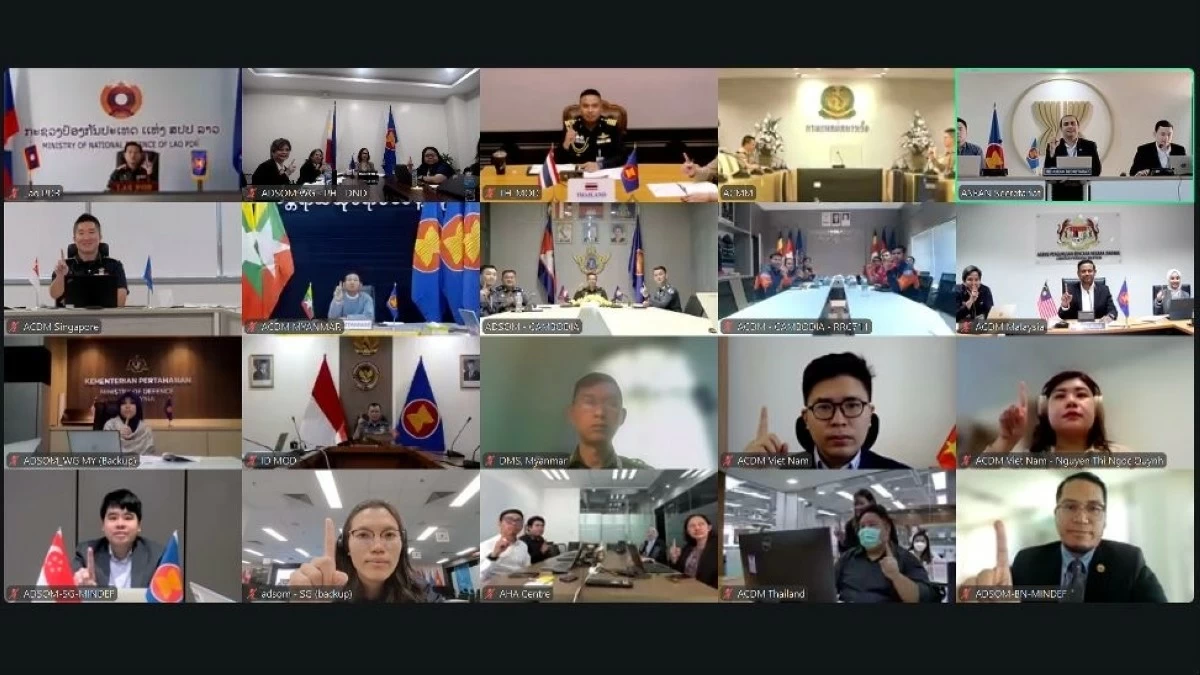
(Courtesy: Department of National Defense)
The Philippines called for stronger regional cooperation on disaster response as it led a key Association of Southeast Asian Nations (ASEAN) meeting that, for the first time, included representatives from the health sector.
Department of National Defense (DND) Assistant Secretary for International Affairs Marita I. Yoro, in her capacity as chair of the ASEAN Defense Senior Officials’ Meeting Working Group (ADSOM WG), co-chaired the 22nd Meeting of the ASEAN Technical Working Group (TWG) on Civil-Military Coordination (CIMIC) on Tuesday, March 10, via video teleconference.
Yoro led the discussions alongside Malaysian, Myanmar, and Singaporean co-chairs of the ASEAN Committee on Disaster Management (ACDM) Working Group on Preparedness, Response, and Recovery (WG on PRR).
The TWG on CIMIC gathered representatives from defense establishments and national disaster management organizations of all ASEAN member states to strengthen cross-sector coordination in responding to disasters across the region.
The DND said this year’s meeting marked the first time that representatives from the ASEAN health sector joined the discussions. The development reflected the expansion of cooperation under the TWG on CIMIC toward a broader disaster management structure, it noted.
During the meeting, Yoro said the region must “better leverage the collective capacity of the region to facilitate stronger responses to current and emerging challenges,” in line with the theme of the Philippines’ ASEAN 2026 chairship, “Navigating Our Future, Together,” and in alignment with the vision of “One ASEAN, One Response.”
The TWG on CIMIC serves as a platform where civilian disaster agencies and military establishments coordinate humanitarian assistance and disaster relief (HADR) operations.
The mechanism seeks to ensure that the armed forces’ logistics, transport, and rapid deployment capabilities complement civilian disaster response systems.
In the area of disaster management, Yoro acknowledged that civil-military collaboration remains a cornerstone in mitigating risks and ensuring swift responses.
“In this light, Assistant Secretary Yoro reaffirmed the commitment of the ASEAN Defense Sector to supporting the work of the TWG on CIMIC and broader ASEAN efforts to reduce disaster losses while undertaking efforts to respond faster and deliver aid more effectively,” the DND noted.
Officials also discussed recent HADR initiatives under existing ASEAN civil and defense mechanisms.
The participants reviewed the progress of civil-military coordination efforts and proposed ways to improve interoperability among regional response systems.
The TWG on CIMIC operates through two major ASEAN bodies: one is the ADSOM, which functions under the ASEAN Political-Security Community pillar and serves as a key policy-making body for the region’s defense sector.
The other is the ACDM, which works under the ASEAN Socio-Cultural Community pillar. The committee leads the implementation of the ASEAN Agreement on Disaster Management and Emergency Response, the bloc’s legally binding framework for joint disaster response.
Through these mechanisms, the DND said that ASEAN members aim to coordinate military and civilian capabilities during emergencies with the goal of speeding up relief operations and reducing disaster losses across the region.