







Oil deregulation law needs guardrails
Published Mar 11, 2026 12:05 am
|
Updated Mar 10, 2026 05:15 pm


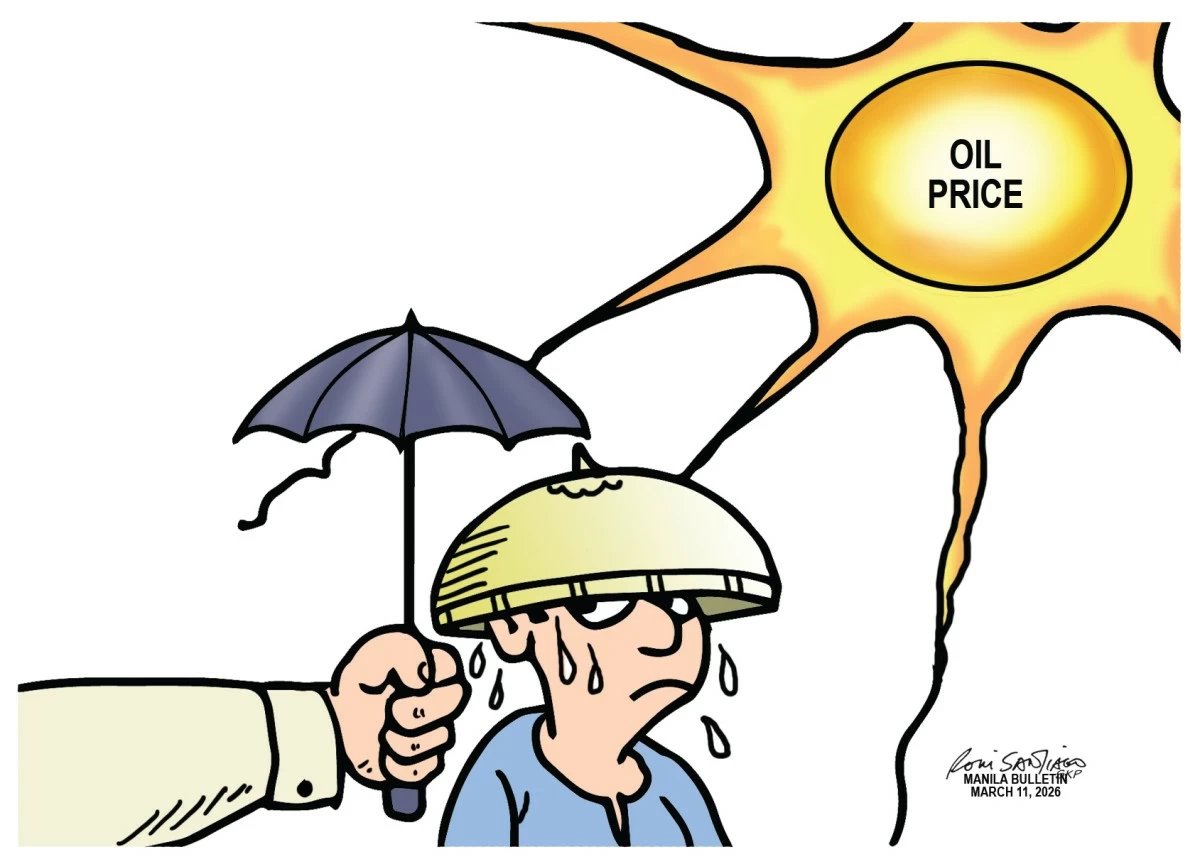
The sharp plunge of the Philippine stock market this week was the immediate effect of the oil price shock brought about by the Middle East tension—a clear warning sign that the government must act swiftly to address the situation. As oil prices surge amid geopolitical tensions and the peso sinks to new lows, the consequences are expected to quickly ripple beyond the trading floors. Transport fares, food prices, and the cost of nearly every basic necessity are expected to follow suit. Yet at the very moment when the public needs protection, the government’s hands are largely tied.
The culprit is not only the volatility of global oil markets. It is the rigid design of the Downstream Oil Industry Deregulation Act of 1998, a law crafted in an era that assumed market competition alone would protect consumers. Nearly three decades later, experience shows that deregulation without safeguards leaves the public dangerously exposed during price shocks.
The law’s core philosophy—letting market forces determine prices—was intended to encourage competition, attract investment, and ensure supply security. In many respects, it succeeded. The Philippine oil sector became more competitive, with numerous players entering a market once dominated by a few giants. But the law also created a system where the government’s role is reduced largely to monitoring prices rather than helping shape them.
When global oil prices spike overnight, as they often do during geopolitical conflicts, domestic pump prices follow almost immediately. Oil companies justify these increases through replacement cost accounting, pricing existing inventory based on the cost of the next shipment rather than the cost at which the fuel was purchased. From a business perspective, the logic is sound. From the perspective of consumers suddenly facing higher transport fares and food prices, it feels detached from reality.
The real problem lies in the absence of emergency guardrails. The deregulation law offers no clear mechanism for temporary government intervention when extraordinary global events threaten economic stability. In times of extreme volatility, public interest should not be left entirely at the mercy of the market.
This does not mean abandoning deregulation. What it requires is modernization.
First, the law must include an emergency stabilization mechanism. In periods of extreme price shocks—triggered by war, supply disruptions, or extraordinary currency depreciation—the government should be authorized to implement temporary price bands or caps. These measures would not dictate permanent pricing but would act as shock absorbers, preventing sudden spikes that ripple through the entire economy.
Second, transparency in pricing must be strengthened. Oil companies should be required to disclose more detailed pricing components, including inventory costs, shipping expenses, and margins. Greater transparency would help regulators and the public understand whether price increases truly reflect global costs or include opportunistic markups.
Third, the law should empower the Department of Energy with stronger oversight tools. Monitoring alone is insufficient. Regulators must be able to investigate pricing behavior more deeply, enforce penalties for unjustified adjustments, and ensure that competition remains genuine rather than concentrated among a few dominant players.
The responsibility, however, does not fall solely on the government.
Private oil companies must recognize that they operate in a sector vital to national welfare. During extraordinary crises, corporate responsibility should go beyond strict market logic. Voluntary measures—such as moderating margins, staggering price adjustments, or supporting targeted fuel discounts for public transport—can help cushion the public without undermining the industry’s viability.
After all, energy is not purely a commodity; it powers the entire economy.
The oil deregulation law was written for a different time. Today’s volatile global landscape demands a smarter framework—one that preserves market efficiency but equips the government with tools to act when the public is most vulnerable.
True deregulation should not mean government paralysis. It should mean a market that works, especially when the world does not.