ADVERTISEMENT

Marcos to certify emergency powers bill urgent

Published Mar 11, 2026 09:51 am
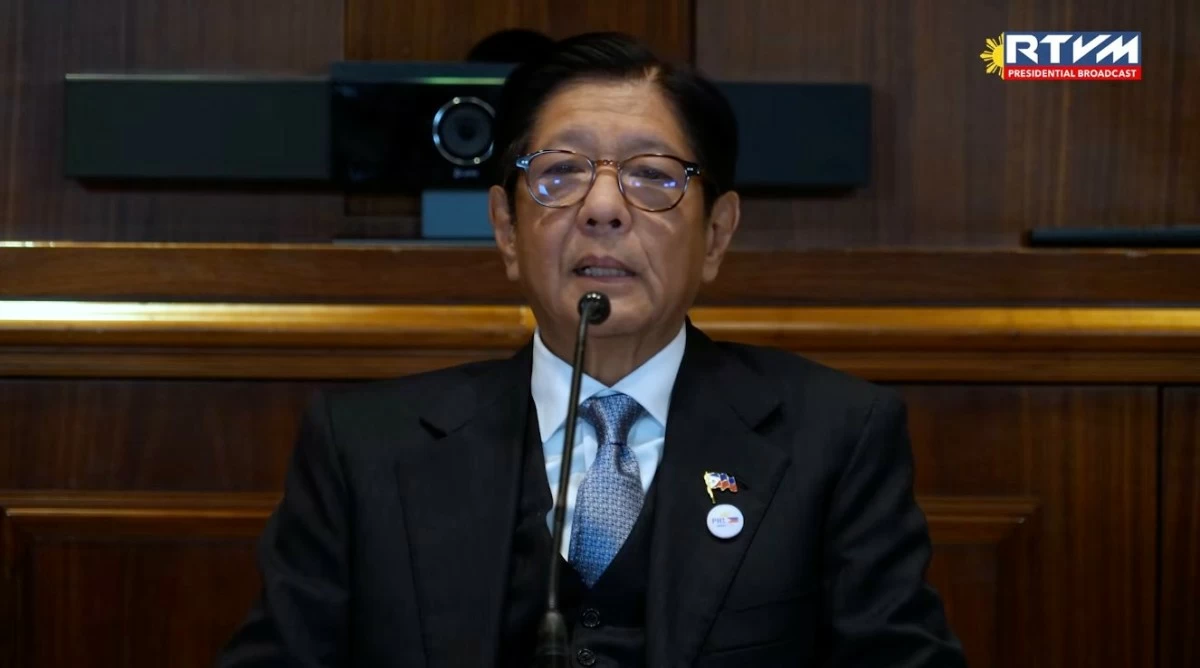
President Ferdinand 'Bongbong' Marcos Jr. (RTVM)
President Marcos said he would certify as urgent a proposed emergency powers bill aimed at enabling the government to respond quickly to spikes in global oil prices brought about by the tension in the Middle East.
Speaking to reporters in New York on Tuesday, March 10 (New York time), the President said the certification would be issued once both chambers of Congress complete their committee reports on the measure.
“I will declare it as urgent because there's no point declaring it as urgent before the committee report has been completed,” he said.
“The minute that you have completed your committee reports… that’s when the declaration of the bill as urgent really goes into effect,” he added.
Under the Constitution, the President’s certification allows Congress to bypass the requirement of three separate readings of a bill on different days, enabling lawmakers to fast-track legislation considered critical.
Marcos said the government’s request for emergency powers is intended to give the executive branch flexibility to act quickly if global oil prices surge.
“It’s very, very simple. What we asked of the legislature is really very simple,” the President said.
He explained that the proposed measure would allow the government to exercise emergency powers if oil prices breach a certain threshold.
“When the price of oil… has breached $80 per barrel on average for a month, then the emergency powers can be exercised,” Marcos said.
The President clarified, however, that reaching the price threshold would not automatically trigger the use of emergency powers.
The proposal comes as the government closely monitors global oil markets amid geopolitical tensions and supply uncertainties that could push fuel prices higher and affect transportation costs as well as the prices of basic goods.

Seeking alternative oil suppliers

Marcos also said the Philippines is looking for alternative oil suppliers to ensure a stable fuel supply amid global market uncertainty.
“We are talking to many other countries who we normally do not buy oil from, but hopefully we will be able to come to an agreement with them and that we will get further supply from them,” he said.
The President acknowledged that the main challenge is the unpredictability of global oil prices amid ongoing geopolitical tensions.
“The real problem here that everybody is having to deal with is hindi natin alam kung gaano katagal ito (we do not know how long this will last),” he said.
He noted that uncertainty over how long tensions could continue or escalate into broader conflict makes it difficult to accurately forecast oil prices, affecting planning for both oil suppliers and financial markets worldwide.
Despite the volatility, the President said the government remains committed to ensuring a stable and affordable oil supply for the country.

Related Tags

President Marcos Bongbong Marcos emergency powers Oil price hike certify as urgent
ADVERTISEMENT
.most-popular .layout-ratio{ padding-bottom: 79.13%; } @media (min-width: 768px) and (max-width: 1024px) { .widget-title { font-size: 15px !important; } }

{{ articles_filter_1561_widget.title }}

.most-popular .layout-ratio{ padding-bottom: 79.13%; } @media (min-width: 768px) and (max-width: 1024px) { .widget-title { font-size: 15px !important; } }

{{ articles_filter_1562_widget.title }}

.most-popular .layout-ratio{ padding-bottom: 79.13%; } @media (min-width: 768px) and (max-width: 1024px) { .widget-title { font-size: 15px !important; } }

{{ articles_filter_1563_widget.title }}

{{ articles_filter_1564_widget.title }}

.mb-article-details { position: relative; } .mb-article-details .article-body-preview, .mb-article-details .article-body-summary{ font-size: 17px; line-height: 30px; font-family: "Libre Caslon Text", serif; color: #000; } .mb-article-details .article-body-preview iframe , .mb-article-details .article-body-summary iframe{ width: 100%; margin: auto; } .read-more-background { background: linear-gradient(180deg, color(display-p3 1.000 1.000 1.000 / 0) 13.75%, color(display-p3 1.000 1.000 1.000 / 0.8) 30.79%, color(display-p3 1.000 1.000 1.000) 72.5%); position: absolute; height: 200px; width: 100%; bottom: 0; display: flex; justify-content: center; align-items: center; padding: 0; } .read-more-background a{ color: #000; } .read-more-btn { padding: 17px 45px; font-family: Inter; font-weight: 700; font-size: 18px; line-height: 16px; text-align: center; vertical-align: middle; border: 1px solid black; background-color: white; } .hidden { display: none; }
function initializeAllSwipers() { // Get all hidden inputs with cms_article_id document.querySelectorAll('[id^="cms_article_id_"]').forEach(function (input) { const cmsArticleId = input.value; const articleSelector = '#article-' + cmsArticleId + ' .body_images'; const swiperElement = document.querySelector(articleSelector); if (swiperElement && !swiperElement.classList.contains('swiper-initialized')) { new Swiper(articleSelector, { loop: true, pagination: false, navigation: { nextEl: '#article-' + cmsArticleId + ' .swiper-button-next', prevEl: '#article-' + cmsArticleId + ' .swiper-button-prev', }, }); } }); } setTimeout(initializeAllSwipers, 3000); const intersectionObserver = new IntersectionObserver( (entries) => { entries.forEach((entry) => { if (entry.isIntersecting) { const newUrl = entry.target.getAttribute("data-url"); if (newUrl) { history.pushState(null, null, newUrl); let article = entry.target; // Extract metadata const author = article.querySelector('.author-section').textContent.replace('By', '').trim(); const section = article.querySelector('.section-info ').textContent.replace(' ', ' '); const title = article.querySelector('.article-title h1').textContent; // Parse URL for Chartbeat path format const parsedUrl = new URL(newUrl, window.location.origin); const cleanUrl = parsedUrl.host + parsedUrl.pathname; // Update Chartbeat configuration if (typeof window._sf_async_config !== 'undefined') { window._sf_async_config.path = cleanUrl; window._sf_async_config.sections = section; window._sf_async_config.authors = author; } // Track virtual page view with Chartbeat if (typeof pSUPERFLY !== 'undefined' && typeof pSUPERFLY.virtualPage === 'function') { try { pSUPERFLY.virtualPage({ path: cleanUrl, title: title, sections: section, authors: author }); } catch (error) { console.error('ping error', error); } } // Optional: Update document title if (title && title !== document.title) { document.title = title; } } } }); }, { threshold: 0.1 } ); function showArticleBody(button) { const article = button.closest("article"); const summary = article.querySelector(".article-body-summary"); const body = article.querySelector(".article-body-preview"); const readMoreSection = article.querySelector(".read-more-background"); // Hide summary and read-more section summary.style.display = "none"; readMoreSection.style.display = "none"; // Show the full article body body.classList.remove("hidden"); } document.addEventListener("DOMContentLoaded", () => { let loadCount = 0; // Track how many times articles are loaded const offset = [1, 2, 3, 4, 5, 6, 7, 8, 9, 10]; // Offset values const currentUrl = window.location.pathname.substring(1); let isLoading = false; // Prevent multiple calls if (!currentUrl) { console.log("Current URL is invalid."); return; } const sentinel = document.getElementById("load-more-sentinel"); if (!sentinel) { console.log("Sentinel element not found."); return; } function isSentinelVisible() { const rect = sentinel.getBoundingClientRect(); return ( rect.top < window.innerHeight && rect.bottom >= 0 ); } function onScroll() { if (isLoading) return; if (isSentinelVisible()) { if (loadCount >= offset.length) { console.log("Maximum load attempts reached."); window.removeEventListener("scroll", onScroll); return; } isLoading = true; const currentOffset = offset[loadCount]; window.loadMoreItems().then(() => { let article = document.querySelector('#widget_1690 > div:nth-last-of-type(2) article'); intersectionObserver.observe(article) loadCount++; }).catch(error => { console.error("Error loading more items:", error); }).finally(() => { isLoading = false; }); } } window.addEventListener("scroll", onScroll); });

Sign up by email to receive news.