

ADVERTISEMENT

Anti-Political Dynasty Law could wipe out 5,000 elected officials, says Adiong

Published Mar 11, 2026 03:44 pm

At A Glance

  • The House's proposed Anti-Political Dynasty Law could end up displacing over 5,000 officials linked to so-called dynastic families, Lanao del Sur 1st district Rep. Zia Alonto Adiong said in a statement Wednesday afternoon, March 11.
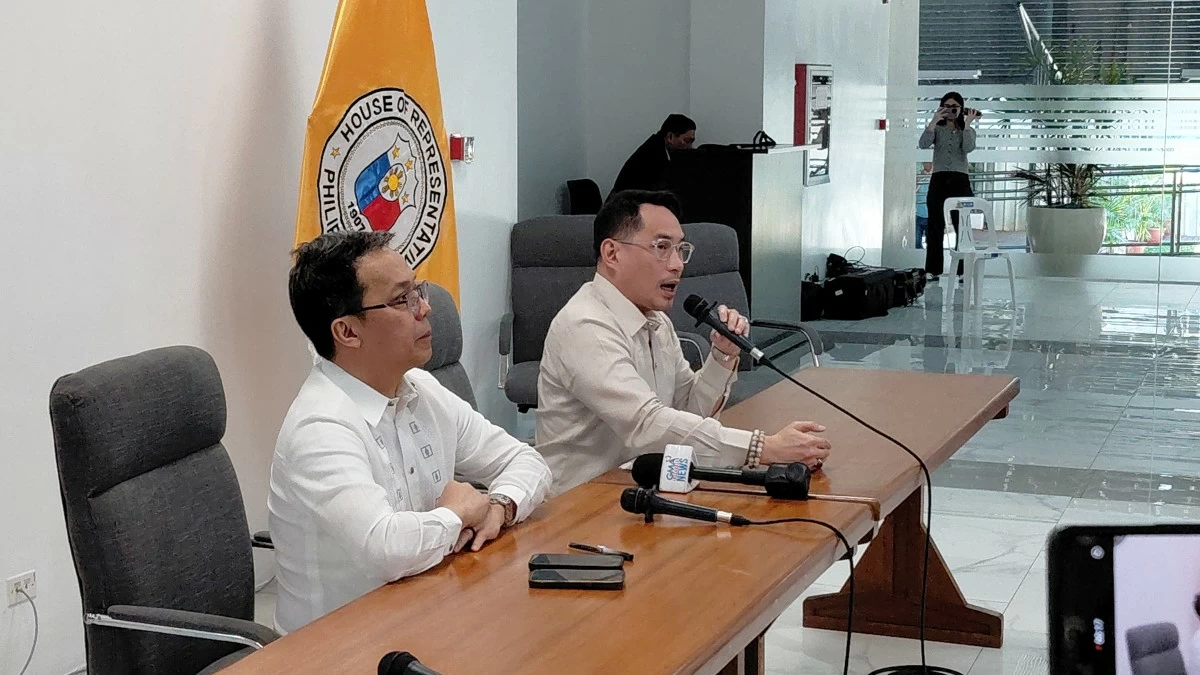
Lanao del Sur 1st district Rep. Zia Alonto Adiong (Ellson Quismorio/ MANILA BULLETIN)


The House's proposed Anti-Political Dynasty Law could end up displacing over 5,000 officials linked to so-called dynastic families, Lanao del Sur 1st district Rep. Zia Alonto Adiong said in a statement Wednesday afternoon, March 11.
“The numbers speak for themselves—and they say the Anti-Political Dynasty Bill will change the landscape of Philippine politics and governance," said Adiong, chairman of the Committee on Suffrage and Electoral Reforms.
The Mindanao lawmaker is referring House Bill (HB) No. 8389, “An Act Prohibiting Political Dynasties in National and Local Elective Offices,” which is the 20th Congress' attempt at producing--once and for all--an enabling law for the anti-political dynasty provision in the 39-year-old Constitution.
To ensure that the suffrage committee’s version was grounded in solid evidence, it collaborated closely with the Socioeconomic Research Bureau (SERB) under the Congressional Policy and Budget Research Department (CPBRD) of the House of Representatives to study the potential impact of the long-sought measure.
SERB analyzed official election data directly from the Commission on Elections (Comelec), which covered provincial, district, and municipal positions.
The preliminary findings of SERB show that 9,852 out of 17,983 local-level positions--some 54.8 percent--are occupied by potential dynasts belonging to approximately 4,239 potential dynastic families.
“The data clearly shows that the committee version—with the second-degree consanguinity/affinity limitation—will have a significant impact on political dynasties. Projections indicate that over 5,000 elective positions could be vacated by individuals from political dynasties once the measure takes effect,” Adiong said.
“The CPBRD is expected to release their full paper in the coming days, but the preliminary findings submitted to us already confirm the substantial reach and feasibility of this approach. We have emphasized this in our media briefings and public hearings: the second-degree limit is both implementable and meaningful," he said.
This assessment is consistent with data shared recently by the League of Municipalities of the Philippines (LMP).
The LMP surveyed municipal mayors from 1,493 municipalities and found that approximately 917 mayors (61 percent) currently serve in jurisdictions where they have immediate or extended family members with a history of elective office.
The group further disclosed that based on survey results, 39 percent came from non-dynastic backgrounds.
“Given the data we have, we can see that it is inaccurate to say that the committee version will not have an impact. The numbers say otherwise. The evidence proves that the second-degree provision strikes the right balance: it is stringent enough to open real opportunities for new leaders while remaining implementable," Adiong said.
ADVERTISEMENT
.most-popular .layout-ratio{ padding-bottom: 79.13%; } @media (min-width: 768px) and (max-width: 1024px) { .widget-title { font-size: 15px !important; } }

{{ articles_filter_1561_widget.title }}

.most-popular .layout-ratio{ padding-bottom: 79.13%; } @media (min-width: 768px) and (max-width: 1024px) { .widget-title { font-size: 15px !important; } }

{{ articles_filter_1562_widget.title }}

.most-popular .layout-ratio{ padding-bottom: 79.13%; } @media (min-width: 768px) and (max-width: 1024px) { .widget-title { font-size: 15px !important; } }

{{ articles_filter_1563_widget.title }}

{{ articles_filter_1564_widget.title }}

.mb-article-details { position: relative; } .mb-article-details .article-body-preview, .mb-article-details .article-body-summary{ font-size: 17px; line-height: 30px; font-family: "Libre Caslon Text", serif; color: #000; } .mb-article-details .article-body-preview iframe , .mb-article-details .article-body-summary iframe{ width: 100%; margin: auto; } .read-more-background { background: linear-gradient(180deg, color(display-p3 1.000 1.000 1.000 / 0) 13.75%, color(display-p3 1.000 1.000 1.000 / 0.8) 30.79%, color(display-p3 1.000 1.000 1.000) 72.5%); position: absolute; height: 200px; width: 100%; bottom: 0; display: flex; justify-content: center; align-items: center; padding: 0; } .read-more-background a{ color: #000; } .read-more-btn { padding: 17px 45px; font-family: Inter; font-weight: 700; font-size: 18px; line-height: 16px; text-align: center; vertical-align: middle; border: 1px solid black; background-color: white; } .hidden { display: none; }
function initializeAllSwipers() { // Get all hidden inputs with cms_article_id document.querySelectorAll('[id^="cms_article_id_"]').forEach(function (input) { const cmsArticleId = input.value; const articleSelector = '#article-' + cmsArticleId + ' .body_images'; const swiperElement = document.querySelector(articleSelector); if (swiperElement && !swiperElement.classList.contains('swiper-initialized')) { new Swiper(articleSelector, { loop: true, pagination: false, navigation: { nextEl: '#article-' + cmsArticleId + ' .swiper-button-next', prevEl: '#article-' + cmsArticleId + ' .swiper-button-prev', }, }); } }); } setTimeout(initializeAllSwipers, 3000); const intersectionObserver = new IntersectionObserver( (entries) => { entries.forEach((entry) => { if (entry.isIntersecting) { const newUrl = entry.target.getAttribute("data-url"); if (newUrl) { history.pushState(null, null, newUrl); let article = entry.target; // Extract metadata const author = article.querySelector('.author-section').textContent.replace('By', '').trim(); const section = article.querySelector('.section-info ').textContent.replace(' ', ' '); const title = article.querySelector('.article-title h1').textContent; // Parse URL for Chartbeat path format const parsedUrl = new URL(newUrl, window.location.origin); const cleanUrl = parsedUrl.host + parsedUrl.pathname; // Update Chartbeat configuration if (typeof window._sf_async_config !== 'undefined') { window._sf_async_config.path = cleanUrl; window._sf_async_config.sections = section; window._sf_async_config.authors = author; } // Track virtual page view with Chartbeat if (typeof pSUPERFLY !== 'undefined' && typeof pSUPERFLY.virtualPage === 'function') { try { pSUPERFLY.virtualPage({ path: cleanUrl, title: title, sections: section, authors: author }); } catch (error) { console.error('ping error', error); } } // Optional: Update document title if (title && title !== document.title) { document.title = title; } } } }); }, { threshold: 0.1 } ); function showArticleBody(button) { const article = button.closest("article"); const summary = article.querySelector(".article-body-summary"); const body = article.querySelector(".article-body-preview"); const readMoreSection = article.querySelector(".read-more-background"); // Hide summary and read-more section summary.style.display = "none"; readMoreSection.style.display = "none"; // Show the full article body body.classList.remove("hidden"); } document.addEventListener("DOMContentLoaded", () => { let loadCount = 0; // Track how many times articles are loaded const offset = [1, 2, 3, 4, 5, 6, 7, 8, 9, 10]; // Offset values const currentUrl = window.location.pathname.substring(1); let isLoading = false; // Prevent multiple calls if (!currentUrl) { console.log("Current URL is invalid."); return; } const sentinel = document.getElementById("load-more-sentinel"); if (!sentinel) { console.log("Sentinel element not found."); return; } function isSentinelVisible() { const rect = sentinel.getBoundingClientRect(); return ( rect.top < window.innerHeight && rect.bottom >= 0 ); } function onScroll() { if (isLoading) return; if (isSentinelVisible()) { if (loadCount >= offset.length) { console.log("Maximum load attempts reached."); window.removeEventListener("scroll", onScroll); return; } isLoading = true; const currentOffset = offset[loadCount]; window.loadMoreItems().then(() => { let article = document.querySelector('#widget_1690 > div:nth-last-of-type(2) article'); intersectionObserver.observe(article) loadCount++; }).catch(error => { console.error("Error loading more items:", error); }).finally(() => { isLoading = false; }); } } window.addEventListener("scroll", onScroll); });

Sign up by email to receive news.