






Manila Bulletin
 Philippines
National
Quimbo renews call to revisit Oil Deregulation Law amid fuel price shocks
Philippines
National
Quimbo renews call to revisit Oil Deregulation Law amid fuel price shocks
Philippines
National
Quimbo renews call to revisit Oil Deregulation Law amid fuel price shocks
Quimbo renews call to revisit Oil Deregulation Law amid fuel price shocks
Published Mar 10, 2026 09:58 am


At A Glance
- The Middle East conflict-triggered fuel price crisis has led to renewed calls to revisit the Oil Deregulation Law, at least from House Committee on Ways and Means Chairman Marikina City 2nd district Rep. Miro Quimbo.
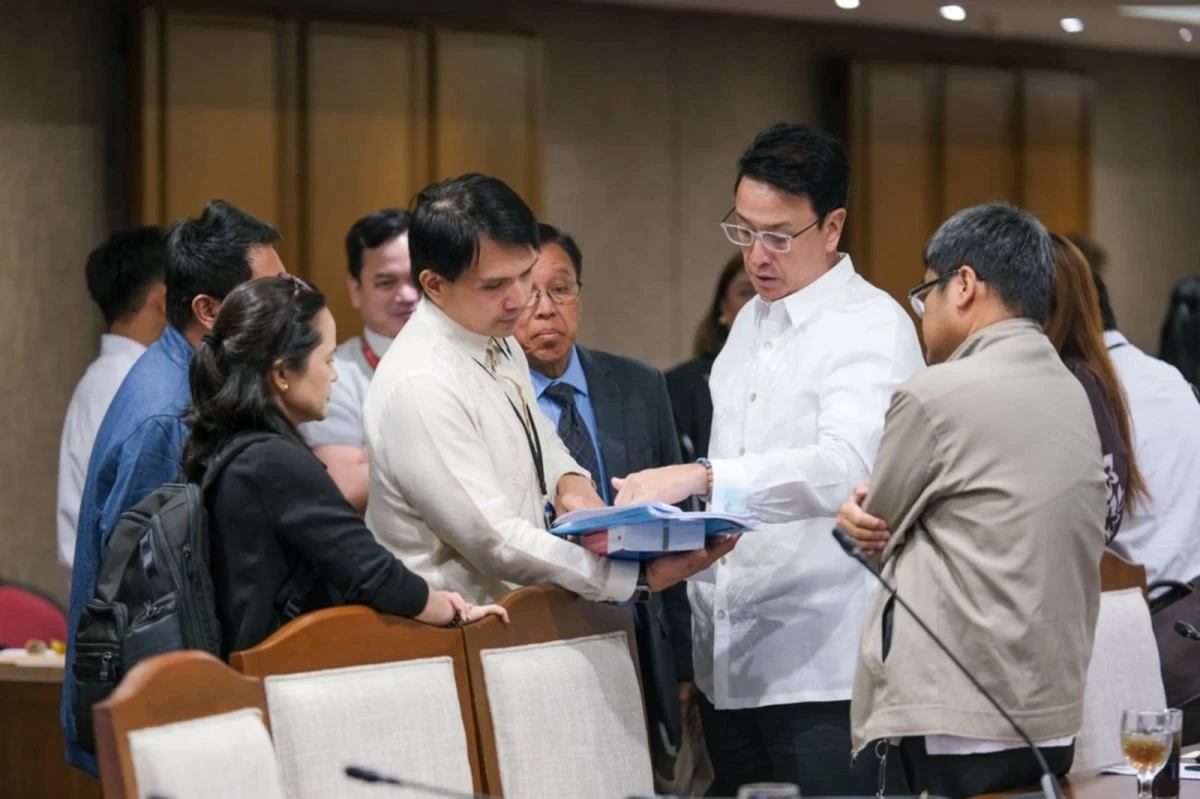
Marikina City 2nd district Rep. Miro Quimbo (2nd from right) speaks to his colleagues on the sidelines of the committee hearing (Rep. Quimbo's office)
The Middle East conflict-triggered fuel price crisis has led to renewed calls to revisit the Oil Deregulation Law, at least from House Committee on Ways and Means Chairman Marikina City 2nd district Rep. Miro Quimbo.
During a briefing of the Department of Energy (DOE) with the ways and means panel Monday, March 10, agency officials repeated their usual admission that the 28-year-old law prevented them from controlling fuel price spikes.
In response, Quimbo reckoned that a review of the law was needed to empower the government to take the necessary measures that will cushion the effects of the continuing increases in pump prices.
“Kung walang power ang gobyerno para i-regulate ang presyo, ibig sabihin kailangan natin i-review ang oil deregulation law para magkaroon kayo ng power to be able to enforce especially in extraordinary times,” the veteran lawmaker said.
(If the government has no power to regulate prices, then we need to review the oil deregulation law so that you will have the authority to enforce regulation, especially in extraordinary times.)
Formally known as Republic Act (RA) No. 8479 or the Downstream Industry Deregulation Act of 1998, the law removes government control to help oil companies become more competitive with their supply and pricing of petroleum products.
There has been numerous calls in the past to tweak, if not outright repeal, the oil deregulation law, particularly when world crude prices become volatile.
Last January, House Majority Leader Ilocos Norte 1st district Rep. Sandro Marcos identified the proposed amendments to RA No. 8479 as a Legislative-Executive Development Advisory Council (LEDAC) priority measure in the current 20th Congress.
On Monday, DOE Secretary Sharon Garin told the committee that oil companies were poised to increase pump fuel prices this week by a staggering P17 to P24 per liter. If its any consolation, she said the oil firms have agreed to implement the hike on a staggered or instalment basis.
"Quimbo, however, pointed out that the implementation of the staggered fuel price increases was only an agreement between the DOE and the oil companies, and did not provide any sanction under the law should an oil firm step away from the deal.
“Parang informal na usapan between the DOE and the big oil companies, tama? At tinatalaga ninyo ito pag Tuesday para mas predictable? Pero in reality, pwede nilang hindi sundin ‘yan, tama?” Quimbo asked.
(It's like an informal arrangement between the DOE and the big oil companies, correct? And you set it on Tuesdays to make it more predictable? But in reality, they can choose not to follow it, right?)
“So, halimbawa mayroon kayong nailagay na diyan na dapat ito lang ang presyo at pag may nahuli tayo o may nakita tayo na mas mataas ang pagbenta, wala tayong karapatan under the law para parusahan sila at sabihin na they’re in violation of a specific law,” he noted.
(So, for example, if you’ve set a price limit there and we catch or see someone selling at a higher price, under the law we have no right to punish them or declare that they’re in violation of a specific law.)
Garin said during the hearing: "It's a deregulated industry, we do not have the powers to regulate the price. We monitor, they report, they justify, but DOE does not have teeth in that sense because of the law."