







Negros Oriental shifts to 4-day work week
Published Mar 10, 2026 03:45 pm


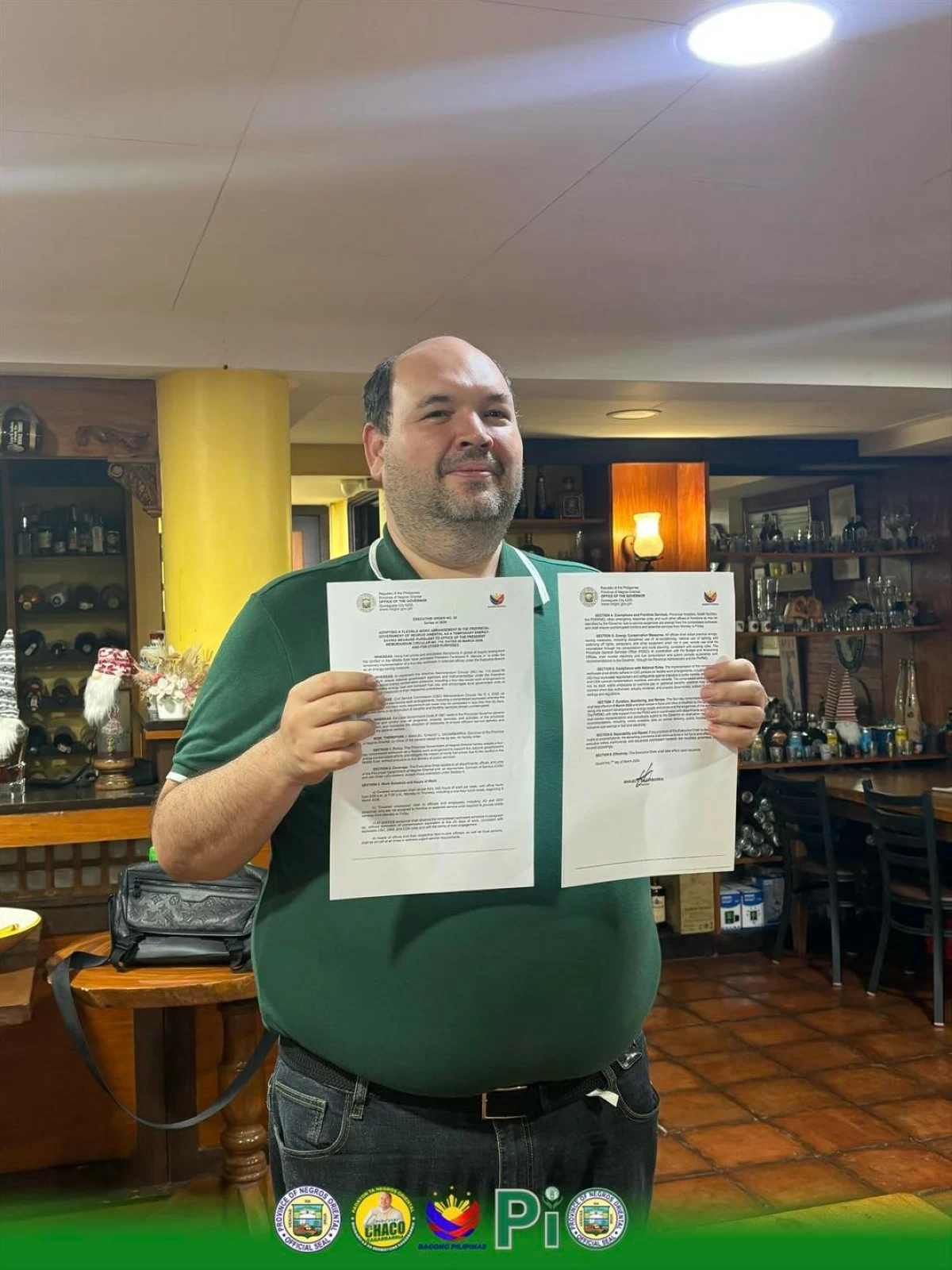
SAGARBARRIA (FB)
BACOLOD CITY – The provincial government of Negros Oriental has implemented a four-day work week beginning Monday, March 9, to mitigate the impact of rising fuel prices due to the conflict in the Middle East.
Gov. Manuel “Chaco” Sagarbarria signed an executive order on Monday adopting a flexible work arrangement in the provincial government as a temporary energy-saving measure in support of the national government’s call for stronger energy conservation efforts.
Under the order, provincial government employees shall render 40 hours of work per week, and will report to work from Monday to Thursday, from 8 a.m. to 7 p.m., including a one-hour lunch break.
Heads of offices and their next-in-rank officials, as well as focal persons, shall be on call at all times to address urgent service requirements.
Sagarbarria said the move aims to reduce electricity consumption, including disciplined use of air-conditioning, rational use of lighting, and switching off lights, computers, and other equipment when not in use, and operational costs in government offices.
He also said that vehicle use shall be rationalized through trip consolidation and route planning, consistent with existing rules.
However, the four-day work week will not apply to frontline offices and essential services to ensure that public services remain uninterrupted for the people of Negros Oriental.
In a video message posted on social media, Sagarbarria said the matter was thoroughly discussed with employees.
He added that the move would allow employees to spend more time with their families and plan activities together.
Sagarbarria said this will also save expenses, especially for employees traveling from far away, since fares of public transportation might also increase.
“We don’t know what will happen because of the war and the major effects or backlash it could cause,” he added.
The governor cited a similar situation during the pandemic, when government offices also operated with limited schedules to help prevent the spread of the virus.
“This is something of an experiment that has to be done, but this will pass,” he said.
He added that they will await the directive of President Ferdinand R. Marcos Jr. once the country has stabilized the oil prices.
“When everything returns to normal, we will go back to how it was before,” he said.