







Filipino Women complete genAI courses at higher rates
Published Mar 10, 2026 08:49 am


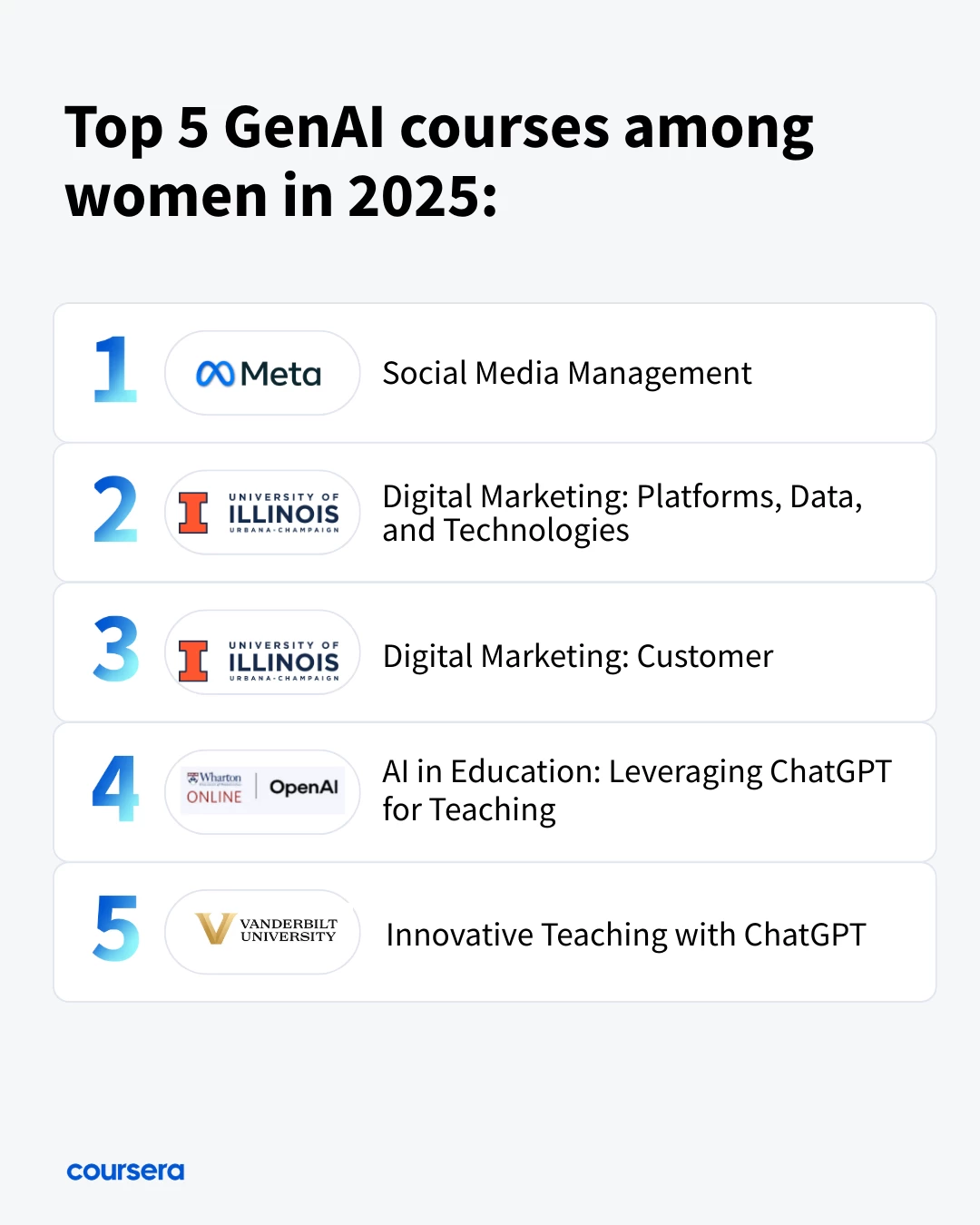
Filipino women who enroll in generative AI (GenAI) courses complete them at rates 0.3 percentage points higher than their male counterparts, according to new data released by Coursera, the global online learning platform listed on the New York Stock Exchange. The finding, published in the report "One Year Later: The Gender Gap in GenAI," comes as women still account for less than 40% of all GenAI course enrollments in the Philippines, highlighting a gap driven more by access than by willingness or ability to learn.
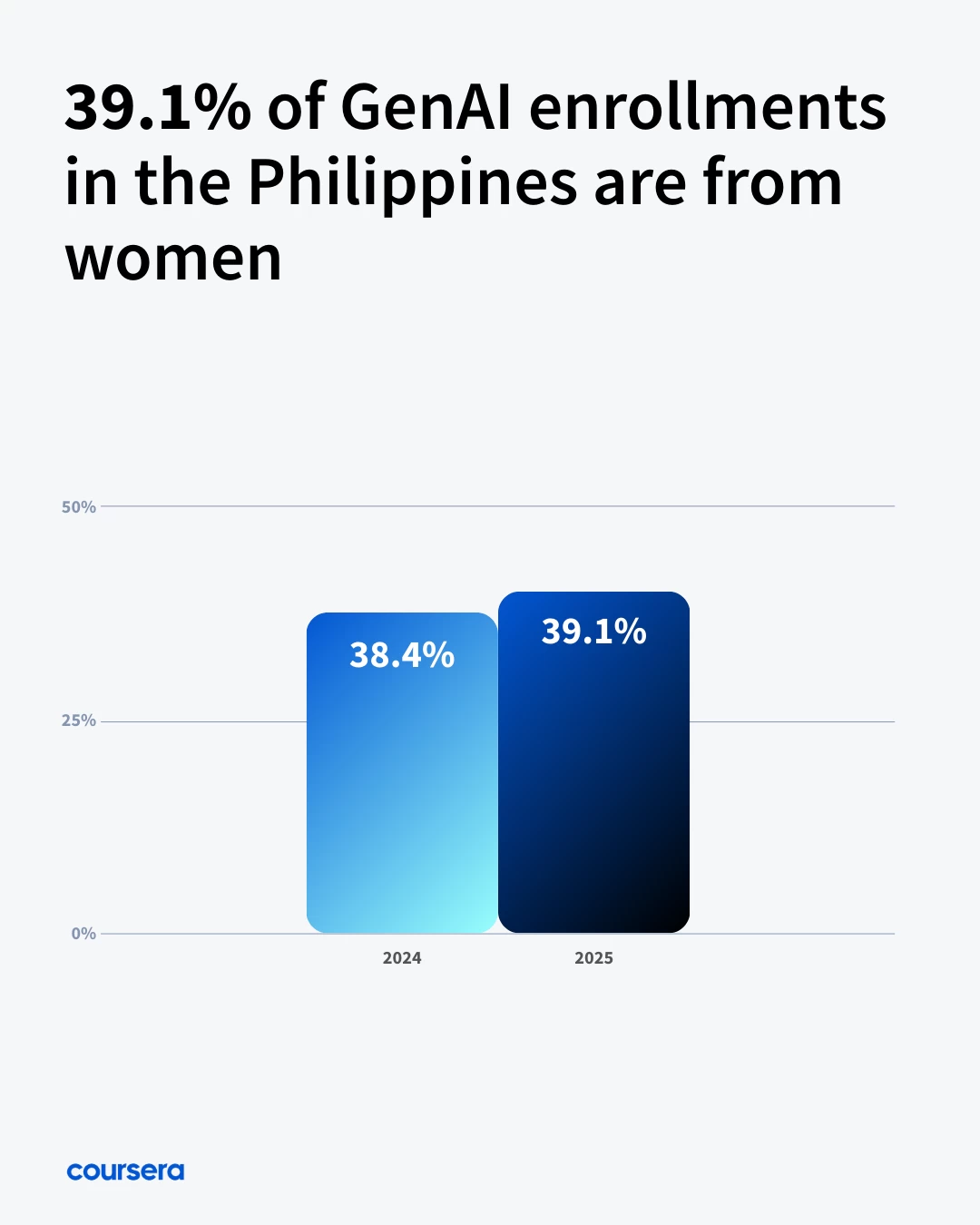
The report tracks progress a full year after Coursera's initial "Closing the Gender Gap in GenAI Skills" playbook was published. In 2025, women made up 39.1% of GenAI course enrollments in the Philippines, up from 38.4% in 2024, a gain of 0.8 percentage points year over year. While enrollment parity remains out of reach, the stronger completion figures indicate that once Filipino women gain a foothold in AI education, they follow through at rates that exceed their male peers.
The Philippines already holds a notable position in global gender equality rankings. According to the World Economic Forum's Global Gender Gap Report 2025, the country ranks 20th worldwide, reflecting sustained advances in women's education and economic participation. As artificial intelligence reshapes industries and labor markets across Southeast Asia, the Coursera data suggests that extending AI learning pathways to Filipino women could yield significant dividends for the country's broader digital economy ambitions.
Course Design Shapes Who Shows Up
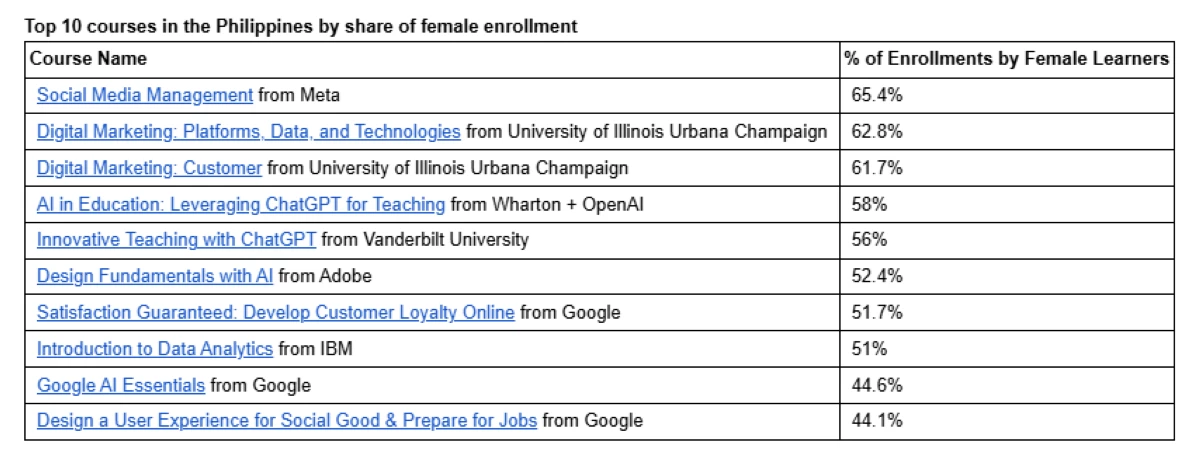
One of the report's clearest signals is that how GenAI is taught matters as much as whether it is taught at all. Beginner-friendly courses that emphasize real-world application consistently attract stronger female participation. Meta's Social Media Management course, for example, achieved 65.4% female enrollment in the Philippines, the highest of any GenAI-adjacent course tracked in the report.
Across the Coursera platform, GenAI courses tied to practical domains — education, productivity, workplace tools, and creative work, have seen female participation approach parity in some cases. The pattern suggests that when AI is framed as a tangible tool for solving everyday problems rather than an abstract technical discipline, a broader and more diverse group of learners engages.
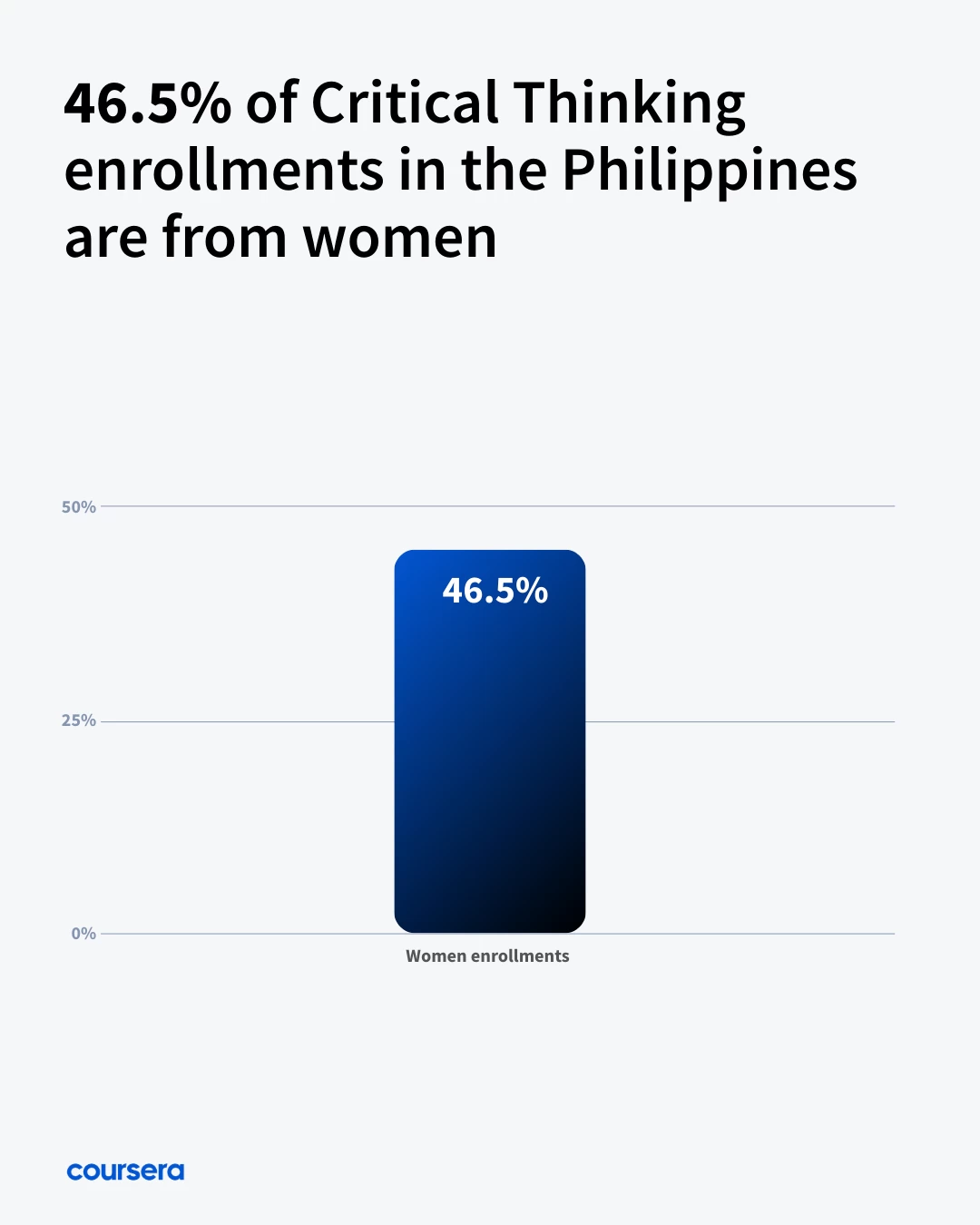
The momentum extends beyond purely technical AI courses. Filipino women account for 46.5% of critical thinking course enrollments on Coursera, a figure that points to a deliberate effort to build the complementary human skills required to use and evaluate AI systems effectively. Coursera's report frames these two tracks, technical GenAI literacy and critical reasoning, as mutually reinforcing pillars of a well-rounded AI skill set.
Based on patterns observed across learner cohorts, Coursera's report outlines several course design and access strategies for closing the remaining gap: developing beginner-level content with explicit real-world applications; prioritizing visible representation and inclusive pedagogy in course materials; expanding reach through localization and institutional partnerships; and pairing GenAI skills instruction with human capabilities like critical thinking and communication.
The data suggests that structural and design-level interventions, not remedial ones, are what's needed. Filipino women are not lagging behind because of any deficit in effort or ability. The completion rates make that clear. The remaining task is ensuring the on-ramp to GenAI education is wide enough for more of them to reach it.