







AFP says missions remain 24/7 as gov't eyes four-day workweek
Published Mar 10, 2026 03:04 pm


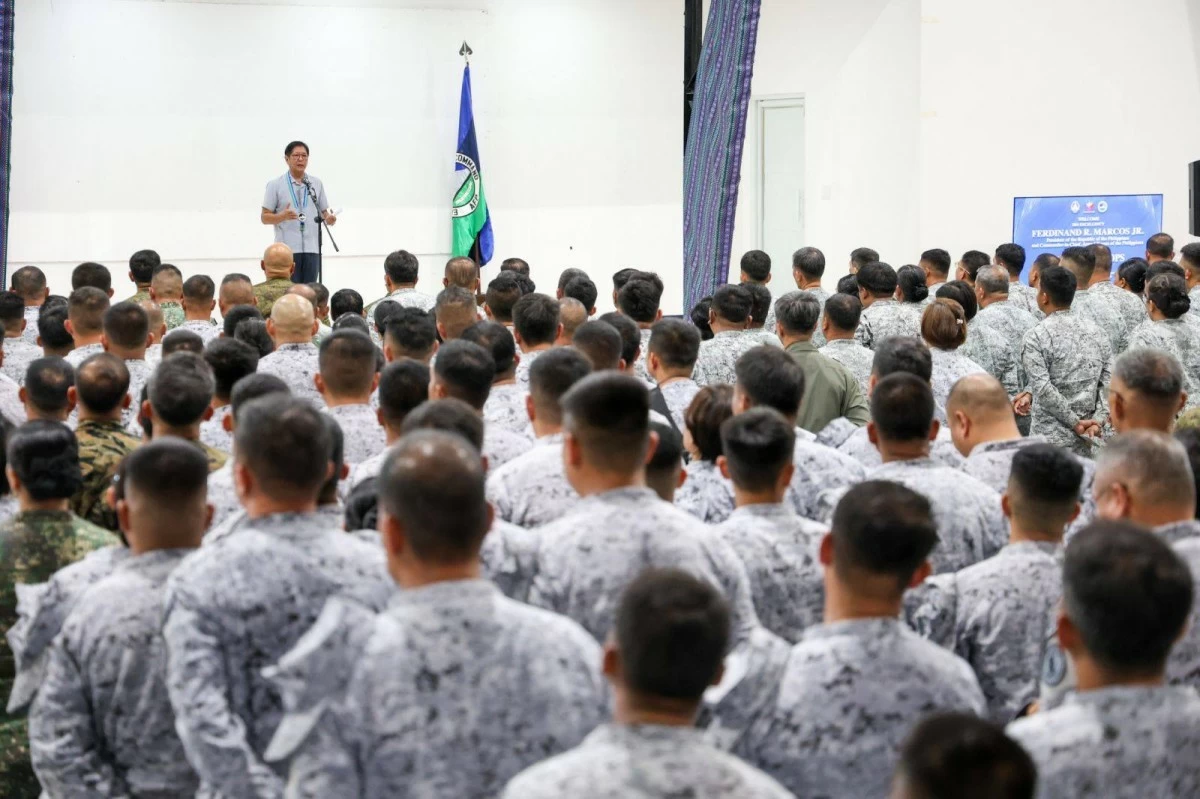
President Ferdinand R. Marcos Jr., Commander-in-Chief of the Armed Forces of the Philippines (AFP), visits the Eastern Mindanao Command (EASTMINCOM) headquarters at Naval Station Felix Apolinario in Panacan, Davao City on December 4, 2025 as part of his regular engagements to review the Command’s operational progress. (Photo: AFP)
The Armed Forces of the Philippines (AFP) said Tuesday, March 10, that its operational missions will continue round-the-clock even if the government adopts a four-day workweek for some offices.
AFP spokesperson Col. Francel Margareth Padilla said the military is waiting for official guidelines before implementing any changes in administrative work arrangements.
She noted that the AFP also employs civilian personnel who could be covered by the policy.
“Well basically, in the Armed Forces of the Philippines, we acknowledge the pronouncement regarding the adoption of a four-day workweek. So we are waiting for guidance from higher authorities,” Padilla said.
Adjustments, according to the AFP, may apply to administrative offices once guidelines are issued. However, military operations will not be affected, Padilla ensured the public.
“So while administrative offices may eventually adjust our work arrangements depending on the guidelines that will be set, our operational missions will continue 24/7. Whether it is territorial defense, disaster response, or internal security operations, we will continue to carry them out,” she said.
“In other words, we may adjust office schedules but guarding the nation cannot take a day off,” she added.
Last week, President Marcos Jr. ordered the temporary implementation of a four-day workweek in some executive branch offices starting March 9, as part of the government’s efforts to conserve energy and reduce fuel use amid rising global oil prices triggered by the ongoing Middle East crisis.
Malacañang released Memorandum Circular (MC) 114, which provides additional details on the implementation of the directive.
MC 114 states that the order will cover all national government agencies, government-owned or -controlled corporations (GOCCs), local government units, constitutional bodies, state universities and colleges, and other government instrumentalities.
However, Marcos stressed that agencies that provide essential and frontline services will continue normal operations. These include offices responsible for health services, public safety, and emergency response, such as the police, firefighters, and other frontline agencies.
In the meantime, AFP units were reminded to continue observing energy conservation practices already in place.
“We have already been doing this before. We have energy conservation measures in support of the greater national effort,” Padilla said.