







A PH voice for peace at the United Nations
Published Mar 10, 2026 12:05 am


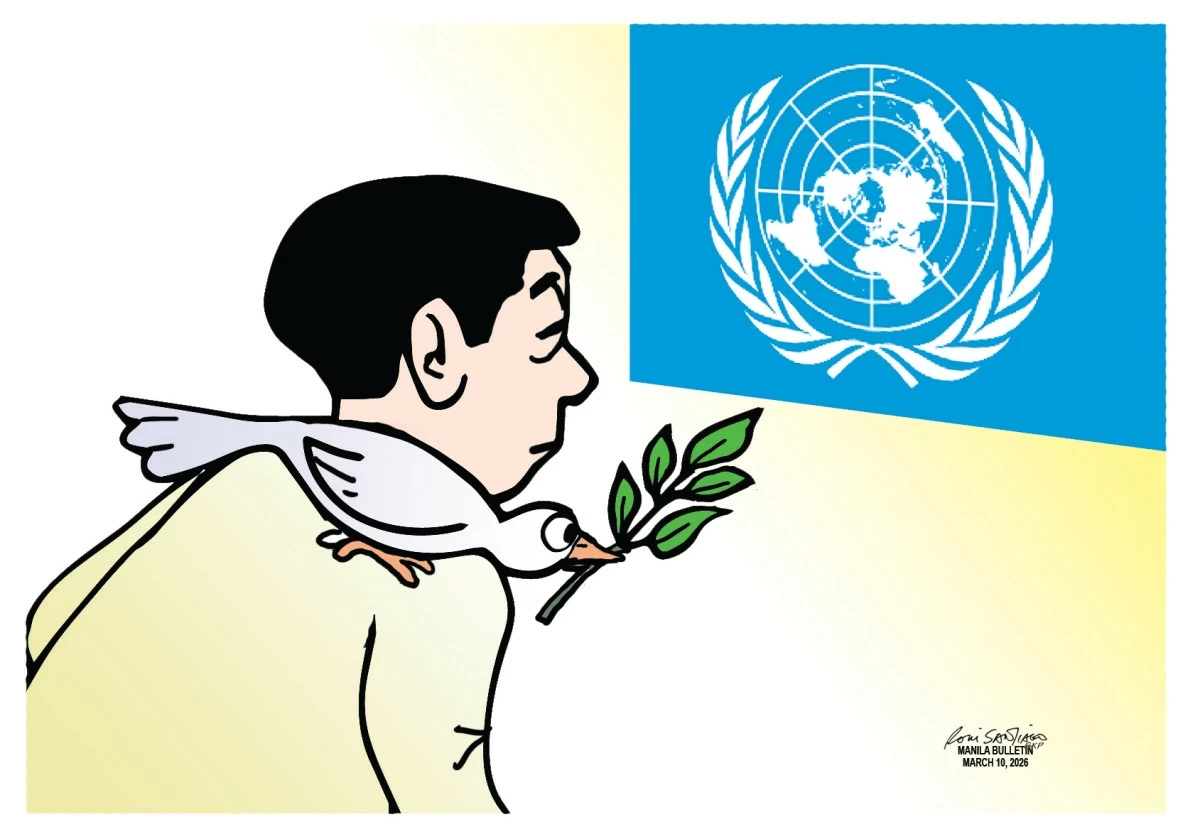
As President Ferdinand Marcos Jr. joins world leaders at the upcoming sessions of the United Nations General Assembly and the 70th session of the Commission on the Status of Women beginning March 9 in New York, his presence carries significance beyond the usual round of diplomatic engagements.
It also underscores the Philippines’ renewed campaign for a non-permanent seat on the United Nations Security Council for the 2027–2028 term, a role that would place the country once again at the center of global peace and security deliberations.
The Philippines is no stranger to this responsibility. It has previously served as a non-permanent member of the Security Council in 1957, 1963, 1980–1981, and 2004–2005, contributing its voice to the international community’s efforts to resolve conflicts and uphold the rules-based international order. Philippines now seeks to return to that role at a time when the world is facing heightened geopolitical tensions and mounting economic uncertainties.
History reminds us that the Philippines has long played a constructive role within the United Nations. One of its most illustrious diplomats, Carlos P. Romulo, served as President of the UN General Assembly in 1949, the first Asian to hold that position. Romulo’s leadership symbolized the country’s early commitment to multilateralism, dialogue, and the peaceful settlement of disputes. That legacy continues to guide Philippine diplomacy today.
The timing of the Philippines’ Security Council bid could hardly be more relevant. The international environment has grown increasingly volatile. The ongoing confrontation involving the United States and Israel on one side and Iran on the other has heightened fears of a wider Middle East conflict. Beyond the grave humanitarian consequences, the crisis threatens global energy stability.
For oil-importing countries like the Philippines, such tensions translate directly into economic vulnerability. Disruptions in oil supply routes or production in the Middle East can trigger spikes in global prices, raising transportation costs, fueling inflation, and ultimately burdening Filipino households and businesses. In an interconnected world, geopolitical instability thousands of miles away can quickly ripple through domestic economies.
This reality highlights why active participation in global governance institutions matters. A seat on the Security Council would give the Philippines a stronger platform to advocate for peaceful dialogue, respect for international law, and cooperative approaches to shared challenges—from armed conflict and terrorism to climate security and humanitarian crises.
The Philippines also brings valuable experience to the table. Over six decades, Filipino soldiers, police, and civilian experts have served in numerous UN peacekeeping missions around the world. These contributions reflect the country’s longstanding belief that maintaining peace is a collective responsibility.
Equally important is the Philippine tradition of consensus-building. As a nation that has navigated complex regional and domestic peace processes—including the landmark Bangsamoro peace agreement—the country offers practical lessons in conflict resolution and reconciliation. Such perspectives are especially relevant as the Security Council grapples with protracted conflicts across multiple regions.
President Marcos’ engagement at the United Nations therefore carries strategic weight. Diplomacy is not merely ceremonial; it is about building partnerships and earning the confidence of the international community. The months ahead will be crucial as Manila gathers support from fellow UN member states ahead of the Security Council elections scheduled next year. His remarks at the sessions on the protection of women’s rights and welfare also underline the country’s abiding commitment to this vital advocacy.
In a troubled world, nations that champion dialogue and cooperation are needed more than ever. The Philippines signals its readiness to contribute once more as a partner, pathfinder, and peacemaker—a role consistent with its history and vital to the pursuit of global stability.