







Where the road ends, phase two begins
Published Mar 9, 2026 12:05 am
|
Updated Mar 8, 2026 03:38 pm


PEACE BY PEACE
There is something remarkable about CARAGA that has continuously drawn me to the region: the people’s indomitable spirit. I have seen this strength of character in the faces of local government officials, farmers, students, mothers, and former combatants.
Having spent years in the area’s hinterlands as a young military officer, I have witnessed the struggles that Caraganons have gone through, particularly at the height of the communist insurgency. Despite the region’s long history of armed conflict, the people did not lose faith and forged ahead.
Because they believed in the national government’s promise that one day, things will get better. For years, they held on to this promise despite emerging challenges that threatened the area’s peace and security.
That moment came early this month as we led the ceremonial groundbreaking of several major infrastructure projects under the government’s Payapa at Masaganang Pamayanan (PAMANA) Program in the provinces of Agusan del Norte and Agusan del Sur.
For decades, many upland barangays in these provinces lived with the difficult reality that when the rains came, roads turned into rivers of mud. Farmers walked for hours to bring their produce to markets, children struggled to reach school, and people could not access health services.
That is why when we launched more than ₱455 million worth of PAMANA projects in Agusan del Norte, I told the people gathered there that the old saying, “Where the road ends, insurgency begins,” no longer applies to them.
We had to revise the saying to: “Where the road ends, Phase Two begins.” Because once the first road is built, development follows.
Business activity expands, schools and clinics become easier to reach, and government services are delivered faster.
A similar story is now unfolding in the municipality of San Luis in Agusan del Sur, where we also broke ground for an 8-kilometer road that will connect the province to Bukidnon.
For many years, the road there was a muddy trail that became impassable when the rains came.
Farmers were often disheartened as they watched their produce spoil before it could reach the market. It was a struggle for students to attend school. Communities felt cut off from economic opportunities that could uplift their lives.
All of these will change once the PAMANA road is completed, as it will serve as an economic corridor that will strengthen agriculture, trade, and food security across the region. What was once a barrier to development will become a bridge to opportunity.
But perhaps the most inspiring part of the visits we made to the two provinces was seeing how communities that were once affected by armed conflict are now becoming show windows of peace and development through the concerted efforts of all stakeholders.
Former rebels now stand shoulder to shoulder with soldiers and government officials as staunch partners. Many of them are now participating in livelihood programs, building homes for their families, and helping protect their communities as they transform their lives.
These are the peace dividends we are now reaping when people choose to walk the path of peace. And this progress has been made possible with the full and strong support of the local leadership.
In Agusan del Norte, Governor Maria Angelica Rosedell Amante has been instrumental in ensuring that the national government’s commitments are translated into concrete projects on the ground.
Her administration’s disciplined implementation and transparent management of PAMANA funds have strengthened the confidence of the national government to continue investing in the province.
As Governor Amante has emphasized during our talks, public funds must never be wasted and should deliver tangible benefits to the people. That commitment to accountability is exactly what has allowed programs like the PAMANA Program to succeed.
In Agusan del Sur, Governor Santiago B. Cane Jr. has likewise been a key partner in sustaining the momentum of peace and development interventions that is turning his province into a bustling economic hub in the region.
With his hands-on leadership style, he is closely coordinating with national agencies and local governments to ensure that infrastructure projects and reintegration programs for former rebels move forward in a focused and efficient manner.
Our work at the Office of the Presidential Adviser on Peace, Reconciliation and Unity (OPAPRU) becomes much easier when local leaders like Governors Amante and Cane share the same vision that the dividends of peace must be shared by all.
The PAMANA Program, the national government’s flagship program, was created with the main goal of ensuring that communities affected by conflict will no longer be left behind in the peace and development process.
Under the guidance of President Ferdinand R. Marcos Jr., we continue to pursue a whole-of-nation approach where security, development, and good governance are carried out simultaneously.
This is because we have recognized the reality that genuine peace cannot be achieved and sustained by force alone. It must also be reinforced and sustained by better roads, reliable water systems, decent housing, and meaningful economic opportunities.
As I stood in those communities during the groundbreaking ceremonies, I was reminded that the transformation of conflict-affected areas did not happen overnight. They were built step by step, project by project, and partnership by partnership.
Herein lies the real strength of the PAMANA Program.
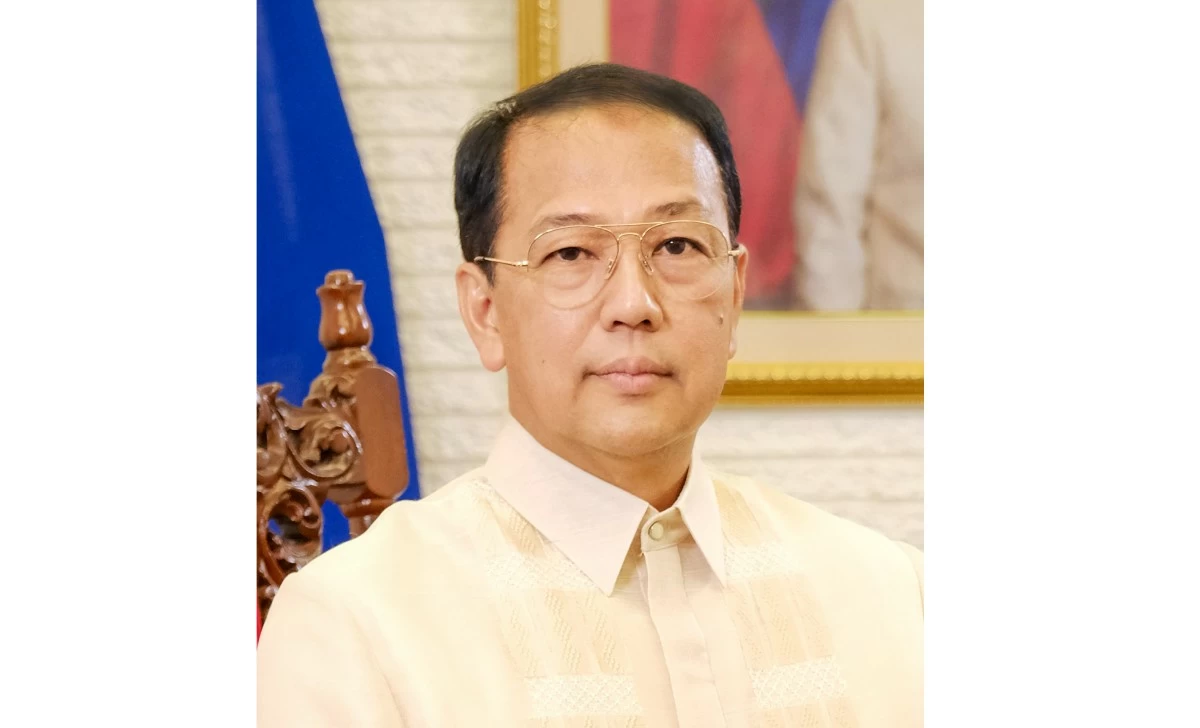
(Secretary Carlito G. Galvez, Jr. is the presidential adviser on peace, reconciliation, and unity.)