






Manila Bulletin
 Philippines
National
Travel tax abolition bill inches forward, gets past House tax panel
Philippines
National
Travel tax abolition bill inches forward, gets past House tax panel
Philippines
National
Travel tax abolition bill inches forward, gets past House tax panel
Travel tax abolition bill inches forward, gets past House tax panel
Published Mar 9, 2026 05:22 pm


At A Glance
- House Majority Leader Ilocos Norte 1st district Rep. Sandro Marcos' celebrated measure seeking the abolition of travel tax has hurdled the Committee on Ways and Means.
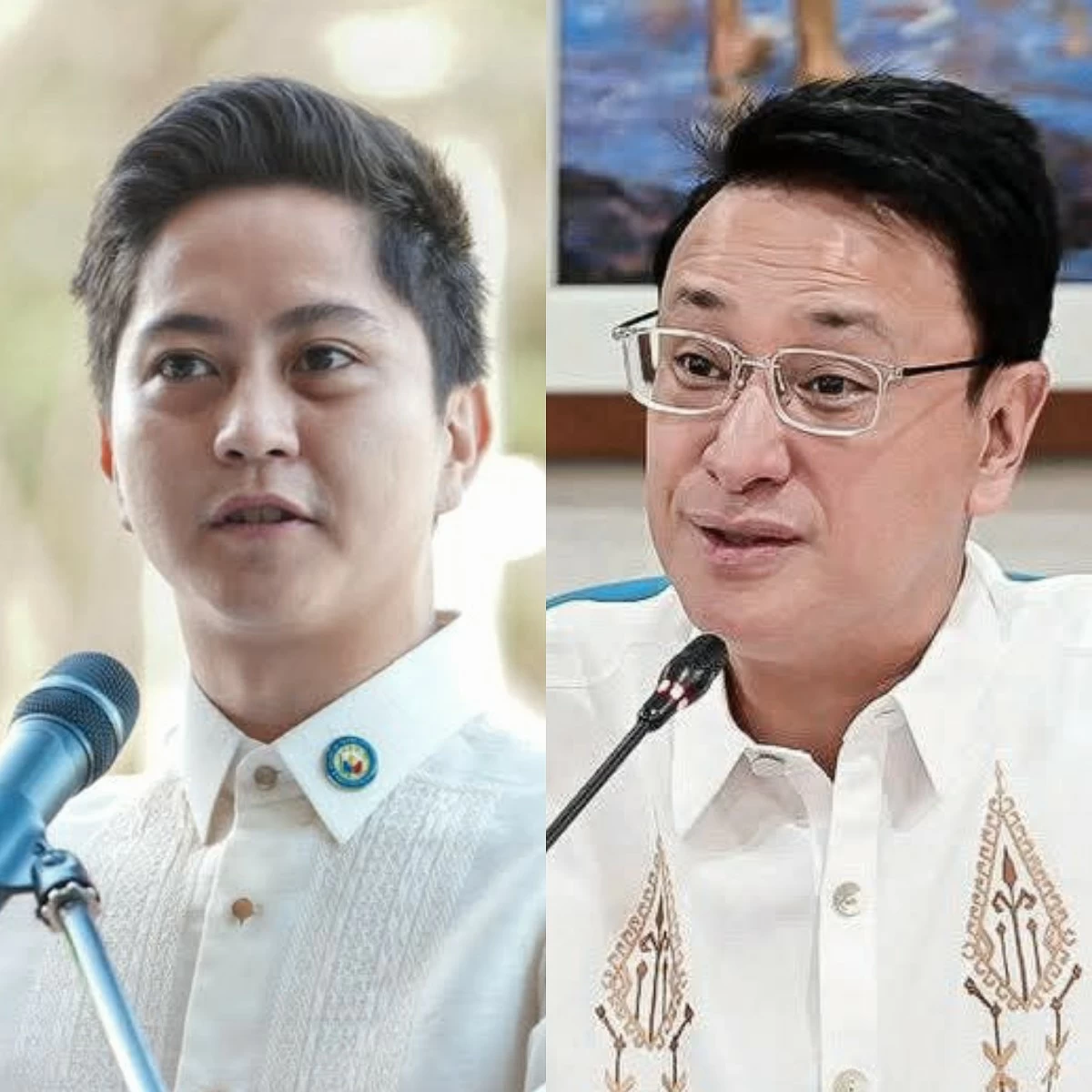
Ilocos Norte 1st district Rep. Sandro Marcos (left), Marikina City 2nd district Rep. Miro Quimbo (Facebook)
House Majority Leader Ilocos Norte 1st district Rep. Sandro Marcos' celebrated measure seeking the abolition of travel tax has hurdled the Committee on Ways and Means.
This developed as the ways and means committee chaired by !Marikina City 2nd district Rep. Miro Quimbo comducted a follow-up hearing on the matter on Monday, March 9.
It was only last week when the panel discussed the tax provisions of the measure, which Marcos filed in the 20th Congress as House Bill (HB) No.7443.
“I would like to move now that we approve subject to style, sections 2 and 3 of the unnumbered substitute bill," House Deputy Majority Leader Manila 1st district Rep. Ernesto “Ernix” Dionisio said in a motion that was swiftly carried by Quimbo after nobody from the panel objected.
The substitute bill, titled "An Act Abolishing The Travel Tax", was a consolidation of the following proposals: HB Nos. 7443, 7367, 7612, 7703, 7757, 150, 3529, 3890, 4793, 5821, 6228, 6979, 7155, 7307, 7631, 7695, and 7758.
The measure, which seeks to scrap the decades-old levy imposed on departing Filipino travelers, will now be taken up by the Committee on Appropriations for discussions on its funding provision.
Representatives from the Department of Finance (DOF) and the Department of Budget and Management (DBM) aired support for the proposal during the hearing of the Quimbo panel.
Quimbo said that while programs funded by travel tax collections remain important, their funding should come directly from the national budget instead of relying on the number of travelers.
“Allow me to bounce off from last week’s session on the issue of the travel tax. Narinig na natin sa mga ahensya ang mga programang pinopondohan ng Travel Tax - para sa turismo, edukasyon at kultura. Kinikilala natin na importante ang lahat ng ito - pero hindi ito dapat magpatuloy at the expense and sacrifice of our Filipino travelers na karamihan ay middle-class at kabataan,” he explained.
(We have heard from the agencies about the programs funded by the Travel Tax—covering tourism, education, and culture. We recognize that all of these are important. But they should not continue at the expense and sacrifice of Filipino travelers, most of whom are middle-class and young people.)
“Dahil importante ito, dapat pinopondohan ito directly ng National Budget or ang General Appropriations Act (Because these programs are important, they ought to be funded directly through the National Budget or the General Appropriations Act).The survival of these programs should not be dependent on the number of travelers. They are far too important to be dependent on unpredictable numbers,” the Marikina solon reckoned.
Quimbo emphasized that the tax system should remain progressive and should not place an undue burden on ordinary Filipinos.
“Today, there are tens of millions of middle-class Filipinos whose voices, together with the poorest of the poor, are too often unheard in policy discussions. As chairman of the Committee on Ways and Means, I must emphasize a basic principle that this committee shall continue to uphold: our tax system must remain progressive,” he said.
“Hindi natin maaaring payagan na maging regressive ang ating sistema ng pagbubuwis—na ang pondo para sa mahahalagang programa ng gobyerno ay nanggagaling sa bulsa ng mga ordinaryong Pilipino na nagsisikap lamang makaahon sa buhay,” Quimbo added.
(We cannot allow our tax system to become regressive—where funding for vital government programs comes from the pockets of ordinary Filipinos who are simply striving to get ahead in life.)
The proposal seeks to repeal the travel tax imposed under Presidential Decree (PD) No. 1183 and related provisions of the Tourism Act of 2009, with the funding for programs currently supported by the levy to be provided through the General Appropriations Act (GAA).
Earlier, the House Committee on Tourism chaired by Romblon lone district Rep. Eleandro Jesus Madrona approved measures seeking the abolition of the travel tax.
Travel tax collections currently fund programs of the Tourism Infrastructure and Enterprise Zone Authority (TIEZA), the Commission on Higher Education (CHEd), and the National Commission for Culture and the Arts (NCCA).