ADVERTISEMENT

Sy Family's SMIC to invest ₱2.9 billion in expanding geothermal assets

Published Mar 9, 2026 12:00 am  |  Updated Mar 9, 2026 05:37 am
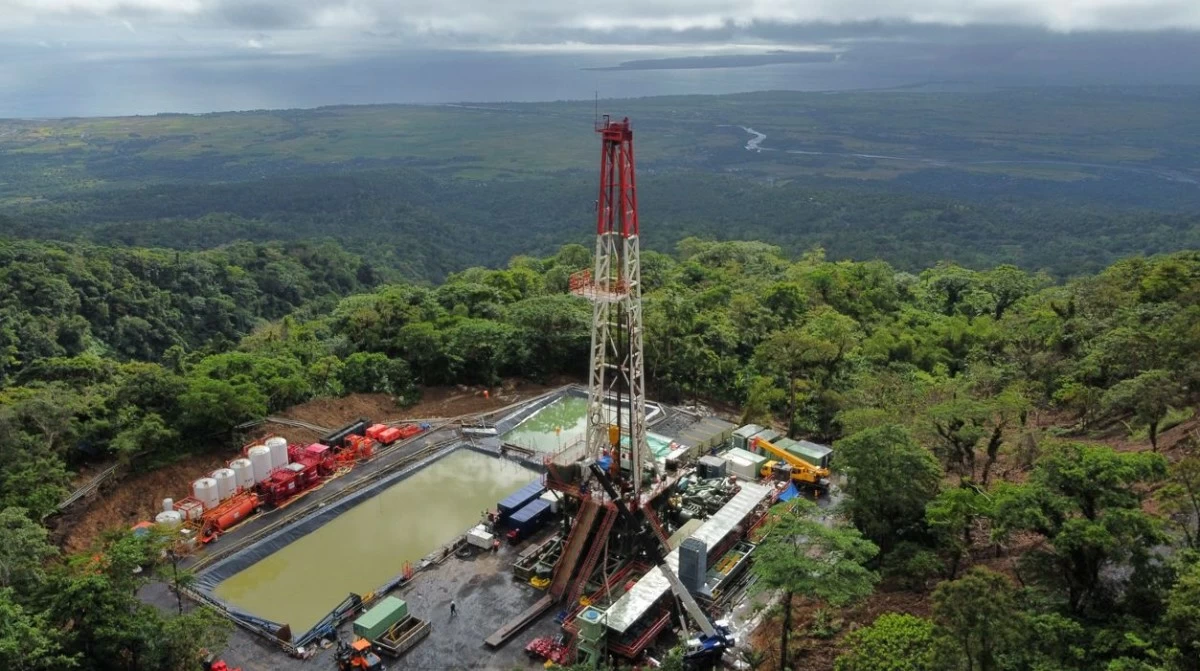
Philippine Geothermal Production Co. (PGPC), the renewable energy unit of SM Investments Corp. (SMIC), plans to spend at least ₱2.9 billion this year to ramp up drilling and exploration across its existing facilities and six new concession areas.
Frederic C. Dybuncio, SMIC president and chief executive officer, said the capital expenditure alighs with the aggressive push by the Sy family’s holding company to expand its footprint in the renewable energy sector as the country seeks to bolster its power grid.
Dybuncio added that the company has already commenced drilling additional wells in Tiwi, Albay, where the firm operates an existing geothermal steam field.
Dybuncio explained said the company is prioritizing Tiwi because there is still significant untapped capacity within that specific steam field to grow production.
The SMIC’s expansion strategy follows a phased approach in its geothermal portfolio. Following the current program in Tiwi, PGPC intends to move drilling operations to Mt. Malinao in Albay, a site estimated to have a potential capacity of 49 megawatts. Subsequent exploration is slated for Mt. Labo, a concession area spanning the provinces of Camarines Sur, Camarines Norte, and Quezon.
Other greenfield sites in the pipeline include Lubuagan in Kalinga, Daklan in Benguet, and the Cagua-Baua area in Cagayan. Collectively, the six new concessions are projected to contribute approximately 300 megawatts of renewable energy to the Luzon grid.
Dybuncio said that the development of these six concessions will be systematic. For each new site, the company must drill two to three exploration wells to confirm if the steam resource is commercially viable for large-scale power generation.
The financial stakes of this exploration are high, with Dybuncio noting that the cost of drilling can reach roughly ₱5.8 million a day per well. Because of these substantial daily costs, the company is exercising caution in its geological assessments to ensure a high success rate for its drilling program.
The timeline for these projects remains long-term. If a site is determined to be commercially viable, PGPC typically requires a five-year window to fully explore and develop the field. This process includes the installation of complex pipeline networks and the construction of the power plant before commercial operations can begin. Currently, PGPC manages a total of 300 megawatts of geothermal steam production, split between its Tiwi plant and the Mak-Ban facility, which straddles Batangas and Laguna.

Related Tags

SM Investments Corporation Frederic C. DyBuncio Philippine Geothermanl Production Company Inc.
ADVERTISEMENT
.most-popular .layout-ratio{ padding-bottom: 79.13%; } @media (min-width: 768px) and (max-width: 1024px) { .widget-title { font-size: 15px !important; } }

{{ articles_filter_1561_widget.title }}

.most-popular .layout-ratio{ padding-bottom: 79.13%; } @media (min-width: 768px) and (max-width: 1024px) { .widget-title { font-size: 15px !important; } }

{{ articles_filter_1562_widget.title }}

.most-popular .layout-ratio{ padding-bottom: 79.13%; } @media (min-width: 768px) and (max-width: 1024px) { .widget-title { font-size: 15px !important; } }

{{ articles_filter_1563_widget.title }}

{{ articles_filter_1564_widget.title }}

.mb-article-details { position: relative; } .mb-article-details .article-body-preview, .mb-article-details .article-body-summary{ font-size: 17px; line-height: 30px; font-family: "Libre Caslon Text", serif; color: #000; } .mb-article-details .article-body-preview iframe , .mb-article-details .article-body-summary iframe{ width: 100%; margin: auto; } .read-more-background { background: linear-gradient(180deg, color(display-p3 1.000 1.000 1.000 / 0) 13.75%, color(display-p3 1.000 1.000 1.000 / 0.8) 30.79%, color(display-p3 1.000 1.000 1.000) 72.5%); position: absolute; height: 200px; width: 100%; bottom: 0; display: flex; justify-content: center; align-items: center; padding: 0; } .read-more-background a{ color: #000; } .read-more-btn { padding: 17px 45px; font-family: Inter; font-weight: 700; font-size: 18px; line-height: 16px; text-align: center; vertical-align: middle; border: 1px solid black; background-color: white; } .hidden { display: none; }
function initializeAllSwipers() { // Get all hidden inputs with cms_article_id document.querySelectorAll('[id^="cms_article_id_"]').forEach(function (input) { const cmsArticleId = input.value; const articleSelector = '#article-' + cmsArticleId + ' .body_images'; const swiperElement = document.querySelector(articleSelector); if (swiperElement && !swiperElement.classList.contains('swiper-initialized')) { new Swiper(articleSelector, { loop: true, pagination: false, navigation: { nextEl: '#article-' + cmsArticleId + ' .swiper-button-next', prevEl: '#article-' + cmsArticleId + ' .swiper-button-prev', }, }); } }); } setTimeout(initializeAllSwipers, 3000); const intersectionObserver = new IntersectionObserver( (entries) => { entries.forEach((entry) => { if (entry.isIntersecting) { const newUrl = entry.target.getAttribute("data-url"); if (newUrl) { history.pushState(null, null, newUrl); let article = entry.target; // Extract metadata const author = article.querySelector('.author-section').textContent.replace('By', '').trim(); const section = article.querySelector('.section-info ').textContent.replace(' ', ' '); const title = article.querySelector('.article-title h1').textContent; // Parse URL for Chartbeat path format const parsedUrl = new URL(newUrl, window.location.origin); const cleanUrl = parsedUrl.host + parsedUrl.pathname; // Update Chartbeat configuration if (typeof window._sf_async_config !== 'undefined') { window._sf_async_config.path = cleanUrl; window._sf_async_config.sections = section; window._sf_async_config.authors = author; } // Track virtual page view with Chartbeat if (typeof pSUPERFLY !== 'undefined' && typeof pSUPERFLY.virtualPage === 'function') { try { pSUPERFLY.virtualPage({ path: cleanUrl, title: title, sections: section, authors: author }); } catch (error) { console.error('ping error', error); } } // Optional: Update document title if (title && title !== document.title) { document.title = title; } } } }); }, { threshold: 0.1 } ); function showArticleBody(button) { const article = button.closest("article"); const summary = article.querySelector(".article-body-summary"); const body = article.querySelector(".article-body-preview"); const readMoreSection = article.querySelector(".read-more-background"); // Hide summary and read-more section summary.style.display = "none"; readMoreSection.style.display = "none"; // Show the full article body body.classList.remove("hidden"); } document.addEventListener("DOMContentLoaded", () => { let loadCount = 0; // Track how many times articles are loaded const offset = [1, 2, 3, 4, 5, 6, 7, 8, 9, 10]; // Offset values const currentUrl = window.location.pathname.substring(1); let isLoading = false; // Prevent multiple calls if (!currentUrl) { console.log("Current URL is invalid."); return; } const sentinel = document.getElementById("load-more-sentinel"); if (!sentinel) { console.log("Sentinel element not found."); return; } function isSentinelVisible() { const rect = sentinel.getBoundingClientRect(); return ( rect.top < window.innerHeight && rect.bottom >= 0 ); } function onScroll() { if (isLoading) return; if (isSentinelVisible()) { if (loadCount >= offset.length) { console.log("Maximum load attempts reached."); window.removeEventListener("scroll", onScroll); return; } isLoading = true; const currentOffset = offset[loadCount]; window.loadMoreItems().then(() => { let article = document.querySelector('#widget_1690 > div:nth-last-of-type(2) article'); intersectionObserver.observe(article) loadCount++; }).catch(error => { console.error("Error loading more items:", error); }).finally(() => { isLoading = false; }); } } window.addEventListener("scroll", onScroll); });

Sign up by email to receive news.