ADVERTISEMENT

Philippines overtakes China as Brazil's top pork buyer

Published Mar 9, 2026 12:00 am  |  Updated Mar 7, 2026 04:27 pm
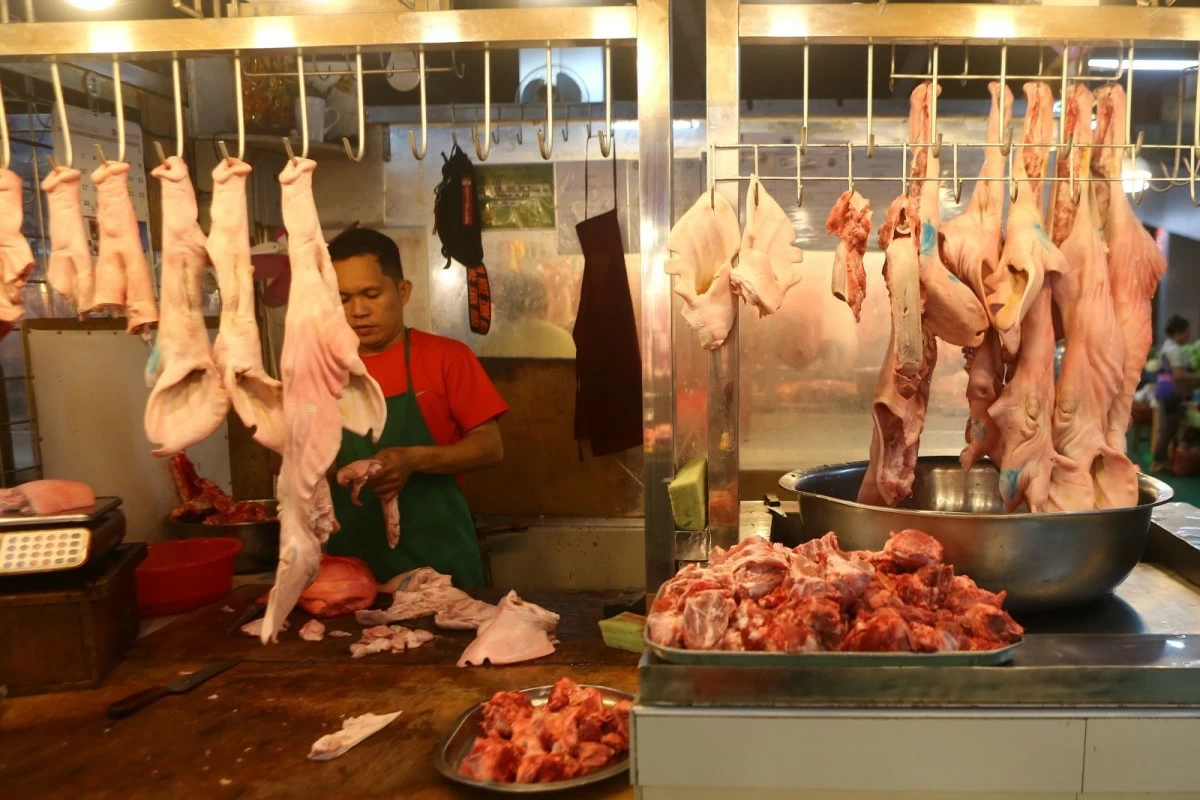
(Manila Bulletin file photo)

The Philippines overtook China as Brazil’s largest market for pork products last year as the country turned to importation while local output remained insufficient to meet strong domestic demand for the protein.

Based on the latest data from the United States Department of Agriculture (USDA), the Philippines is now Brazil’s main destination for its pork products after the South American country exported 433,595 metric tons (MT) in carcass-weight equivalent in 2025.

The Philippines increased its market share in Brazilian pork imports to 25.3 percent last year, compared to 18.09 percent in the previous year, when it was still a close second to China’s 18.45 percent.

China lost its spot as the leading export market after it brought in only around 175,600 MT of pork products from Brazil last year, which accounted for 10.2 percent of total Brazilian exports.

In recent years, China has been decreasing its reliance on pork imports—such as those from Brazil—as its domestic pork production continued to recover from the impact of the devastating African swine fever (ASF).

“As the Chinese swine industry recomposes its production after the serious cases of ASF that decimated the industry years ago, Brazil is exporting less to China over the years,” USDA said.

This contrasts with the situation in the Philippines, which has been increasing shipments of pork from abroad due to challenges in its domestic industry, according to USDA.

Data from the Philippine Statistics Authority (PSA) showed that the country’s hog inventory reached 8.79 million head by the end of last year, a marginal improvement from 8.75 million head in 2024.

This, however, remains a far cry from the previous headcount of around 14 million before the first outbreak of ASF in 2019. As of Feb. 27, ASF remains active in 14 barangays across five provinces, based on data from the Bureau of Animal Industry (BAI).

According to BAI, the Philippines imported 851,760 MT of pork last year, an increase of 16 percent from 733,729 MT in the previous year.

Taking into account January of this year, 74,791 MT of pork products have already entered the country, around 46 percent of which, or 34,473 MT, were sourced from Brazil.

For the year, USDA projects that Brazil will register a seven-percent increase in pork exports to 1.83 million MT from last year’s 1.71 million MT due to firm external demand from countries like the Philippines.

Brazil has been a reliable supplier of pork products for the Philippines given its status as an ASF-free country since 1988.

“With the current status, Brazil is likely to be able to expand exports to different destinations and sourced from more Brazilian states,” USDA said.

Based on BAI data, the Philippines’ meat imports, including pork, reached 143,842 MT in January, up four percent from nearly 138,000 MT in the same month last year.

ADVERTISEMENT
.most-popular .layout-ratio{ padding-bottom: 79.13%; } @media (min-width: 768px) and (max-width: 1024px) { .widget-title { font-size: 15px !important; } }

{{ articles_filter_1561_widget.title }}

.most-popular .layout-ratio{ padding-bottom: 79.13%; } @media (min-width: 768px) and (max-width: 1024px) { .widget-title { font-size: 15px !important; } }

{{ articles_filter_1562_widget.title }}

.most-popular .layout-ratio{ padding-bottom: 79.13%; } @media (min-width: 768px) and (max-width: 1024px) { .widget-title { font-size: 15px !important; } }

{{ articles_filter_1563_widget.title }}

{{ articles_filter_1564_widget.title }}

.mb-article-details { position: relative; } .mb-article-details .article-body-preview, .mb-article-details .article-body-summary{ font-size: 17px; line-height: 30px; font-family: "Libre Caslon Text", serif; color: #000; } .mb-article-details .article-body-preview iframe , .mb-article-details .article-body-summary iframe{ width: 100%; margin: auto; } .read-more-background { background: linear-gradient(180deg, color(display-p3 1.000 1.000 1.000 / 0) 13.75%, color(display-p3 1.000 1.000 1.000 / 0.8) 30.79%, color(display-p3 1.000 1.000 1.000) 72.5%); position: absolute; height: 200px; width: 100%; bottom: 0; display: flex; justify-content: center; align-items: center; padding: 0; } .read-more-background a{ color: #000; } .read-more-btn { padding: 17px 45px; font-family: Inter; font-weight: 700; font-size: 18px; line-height: 16px; text-align: center; vertical-align: middle; border: 1px solid black; background-color: white; } .hidden { display: none; }
function initializeAllSwipers() { // Get all hidden inputs with cms_article_id document.querySelectorAll('[id^="cms_article_id_"]').forEach(function (input) { const cmsArticleId = input.value; const articleSelector = '#article-' + cmsArticleId + ' .body_images'; const swiperElement = document.querySelector(articleSelector); if (swiperElement && !swiperElement.classList.contains('swiper-initialized')) { new Swiper(articleSelector, { loop: true, pagination: false, navigation: { nextEl: '#article-' + cmsArticleId + ' .swiper-button-next', prevEl: '#article-' + cmsArticleId + ' .swiper-button-prev', }, }); } }); } setTimeout(initializeAllSwipers, 3000); const intersectionObserver = new IntersectionObserver( (entries) => { entries.forEach((entry) => { if (entry.isIntersecting) { const newUrl = entry.target.getAttribute("data-url"); if (newUrl) { history.pushState(null, null, newUrl); let article = entry.target; // Extract metadata const author = article.querySelector('.author-section').textContent.replace('By', '').trim(); const section = article.querySelector('.section-info ').textContent.replace(' ', ' '); const title = article.querySelector('.article-title h1').textContent; // Parse URL for Chartbeat path format const parsedUrl = new URL(newUrl, window.location.origin); const cleanUrl = parsedUrl.host + parsedUrl.pathname; // Update Chartbeat configuration if (typeof window._sf_async_config !== 'undefined') { window._sf_async_config.path = cleanUrl; window._sf_async_config.sections = section; window._sf_async_config.authors = author; } // Track virtual page view with Chartbeat if (typeof pSUPERFLY !== 'undefined' && typeof pSUPERFLY.virtualPage === 'function') { try { pSUPERFLY.virtualPage({ path: cleanUrl, title: title, sections: section, authors: author }); } catch (error) { console.error('ping error', error); } } // Optional: Update document title if (title && title !== document.title) { document.title = title; } } } }); }, { threshold: 0.1 } ); function showArticleBody(button) { const article = button.closest("article"); const summary = article.querySelector(".article-body-summary"); const body = article.querySelector(".article-body-preview"); const readMoreSection = article.querySelector(".read-more-background"); // Hide summary and read-more section summary.style.display = "none"; readMoreSection.style.display = "none"; // Show the full article body body.classList.remove("hidden"); } document.addEventListener("DOMContentLoaded", () => { let loadCount = 0; // Track how many times articles are loaded const offset = [1, 2, 3, 4, 5, 6, 7, 8, 9, 10]; // Offset values const currentUrl = window.location.pathname.substring(1); let isLoading = false; // Prevent multiple calls if (!currentUrl) { console.log("Current URL is invalid."); return; } const sentinel = document.getElementById("load-more-sentinel"); if (!sentinel) { console.log("Sentinel element not found."); return; } function isSentinelVisible() { const rect = sentinel.getBoundingClientRect(); return ( rect.top < window.innerHeight && rect.bottom >= 0 ); } function onScroll() { if (isLoading) return; if (isSentinelVisible()) { if (loadCount >= offset.length) { console.log("Maximum load attempts reached."); window.removeEventListener("scroll", onScroll); return; } isLoading = true; const currentOffset = offset[loadCount]; window.loadMoreItems().then(() => { let article = document.querySelector('#widget_1690 > div:nth-last-of-type(2) article'); intersectionObserver.observe(article) loadCount++; }).catch(error => { console.error("Error loading more items:", error); }).finally(() => { isLoading = false; }); } } window.addEventListener("scroll", onScroll); });

Sign up by email to receive news.