







Philippine peso, inflation face pressures from oil shock


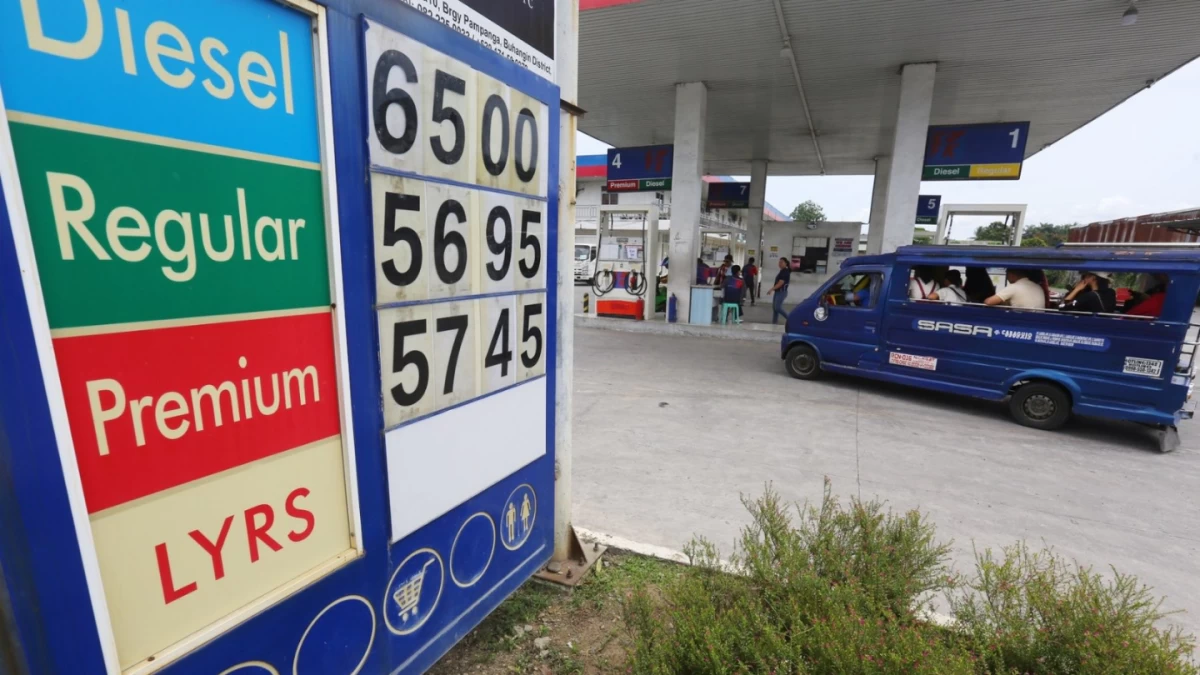
Foreign banks have warned of rising risks to the Philippine peso, which could slide to the ₱60:$1 level, and to domestic inflation, which is poised to climb further if Middle East tensions persist.
In a March 6 report, Japanese financial giant MUFG Bank Ltd. projected the peso could weaken further to ₱59-60 against the United States (US) dollar, especially if global oil prices surge to $90 per barrel. The peso closed last week at ₱59 per greenback.
“The Philippine peso has been quite volatile as well with the Iran conflict, rising from the ₱57.5 levels toward the ₱58.6 levels in a short span of the week,” MUFG Global Markets Research senior currency analyst Michael Wan noted. “Our best sense is that the Bangko Sentral ng Pilipinas (BSP) has been more hands-off in foreign exchange (forex) intervention given recent developments.”
Wan said that since 98 percent of the Philippines’ crude oil imports pass through the Strait of Hormuz, every $10 per barrel increase in international oil prices is estimated to raise the country’s current account deficit by 0.5 percent of gross domestic product (GDP), putting additional pressure on the peso. If prices reach $100 per barrel, the deficit could widen to three percent of GDP.
BSP Governor Eli M. Remolona Jr. said last week that the central bank may be forced to end its monetary easing cycle if oil hits $100 per barrel, potentially prompting an interest rate hike. However, MUFG does not expect Asian central banks to raise interest rates due to higher oil prices, instead anticipating that monetary authorities in the Philippines, India, and Indonesia may delay rate cuts or reduce their frequency.
National Statistician Claire Dennis S. Mapa told Manila Bulletin last week that over 36 percent of the consumer price index (CPI) basket is directly or indirectly vulnerable to rising oil prices. Energy items such as transport fuels, electricity, liquefied petroleum gas (LPG), and kerosene—accounting for 8.23 percent of the CPI—are most directly affected, while agricultural products, meals outside the home, and road passenger transport, which together make up about 28 percent of the CPI, may face secondary impacts from higher transport and raw material costs.
Headline inflation climbed to a 13-month high of 2.4 percent in February, mainly driven by higher food prices.
“Looking ahead, inflation risks remain tilted to the upside amid the recent surge in global energy prices,” the research arm of investment banking giant Goldman Sachs said in a March 5 report obtained by Manila Bulletin.
Goldman Sachs noted that the Philippine government is preparing to introduce fuel subsidies for the transport and agriculture sectors and is exploring temporary relief measures, including possible adjustments to oil excise taxes, to help mitigate the impact.
Singapore-based United Overseas Bank Ltd. (UOB) said rising global energy prices are likely to weaken the peso and push up inflation, making further BSP rate cuts unlikely for the rest of the year, following last month’s 25-basis-point (bp) reduction in the policy rate to the current 4.25 percent.
While maintaining their 2026 inflation forecast at three percent—above the nine-year-low, full-year average of 1.7 percent recorded in 2025—UOB senior economist Julia Goh and economist Loke Siew Ting said year-on-year price hikes are expected to stay on an upward trajectory, climbing above the midpoint of the BSP’s two- to four-percent medium-term target range in the second half of 2026, even as economic activity gradually improves.
“The interest rate differential with the US has also compressed to a historic low of 50 bps following the February rate cut, placing additional downward pressure on the Philippine peso and heightening the risk of imported inflation,” they added.
Deepali Bhargava, Asia-Pacific research head at Dutch financial giant ING, noted that the Philippines remains one of the region’s most oil-exposed economies. She said that while lowering excise taxes may ease inflationary pressures, the bigger impact is expected through the trade balance, adding further pressure on the peso.
Bhargava forecasts the peso to hover around ₱59:$1 for the rest of the first quarter, “with risks tilted toward modest further weakness should oil prices remain elevated.”
“The pickup in oil price inflation warrants monitoring, especially as the Philippines’ retail fuel prices are market-linked,” she said in a March 5 report.
“Given this possibility that limits transmission to retail prices—and the higher oil prices likely seen as a temporary supply-side shock by the BSP—we do not expect the central bank to respond to sustained higher oil prices with rate hikes. Instead, the growth drag from higher energy costs would increase the likelihood of another rate cut over the year,” Bhargava said.
She pointed out that the Philippines depends on the Middle East for nearly 90 percent of its oil supply, making it highly vulnerable to price shocks that can push up inflation—directly through fuel and transport costs and indirectly via food and logistics—and worsen the current account deficit. If high oil prices persist, Bhargava said the government may consider suspending fuel excise taxes, as even short-lived price spikes have previously caused notable peso depreciation.