

ADVERTISEMENT

House leadership files fuel excise tax suspension bill; public hearing set Tuesday

Published Mar 9, 2026 08:02 pm

At A Glance

  • The House leadership has filed its version of the bill authorizing the President of the Philippines to suspend or reduce excise tax on petroleum products during national or global economic emergencies, in light of the ongoing conflict in the oil-producing Middle East.
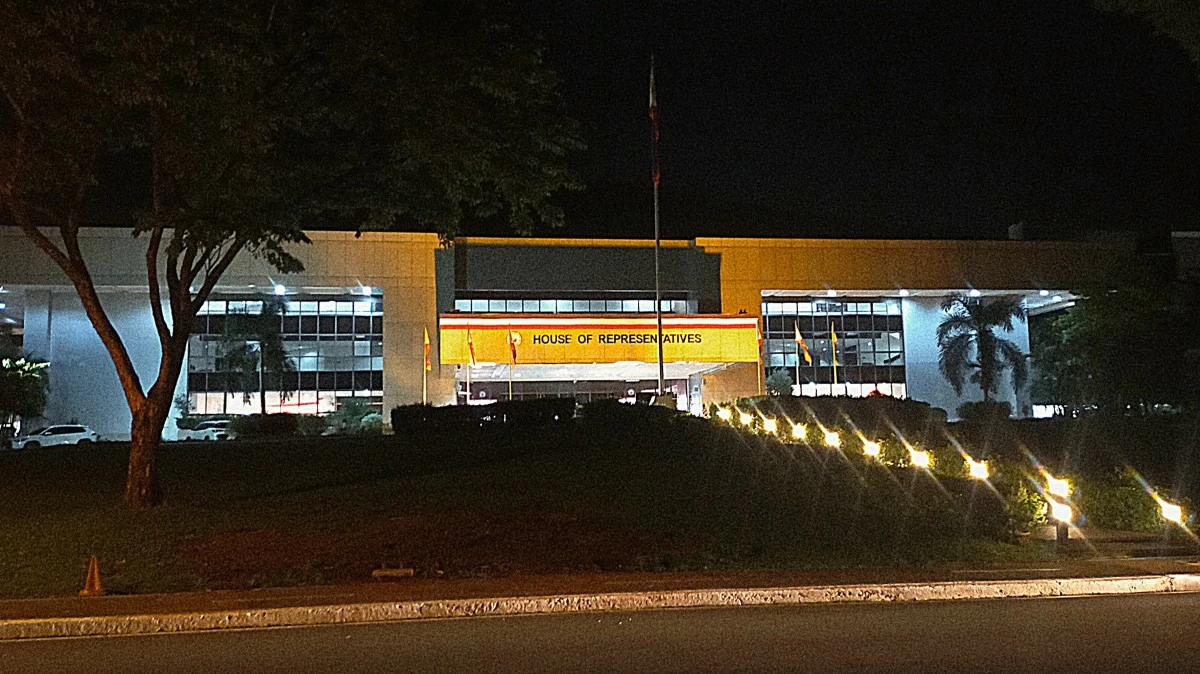
The House of Representatives (Ellson Quismorio/ MANILA BULLETIN)


The House leadership has filed its version of the bill authorizing the President of the Philippines to suspend or reduce excise tax on petroleum products during national or global economic emergencies, in light of the ongoing conflict in the oil-producing Middle East.
House Bill (HB) No. 8292 was jointly filed by Speaker Isabela 6th district Rep. Faustino "Bojie" Dy III and Majority Leader Ilocos Norte 1st district Rep. Sandro Marcos on Monday, March 9.
Shortly after the filing was announced, the House Committee on Ways and Means scheduled a public hearing on Tuesday, March 10 to deliberate on the so-called "emergency powers" measure, as well as many similar bills that were filed ever since the United States (US) and Israel attacked Iran late last month.
The proposed suspension of excise tax of fuel is expected to help mitigate the impact of soaring fuel prices on Filipinos' lives.
Rep. Marcos said House Bill (HB) No. 8292 seeks to amend the National Internal Revenue Code (NIRC] to give the President the authority, upon the recommendation of the Department of Finance (DOF) secretary and in coordination with the Department of Energy (DOE) secretary, to temporarily suspend or reduce excise tax on fuel when extraordinary conditions drive global oil prices higher.
“This measure grants the President of the Philippines the authority to suspend the imposition of, or reduce the excise taxes on petroleum products when public interest so requires,” the two House leaders said in the bill’s explanatory note.
Rep Marcos said the measure "comes amid renewed volatility in global oil markets due to geopolitical tensions in the Middle East, which threaten to disrupt supply and push fuel prices higher".
The authors noted that the Philippine economy remains highly vulnerable to global petroleum market fluctuations.
Dy and Rep. Marcos added that because the Philippines imports nearly 90 percent of its petroleum from the Middle East, geopolitical tensions in the region can quickly drive up domestic fuel prices, in furniture worsen inflation and erode consumers’ purchasing power.
Under the bill, the President may suspend or reduce excise taxes on fuel if the average Dubai crude oil price reaches at least $80 per barrel for three consecutive months, or if a national emergency or calamity results in extraordinary increases in domestic pump prices.
Any suspension may apply to specific petroleum products and will be effective for up to six months, subject to extension by Congress but not exceeding one year in total.
The President would also be required to submit a report to Congress within 15 days of issuing the suspension order, and monthly thereafter, detailing its basis, the estimated foregone revenues, and the expected impact on fuel prices and inflation.
The House Speaker and the Majority Leader rued over how the runaway prices of fuel hit vulnerable sectors the hardest.
“Rising fuel prices impose a disproportionate burden on the most vulnerable sectors of society, particularly farmers, fisherfolk, public transport operators, small enterprises, and low-income households whose livelihoods are directly affected by increases in petroleum costs,” they said.
“In times of national emergency or sudden global disruption, the government must be equipped to act swiftly to mitigate the impact of these shocks and safeguard the welfare of the Filipino people,” they added.
Meanwhile, Assistant Minority Leader Bagong Henerasyon (BH) Party-list Rep. Robert Nazal also filed on Monday HB No. 8338, or the proposed Fuel Price Stabilization and Targeted Excise Relief Act.
Alongside this, Nazal also filed House Resolution (HR) No. 851, which urged the President to certify as urgent legislation temporarily suspending or reducing excise taxes on gasoline and diesel or reducing the value-added tax (VAT) on petroleum products.
“Global oil markets remain highly volatile and susceptible to geopolitical tensions, supply disruptions, and speculative pressures. As a net oil-importing country, the Philippines is particularly vulnerable to abrupt increases in crude prices,” he noted.
ADVERTISEMENT
.most-popular .layout-ratio{ padding-bottom: 79.13%; } @media (min-width: 768px) and (max-width: 1024px) { .widget-title { font-size: 15px !important; } }

{{ articles_filter_1561_widget.title }}

.most-popular .layout-ratio{ padding-bottom: 79.13%; } @media (min-width: 768px) and (max-width: 1024px) { .widget-title { font-size: 15px !important; } }

{{ articles_filter_1562_widget.title }}

.most-popular .layout-ratio{ padding-bottom: 79.13%; } @media (min-width: 768px) and (max-width: 1024px) { .widget-title { font-size: 15px !important; } }

{{ articles_filter_1563_widget.title }}

{{ articles_filter_1564_widget.title }}

.mb-article-details { position: relative; } .mb-article-details .article-body-preview, .mb-article-details .article-body-summary{ font-size: 17px; line-height: 30px; font-family: "Libre Caslon Text", serif; color: #000; } .mb-article-details .article-body-preview iframe , .mb-article-details .article-body-summary iframe{ width: 100%; margin: auto; } .read-more-background { background: linear-gradient(180deg, color(display-p3 1.000 1.000 1.000 / 0) 13.75%, color(display-p3 1.000 1.000 1.000 / 0.8) 30.79%, color(display-p3 1.000 1.000 1.000) 72.5%); position: absolute; height: 200px; width: 100%; bottom: 0; display: flex; justify-content: center; align-items: center; padding: 0; } .read-more-background a{ color: #000; } .read-more-btn { padding: 17px 45px; font-family: Inter; font-weight: 700; font-size: 18px; line-height: 16px; text-align: center; vertical-align: middle; border: 1px solid black; background-color: white; } .hidden { display: none; }
function initializeAllSwipers() { // Get all hidden inputs with cms_article_id document.querySelectorAll('[id^="cms_article_id_"]').forEach(function (input) { const cmsArticleId = input.value; const articleSelector = '#article-' + cmsArticleId + ' .body_images'; const swiperElement = document.querySelector(articleSelector); if (swiperElement && !swiperElement.classList.contains('swiper-initialized')) { new Swiper(articleSelector, { loop: true, pagination: false, navigation: { nextEl: '#article-' + cmsArticleId + ' .swiper-button-next', prevEl: '#article-' + cmsArticleId + ' .swiper-button-prev', }, }); } }); } setTimeout(initializeAllSwipers, 3000); const intersectionObserver = new IntersectionObserver( (entries) => { entries.forEach((entry) => { if (entry.isIntersecting) { const newUrl = entry.target.getAttribute("data-url"); if (newUrl) { history.pushState(null, null, newUrl); let article = entry.target; // Extract metadata const author = article.querySelector('.author-section').textContent.replace('By', '').trim(); const section = article.querySelector('.section-info ').textContent.replace(' ', ' '); const title = article.querySelector('.article-title h1').textContent; // Parse URL for Chartbeat path format const parsedUrl = new URL(newUrl, window.location.origin); const cleanUrl = parsedUrl.host + parsedUrl.pathname; // Update Chartbeat configuration if (typeof window._sf_async_config !== 'undefined') { window._sf_async_config.path = cleanUrl; window._sf_async_config.sections = section; window._sf_async_config.authors = author; } // Track virtual page view with Chartbeat if (typeof pSUPERFLY !== 'undefined' && typeof pSUPERFLY.virtualPage === 'function') { try { pSUPERFLY.virtualPage({ path: cleanUrl, title: title, sections: section, authors: author }); } catch (error) { console.error('ping error', error); } } // Optional: Update document title if (title && title !== document.title) { document.title = title; } } } }); }, { threshold: 0.1 } ); function showArticleBody(button) { const article = button.closest("article"); const summary = article.querySelector(".article-body-summary"); const body = article.querySelector(".article-body-preview"); const readMoreSection = article.querySelector(".read-more-background"); // Hide summary and read-more section summary.style.display = "none"; readMoreSection.style.display = "none"; // Show the full article body body.classList.remove("hidden"); } document.addEventListener("DOMContentLoaded", () => { let loadCount = 0; // Track how many times articles are loaded const offset = [1, 2, 3, 4, 5, 6, 7, 8, 9, 10]; // Offset values const currentUrl = window.location.pathname.substring(1); let isLoading = false; // Prevent multiple calls if (!currentUrl) { console.log("Current URL is invalid."); return; } const sentinel = document.getElementById("load-more-sentinel"); if (!sentinel) { console.log("Sentinel element not found."); return; } function isSentinelVisible() { const rect = sentinel.getBoundingClientRect(); return ( rect.top < window.innerHeight && rect.bottom >= 0 ); } function onScroll() { if (isLoading) return; if (isSentinelVisible()) { if (loadCount >= offset.length) { console.log("Maximum load attempts reached."); window.removeEventListener("scroll", onScroll); return; } isLoading = true; const currentOffset = offset[loadCount]; window.loadMoreItems().then(() => { let article = document.querySelector('#widget_1690 > div:nth-last-of-type(2) article'); intersectionObserver.observe(article) loadCount++; }).catch(error => { console.error("Error loading more items:", error); }).finally(() => { isLoading = false; }); } } window.addEventListener("scroll", onScroll); });

Sign up by email to receive news.