






Manila Bulletin
 Embassies & Foreign Affairs
70 years later, PH and JP celebrate a friendship forged over time
Embassies & Foreign Affairs
70 years later, PH and JP celebrate a friendship forged over time
Embassies & Foreign Affairs
70 years later, PH and JP celebrate a friendship forged over time
70 years later, PH and JP celebrate a friendship forged over time
Published Mar 9, 2026 02:18 pm


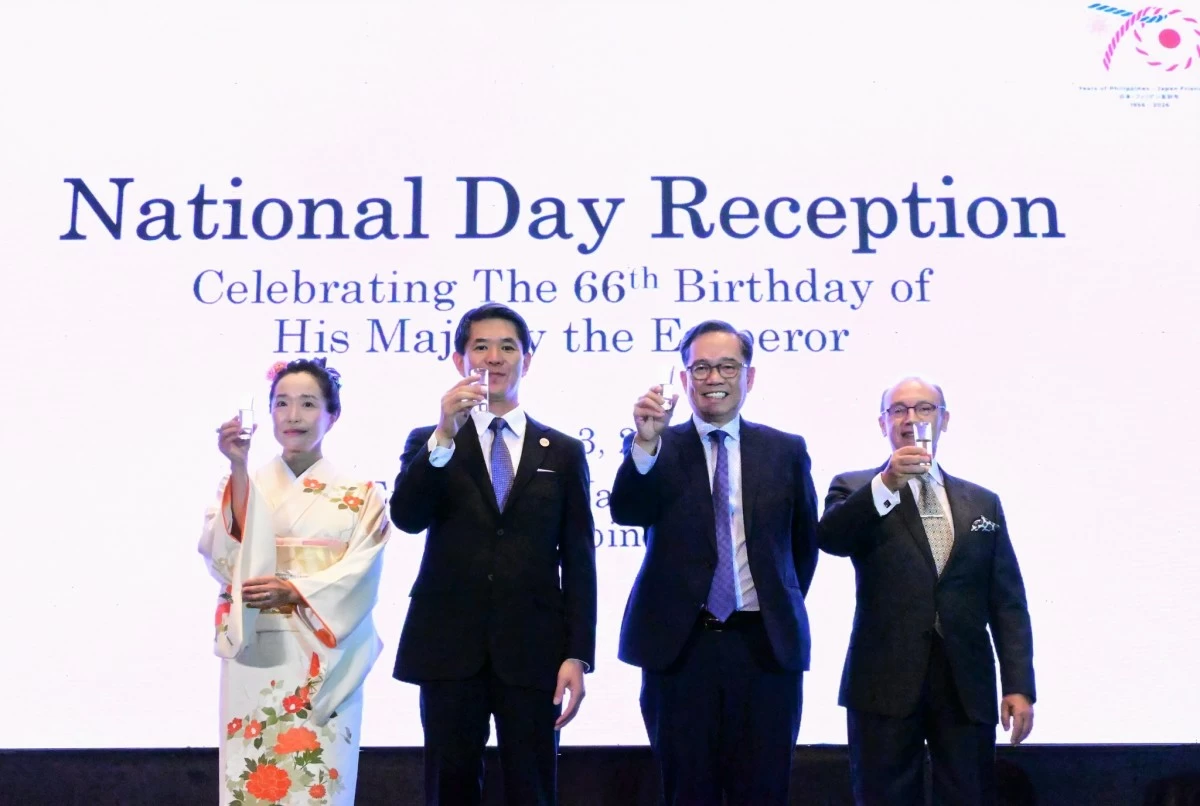
Mme. Akiko Endo, Ambassador Endo Kazuya, DFA Undersecretary for Policy Leo Herrera-Lim, and Ambassador of the Kingdom of Monacco Mohammed Rida El-Fassi raise their glasses in a celebratory toast.
National day receptions often follow a familiar rhythm—anthems, speeches, ceremonial toasts, and a ballroom filled with diplomats, policymakers, cultural purveyors, and business leaders moving easily between conversations. Yet some evenings carry a deeper sense of history and the relationships that have shaped it. The Japanese National Day reception held on March 3, 2026 at the Grand Hyatt Manila was one of them.
Hosted by Ambassador Kazuya Endo to mark the 66th birthday of His Majesty Emperor Naruhito, this year’s celebration carried additional weight: 2026 marks the 70th anniversary of the normalization of diplomatic relations between Japan and the Philippines. Seven decades after ties were formally restored in 1956, the relationship today stands as one of the most significant partnerships in the Indo-Pacific.
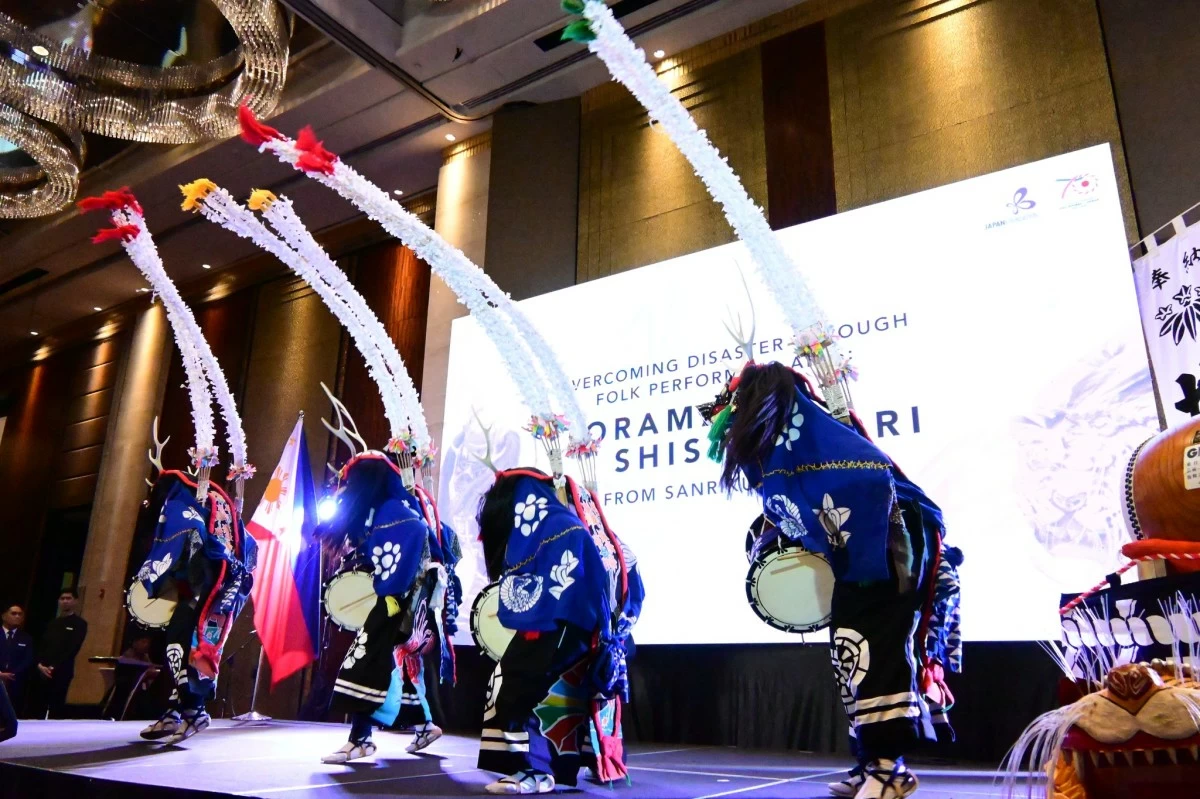
Japanese performers from the Sanriku region showcase the Gyozan-style Maeda Shishiodori (deer dance) originally performed during local festivals to pray for abundant harvests and protection.
The theme of the evening, “Weaving the Future Together: Peace, Prosperity, Possibilities,” captured that evolution well, and even echoed the Philippines’ own theme for its pavilion at World Expo 2025 in Osaka. The story of Philippine-Japanese relations is ultimately one of transformation. From the painful memories of war, the two countries have built a partnership that now touches nearly every dimension of public life: trade, infrastructure, security cooperation, culture, and everyday people-to-people exchange.
History, of course, casts a long shadow over the relationship. The devastation of Manila in 1945 remains one of the most tragic chapters of the Second World War in Asia. When diplomatic relations were restored in 1956, reconciliation was not automatic—it required patience, sustained dialogue, and a willingness from both nations to move forward. Few would have predicted then how deeply intertwined the two countries would become.
Today, Japan is among the Philippines’ closest allies and one of its most important economic partners. Japanese infrastructure has reshaped Philippine cities, development cooperation has supported everything from railways to disaster resilience, and security cooperation has grown steadily as both nations navigate a more complex regional environment.
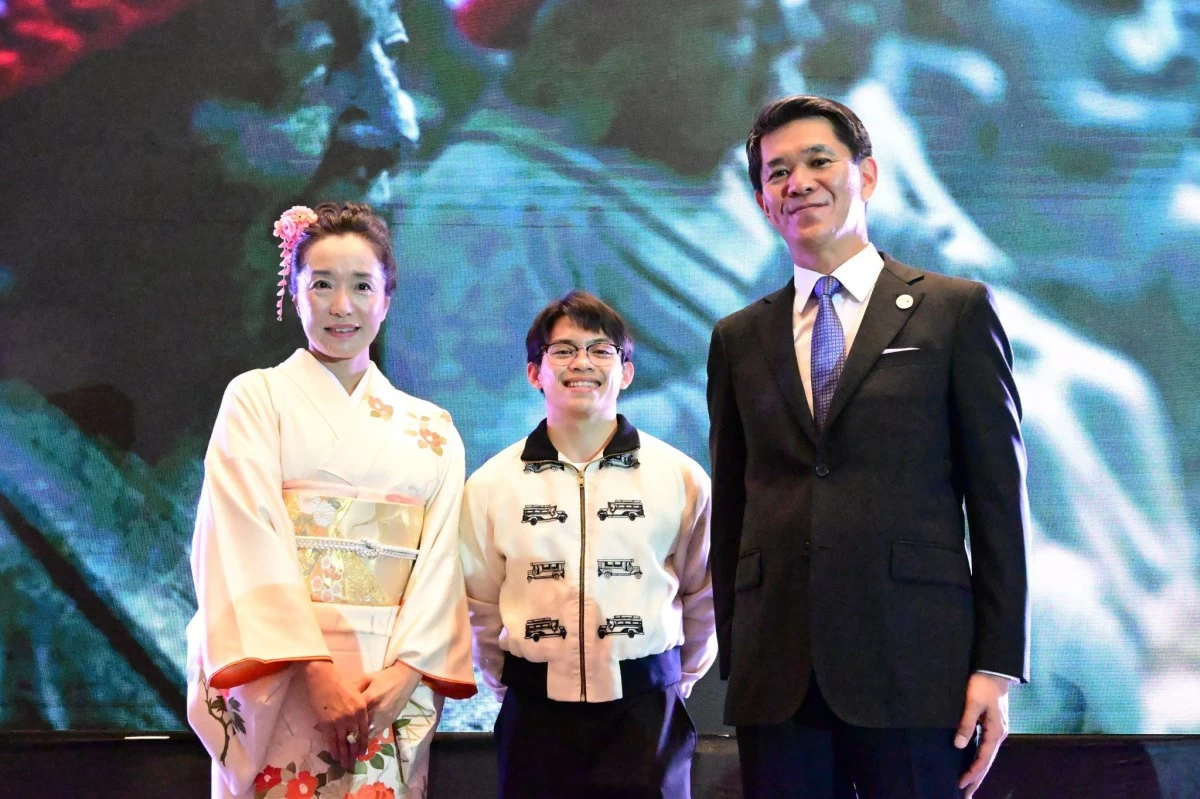
Ambassador Kazuya Endo and Mme. Akiko Endo celebrate alongside two-time Olympic champion Carlos Yulo.
At the same time, millions of day-to-day interactions—Filipino professionals working in Japan, Japanese businesses operating in Philippine communities, students, artists, athletes, and travelers moving between the two countries—have strengthened the relationship in ways that go far beyond diplomacy. That sense of depth was evident at the reception.
Senior Philippine officials, members of Congress, business leaders, and members of the diplomatic corps gathered for the occasion. Department of Foreign Affairs (DFA) Secretary Maria Theresa Lazaro delivered a video message, while Undersecretary for Policy Leo Herrera-Lim led the ceremonial toast. Olympic gold medalist Carlos Yulo, who trained in Japan, also made an appearance, a reminder that the relationship now extends naturally into sports and cultural exchange.
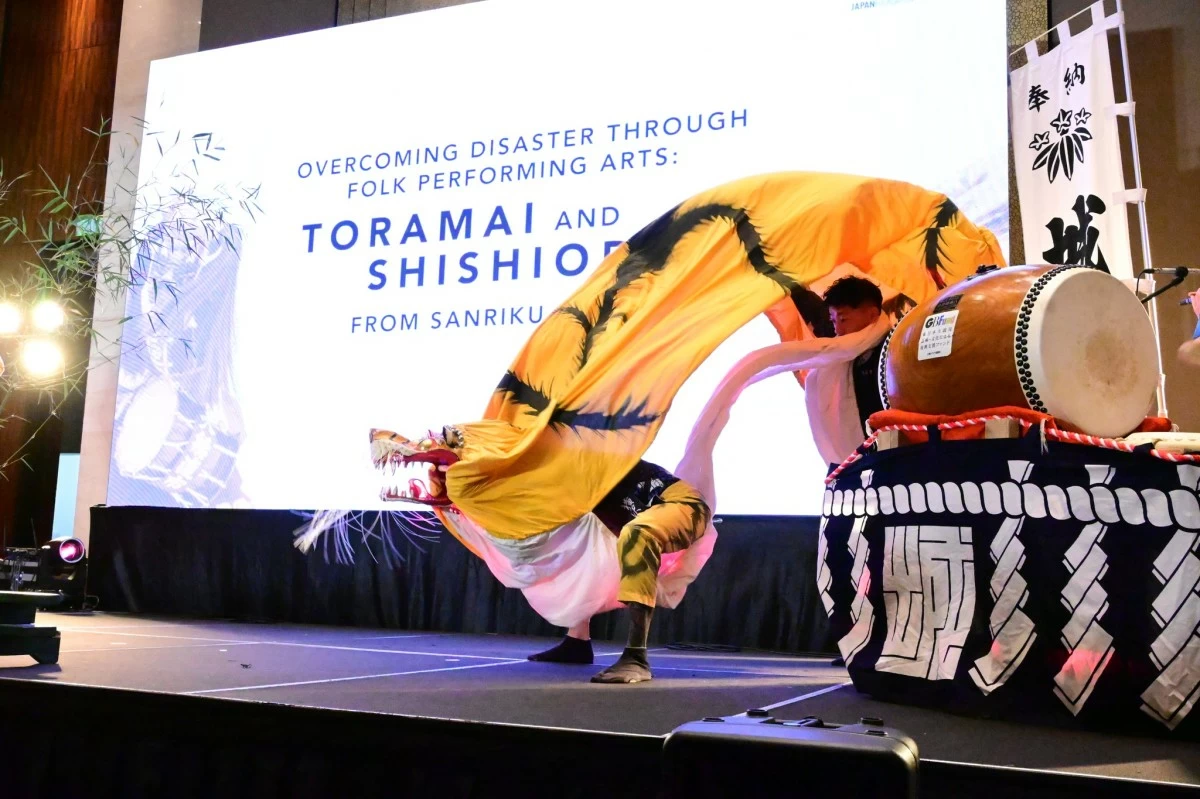
The traditional Otsuchi Shiroyama Toramai (tiger dance).
The evening itself offered a glimpse of Japanese tradition. Performers from Sanriku presented the “Maeda Shishiodori” deer dance and the “Otsuchi Shiroyama Toramai” tiger dance—folk performances once associated with prayers for good harvests and now revived as part of cultural recovery efforts following the Great East Japan Earthquake.
Music followed, with the Philippine and Japanese national anthems performed by the Annex Chorale Ensemble, composed of young musicians from the University of the Philippines College of Music. Around the hall, ikebana arrangements and bonsai displays added elegance, while Japanese companies showcased wagyu beef, seafood, strawberries, sake, and other specialties.
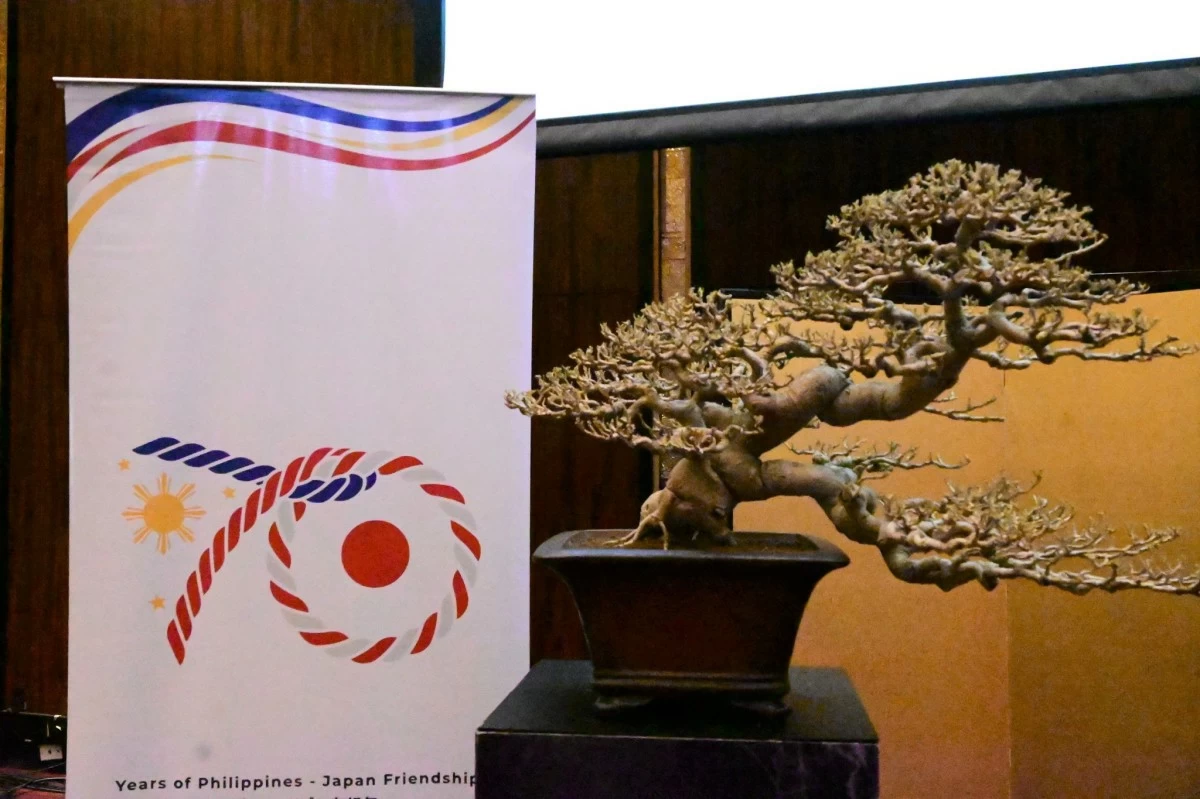
The 70th anniversary logo of Philippines–Japan diplomatic relations, featuring a Japanese shimenawa rope intertwined with Philippine abaca fiber. A symbol of unity and partnership.
Yet the symbolism of the evening perhaps came through most clearly in the anniversary logo marking the 70th year of diplomatic relations, which will be featured throughout the year at commemorative events organized by the Japanese Embassy in Manila and the Philippine Embassy in Tokyo. The design intertwines a Japanese shimenawa rope with Philippine abaca fiber—a visual reminder of two traditions braided together.
Meanwhile, in Tokyo, the anniversary is being marked just as actively on the other side of the relationship. The Philippine Embassy and its partner agencies have also launched a year-long program to celebrate the milestone anniversary, highlighting not only diplomacy but also culture, trade, and innovation.
The celebrations opened in January with a landmark exhibition titled “The Philippine Coconut: Tree of Life, Seed of Innovation” at the Tokyo Midtown Design Hub in Minato. Organized by the Department of Trade and Industry (DTI) through the Philippine Trade and Investment Center (PTIC) in Tokyo, with the Philippine Embassy as a key partner, the exhibition drew more than 200 guests from the diplomatic corps, Japanese government agencies, major trading companies, investors, and members of the creative sector.
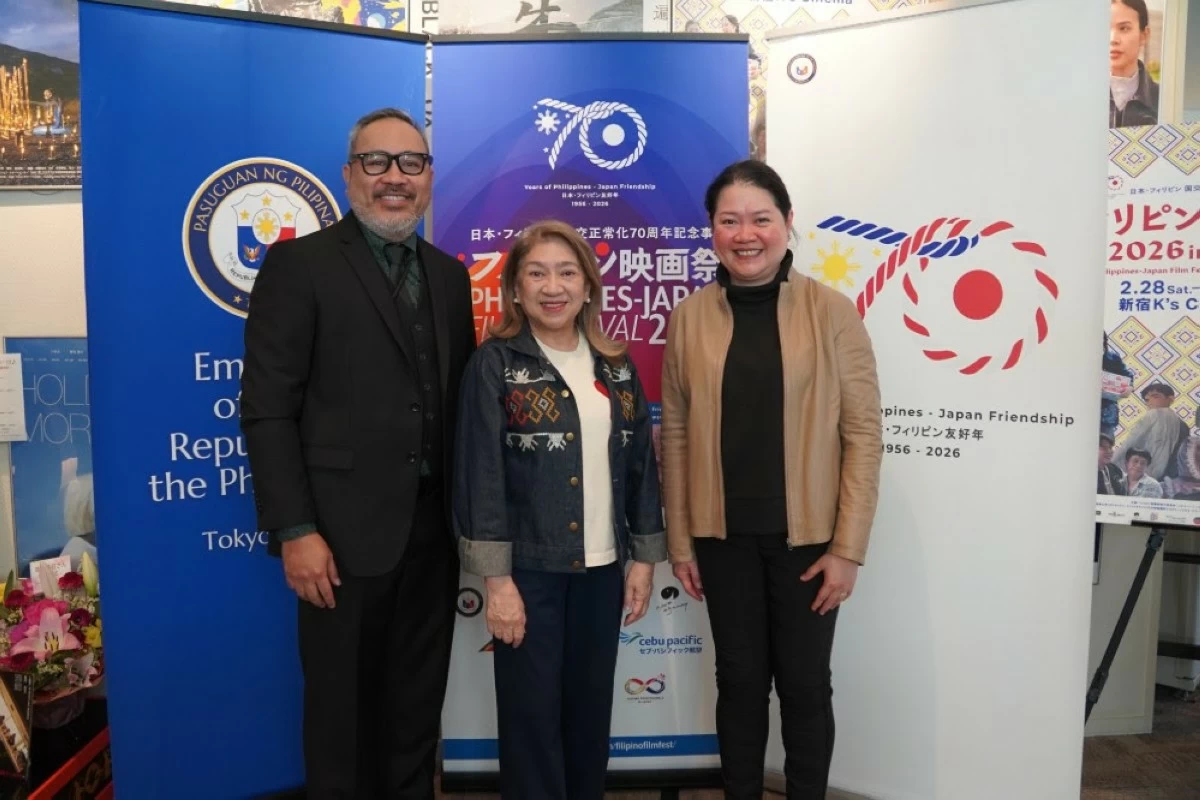
Philippine Ambassador to Japan Mylene J. Garcia-Albano (center) with Consul General Shirlene C. Mananquil of the Philippine Consulate General in Nagoya, and film director Jaime Pacena II.
In her remarks, Philippine Ambassador to Japan Mylene Garcia-Albano described the exhibition as the official kickoff event for the anniversary year. The coconut, often called the Philippines’ “Tree of Life,” served as a fitting symbol, representing sustainability, creativity, and the shared pursuit of innovation that increasingly defines the partnership between the two countries.
The exhibition explored the coconut beyond being a mere agricultural commodity but as a material with applications in architecture, design, food, wellness, and climate-resilient infrastructure. For Japanese audiences, it was a reminder that the Philippines is also an increasingly dynamic economic collaborator.
The commemorative program has also extended into cinema. In late February, the inaugural Philippines-Japan Film Festival opened in Shinjuku, with the Philippine Embassy in Japan partnering with the festival’s organizers and hosting a special screening of “Kono Basho”.
Directed by Jaime Pacena II, the Filipino-Japanese film follows two half-sisters raised in different cultural environments—one in the Philippines and the other in Japan—who reconnect after their Japanese father’s death. It is, in many ways, an intimate story about distance, memory, and reconciliation. A fitting choice for an anniversary that is itself about how two nations moved from post-war healing to one of Asia’s most dynamic bilateral relationships.
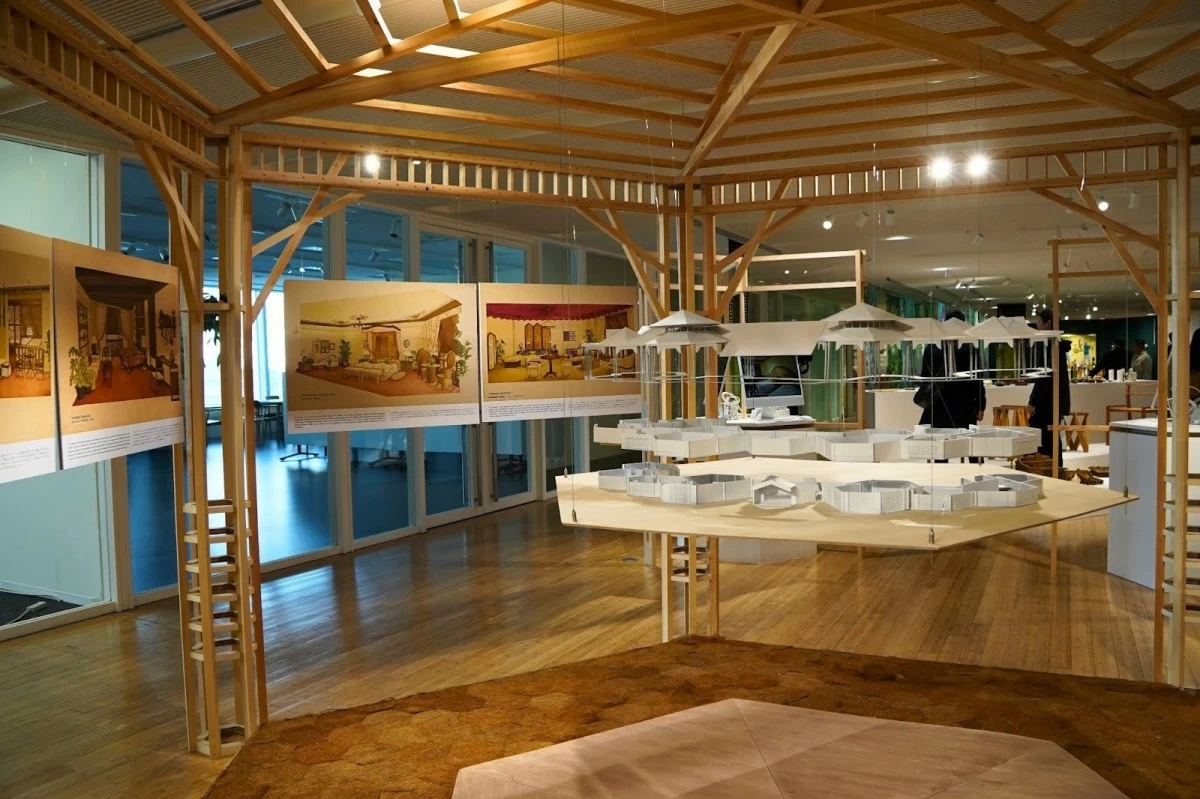
'The Philippine Coconut' exhibition’s pavilion in Tokyo, inspired by the Coconut Palace.
The film festival, which also featured titles such as “Call Me Mother”, “Iti Mapupukaw”, and “Plan 75”, offered another reminder that diplomacy is not sustained by policy alone. It is also shaped by stories, by shared cultural spaces, and by the willingness to see one another in more human and nuanced ways.
Sometimes diplomacy, however, finds its most charming expression in everyday experiences.
In another anniversary initiative, the Filipino national dish adobo recently appeared on the international menu of Kura Sushi, one of Japan’s largest conveyor-belt sushi chains with more than 500 branches worldwide. The limited-time dish reimagined adobo using sushi vinegar and paired it with Japanese-style tamagoyaki, blending Filipino flavors with Japanese ingredients.
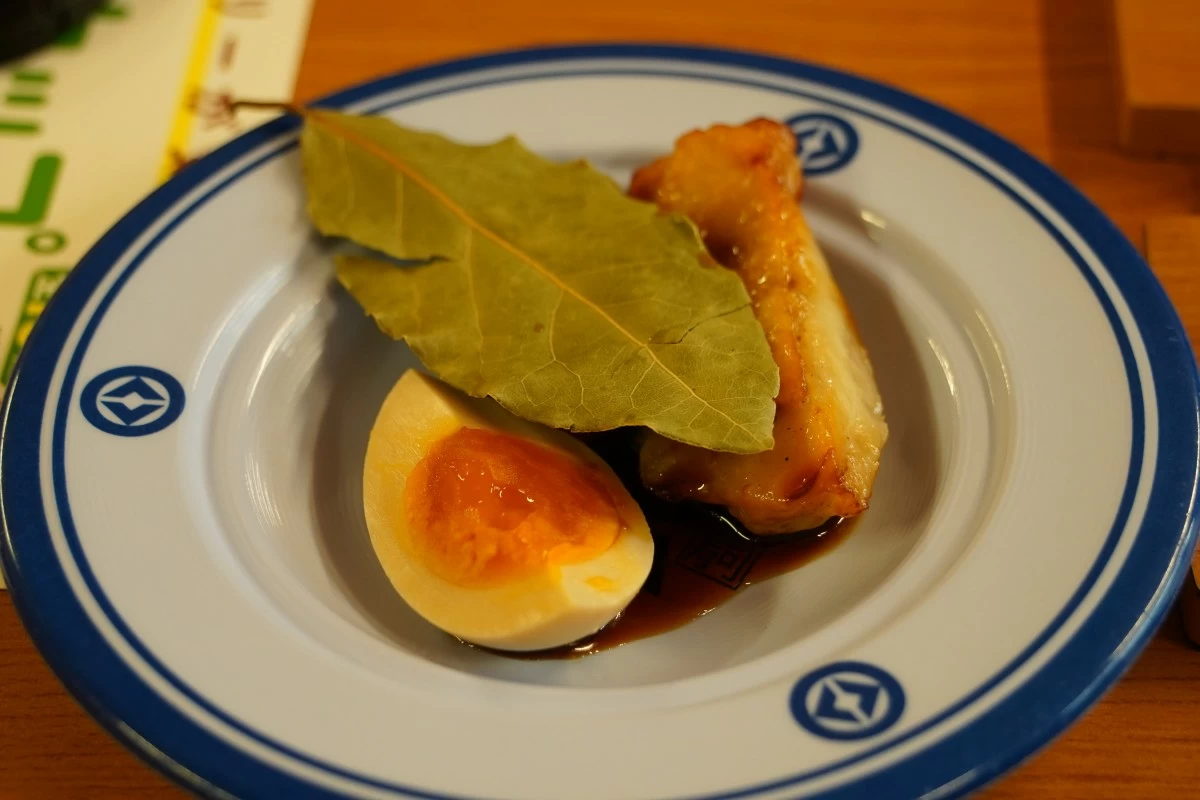
Adobo reimagined. Kura Sushi's take on the Philippines' national dish.
It may seem like a small gesture, but food often succeeds where formal diplomacy cannot—it invites people to experience another culture in the most immediate way possible.
Seventy years after diplomatic relations were restored, the Philippines and Japan are often described as being in a “golden age” of partnership. The phrase may sound like diplomatic shorthand, but in many ways it reflects a genuine reality. The relationship today is not defined solely by governments but by the countless exchanges between two societies that have grown familiar with one another over time.
And that may be the most remarkable transformation of all.
From a difficult shared past has emerged one of the strongest and most forward-looking partnerships in Asia—proof that diplomacy, when sustained across generations, can turn history’s hardest chapters into enduring friendship.