







Raising our bar in education
Published Mar 8, 2026 12:05 am
|
Updated Mar 8, 2026 01:18 pm


HEARD IT THROUGH THE GRIPE-VINE
When we speak of the sad situation we find ourselves in terms of political choices, how we keep electing the “usual suspects,” and that whether on a national or local level, there’s a dearth of true performance-driven public officials; we often point to the dismal level of education as one of the main culprits as to why we can’t extricate ourselves from this “cycle of despair.” And to very frank, it’s often voiced by those who make it almost sound like they’re separate and distinct from the general public; with the implication, that they’re smarter, and know better. But do they try and do anything substantive about this state of affairs? Or are they just bitter complainers?
While our Department of Education and DepEd Secretary Sonny Angara have been tirelessly setting the foundation for a marked improvement in the quality of the classrooms and teachers providing basic education; we often ask what’s happening at the level of higher education, and if we are producing in numbers, Filipino graduates who are globally competitive and can flourish. That some Filipinos, against all odds, do excel is a proven proposition – but what we’re after is raising the bar of higher education for the majority of Filipinos who go for that academic degree.
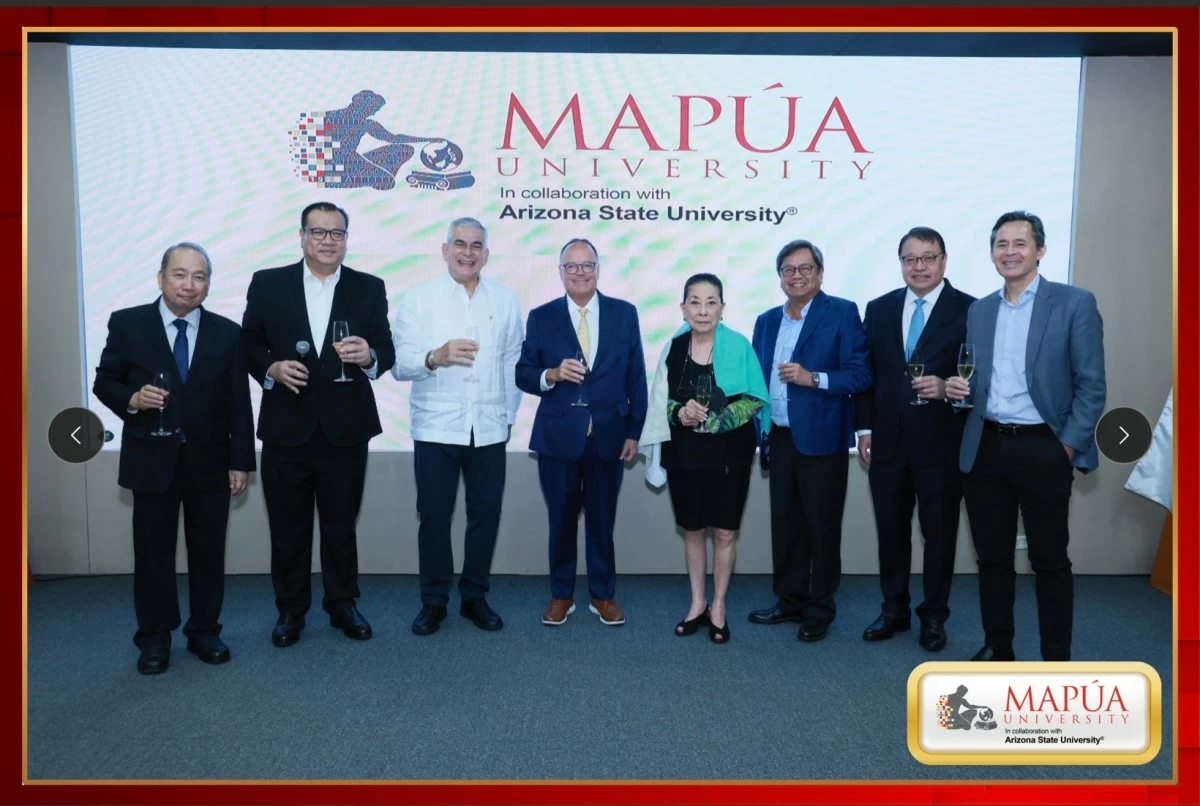
THE DIRECTORS of iPeople and Mapúa University, with Dr. Rick Shangraw of Cintana Education (center), formerly of Arizona State University.
If we go by the recognized bodies that rank universities worldwide, it would seem we’ve been on a decline for some decades now. In the QS World University Rankings of 2026, the highest ranked Philippine academic institution would be the University of the Philippines, but coming in at 362nd. At 511th, the Ateneo is the highest-ranked private university. Others appearing on the list include De La Salle University (654th), University of Santo Tomas (851-900 range), Adamson University (1001-1200), and Mapúa University (1401+).
Which is why it’s always encouraging to report on academic institutions that are being pro-active and committed to building futures, and ensuring that these futures are solidly built, and developed. Just the other week, one such move came to my attention, and it’s the fruition of a relationship that already existed, but just got much better!
Dr. Rick Shangraw is the President of Cintana Education, and was formerly with Arizona State University (ASU), ranked number one over several years as “Most Innovative School” by US News & World Report, and in the top one percent of international universities, according to the Center for World University Rankings. Dr. Shangraw was in Manila to join the Directors of iPeople, a noted joint venture in education forged by the Yuchengco-led House of Investments and the Ayala Corporation. Also on hand was Dr. Dodjie Maestrecampo, President and CEO of Mapúa University.
Together, the parties concerned were launching the expansion of their ground-breaking partnership, whose aim is to globalize Philippine higher education. As Dr. Shangraw made very clear in his speech, this was “not about importing a US model; but about co-creating a globally relevant, locally-grounded model, one that respects cultural context, while delivering global standards.”
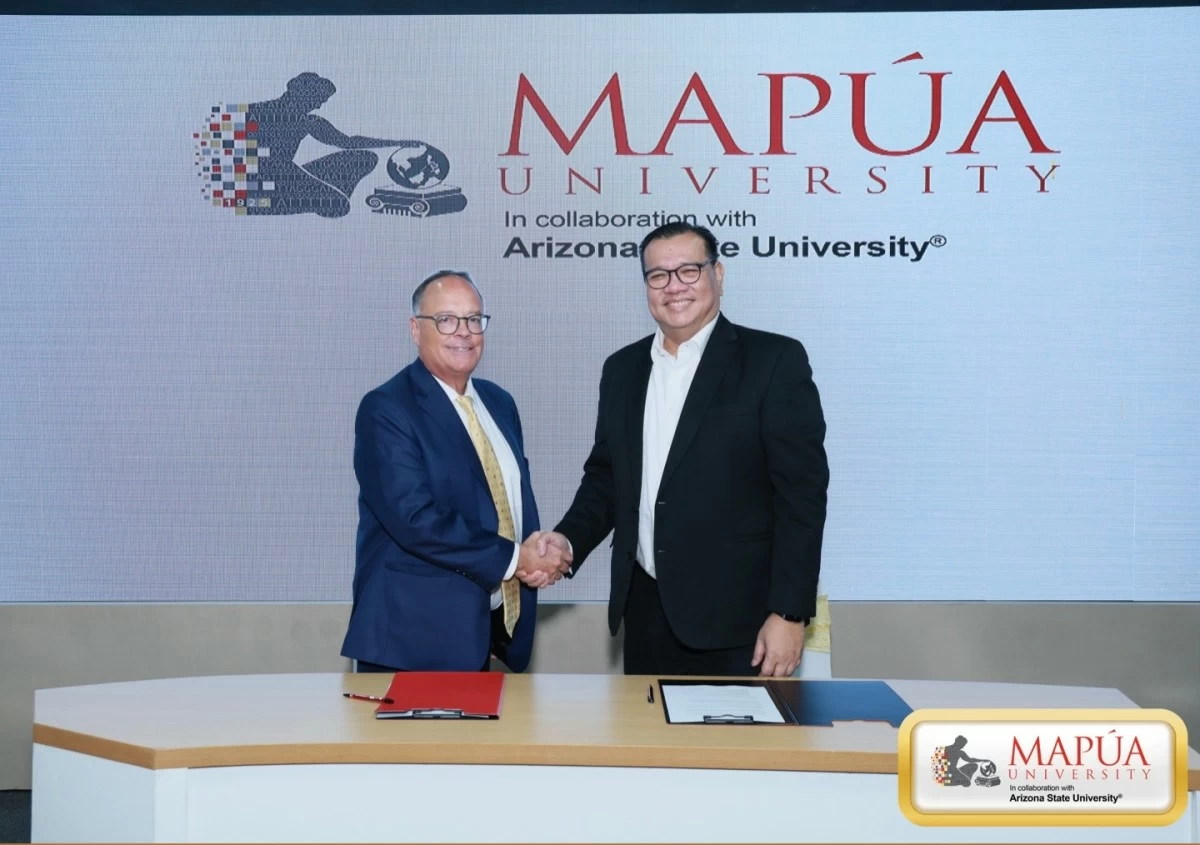
DR. RICK SHANGRAW, President of Cintana Education, and Dr. Dodjie Maestrecampo, President and CEO Mapúa University.
For Dr. Dodjie Maestrecampo, he explained how this was going beyond the original partnership that had been generated for degrees in business and health sciences. With the expansion of the scheme, there would now be dual degrees, accelerated Master’s programs, and international student experiences being offered. And for those who feel discouraged by the present immigration situation in the USA with the Trump administration and the ICE, there’s always the option to take the courses via ASU Online. Students at all four existing Mapúa schools can avail of this strengthened partnership.
The Artificial Intelligence (AI) enabled teaching programs, and digital learning models, of Arizona State University form part of the new program; with faculty exchange and joint research also on the new agenda of enhanced partnership. Simply put, it’s about bringing world class education to our local university classrooms, thereby elevating Higher Education at the Mapúa Education Group campuses to a recognized global level. The stage then is being set to make the globally competitive Filipino a much more reachable target – an impending reality that we can all look forward to.
The key impact initiative that caught my attention is the planned establishment of a Green College, to be benchmarked against ASU’s Rob Walton College of Global Futures School of Sustainability.
As was reiterated during the launch ceremony, this was not about announcing a partner for mere symbolism, or because of the partner’s global reputation; but it was one rooted in alignment. The partnership was already in existence, and with a proven track record; so that momentous day was about refining, expanding, and elevating the partnership — all to the benefit of the students of the Mapúa Education Group.
Congratulations, and a salute, to the Mapúa Education Group, to Cintana Education, Arizona State University, and to iPeople.