






Manila Bulletin
 Philippines
National
DOST pushes stronger mechanisms to bridge gap between research and real-world innovation
Philippines
National
DOST pushes stronger mechanisms to bridge gap between research and real-world innovation
Philippines
National
DOST pushes stronger mechanisms to bridge gap between research and real-world innovation
DOST pushes stronger mechanisms to bridge gap between research and real-world innovation
By Jel Santos
Published Mar 8, 2026 02:31 pm


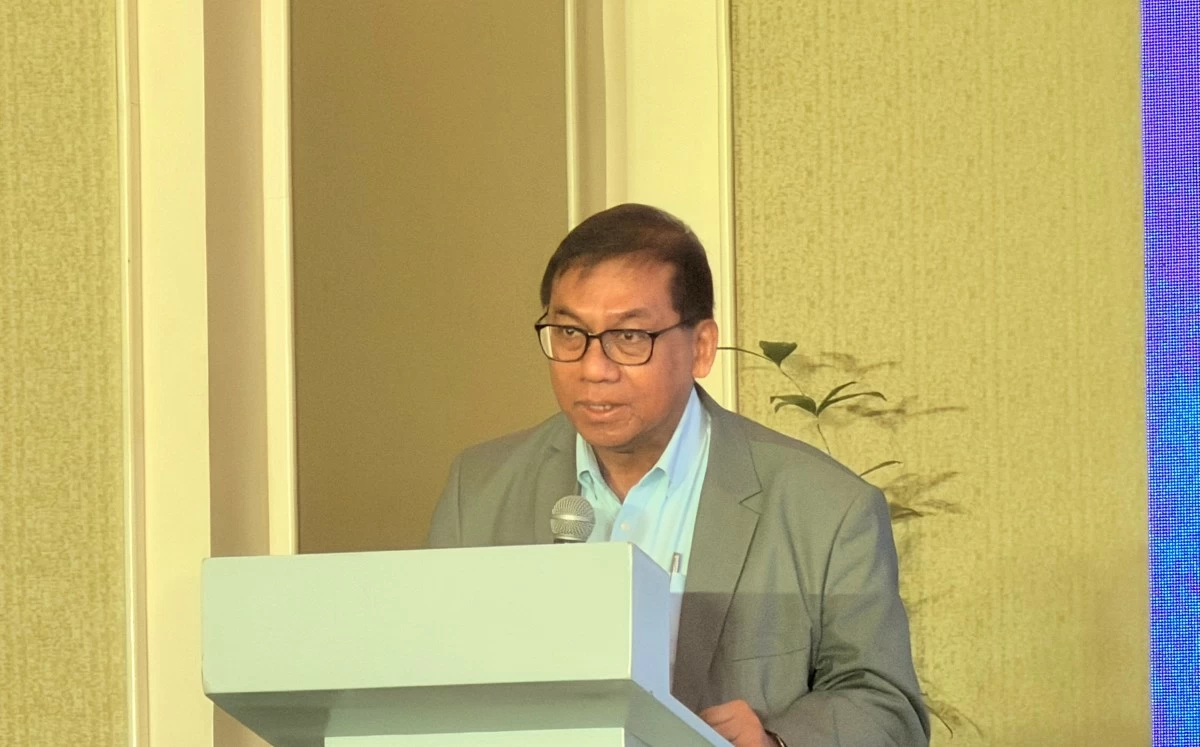
DOST Secretary Renato U. Solidum Jr. (JEL SANTOS/MB PHOTO)
Seeking to bridge the gap between research and real-world applications, the Department of Science and Technology (DOST) is pushing for stronger mechanisms to ensure that innovations developed in Philippine laboratories reach industry, communities, and the broader economy.
During the Ready, Set, Tech: National Capacity Building Workshop on Technology Readiness and Valuation held in Makati City, DOST Secretary Renato U. Solidum Jr. said the government is strengthening mechanisms that will allow emerging technologies to move more efficiently from research to commercialization.
“Today’s engagement reflects a clear and deliberate shift in how we strengthen innovation governance in the Philippines,” Solidum said in his opening message.
“For many years, we have supported research and development across priority sectors. The next imperative is to ensure that the technologies we generate are systematically assessed, validated, de-risked, and positioned for market and societal deployment,” he added.
According to Solidum, the initiative is part of the rollout of the Philippine Technology Evaluation and Standards for Testing (PHITEST), a framework that institutionalizes internationally benchmarked approaches to assessing Technology Readiness Level, Market Readiness Level, Manufacturing Readiness Level, and technology valuation.
“This is not merely a technical exercise. It is a governance reform—one that aligns standards, clarifies evidence requirements, strengthens evaluation integrity, and creates a common language among developers, evaluators, industry adopters, and investors,” he said.
Moreover, the DOST chief underscored that readiness assessment is intended to strengthen decision-making and accelerate the pathway from research laboratories to real-world applications.
Meanwhile, Lotus Postrado, the country director of the British Council in the Philippines, said many innovations emerging from Philippine laboratories have yet to reach wider use in society.
“Every year, countless innovative ideas emerge from Philippine labs — yet only a fraction reach the people who need them most,” she said.
“That is why this workshop is so important. It is about turning potential into impact, and ensuring that our systems for innovation are robust, practical, and internationally aligned,” she went on.
The workshop, organized in partnership with the British Council and supported by the UK government’s International Science Partnerships Fund, seeks to strengthen the country’s innovation ecosystem by equipping institutions and stakeholders with tools for assessing technology readiness and valuation.
Postrado said the initiative also reflects broader science and innovation cooperation between the Philippines and the United Kingdom.
“Science and innovation are among the most meaningful ways countries collaborate, sharing knowledge, strengthening institutions, and building pathways that allow ideas to move from research into real-world solutions,” she said.
Solidum said international collaboration is essential in strengthening the country’s innovation systems.
“Our partnership with the British Council and Oxentia brings global insight, but our responsibility is to contextualize these frameworks to Philippine realities,” he said.