

ADVERTISEMENT

Alex Eala eyes redemption vs Coco Gauff in Indian Wells

Published Mar 8, 2026 11:53 am  |  Updated Mar 8, 2026 01:34 pm

At A Glance

  • The much-anticipated showdown is set for 9 a.m., marking their second meeting in just two weeks.
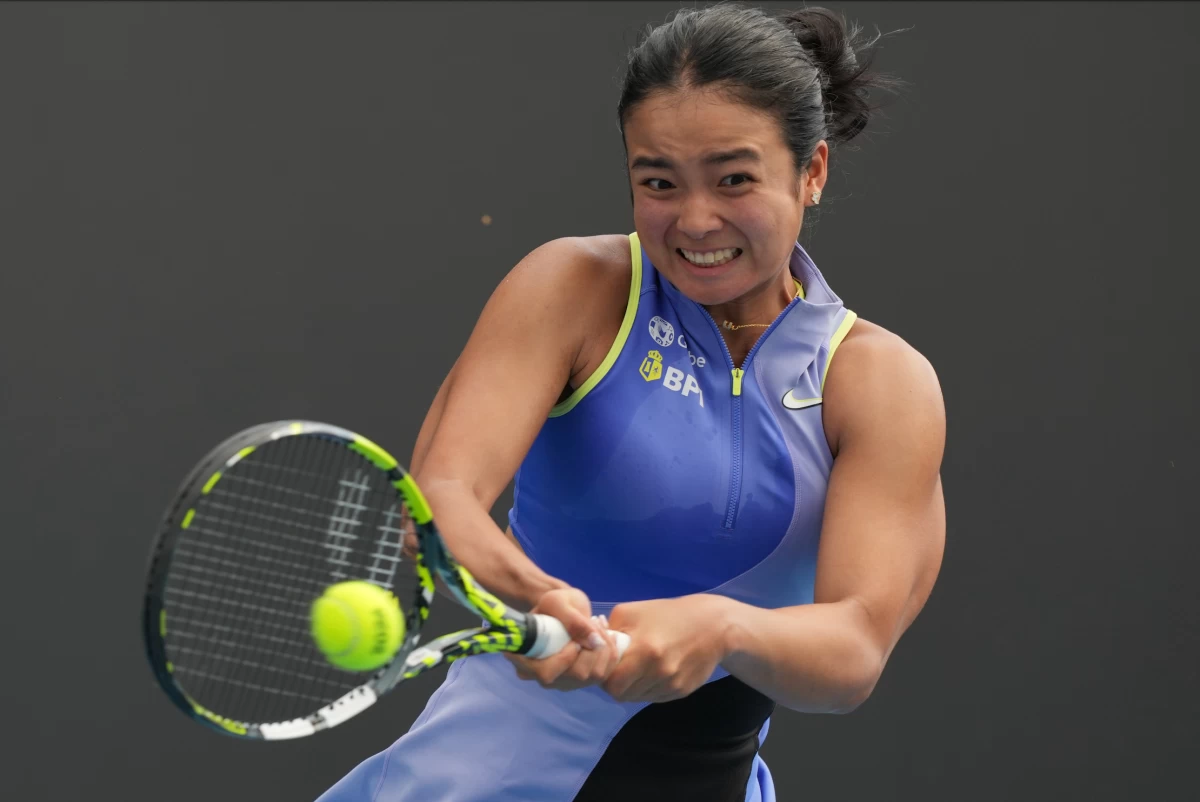
Alex Eala faces a familiar rival in Coco Gauff at the Indian Wells. (File Photo/ AP)
Alex Eala gets another shot at world No. 4 Coco Gauff when they clash in the Round of 32 at the Indian Wells on Monday, March 9 (Philippine time).
The much-anticipated showdown is set for 9 a.m., marking their second meeting in just two weeks.
At the Dubai Tennis Championships, the former doubles partners faced each other in the quarterfinals with Gauff prevailing 6-2, 6-2.
Expect it to be business as usual for the 31st-ranked Eala, who is hoping to make an impact in her debut in this WTA1000 event. She is coming off a morale-boosting, hard-fought victory over Dayana Yastremska, 7-5, 4-6, 7-5, the other day before a huge crowd composed mostly of Filipino fans.
The 20-year-old Eala is also expected to draw strength from the crowd, and has shown significant improvement on her serve where she registered 75 percent on her first serve against Yastremska compared to her all-time average of 66.4 percent.
But Gauff is one strong server herself, posting 86 percent on her first serve in her 6-3, 7-6 (5) victory over Kamilla Rakhinova -- a far cry from her 61.9 percent average.
Prior to this tournament, Gauff made it to the semifinals in Dubai, where she lost to eventual runner-up Elina Svitolina.
A two-time Grand Slam champion, Gauff also packs experience despite being only older by Eala by one year.
Meanwhile, Eala bowed out early in the women’s doubles of the Indian Wells after she and Iva Jovic yielded to Jelena Ostapenko and Hailey Baptiste in the opening round on Sunday, March 8 (Philippine time).
Eala and Jovic, reunited after reaching the semifinals of the ASB Classic last January, looked to seize early momentum against their more experienced, unseeded opponents, but Ostapenko and Baptiste dictated the tempo from the outset and never looked back.
Ostapenko, a 2024 US Open doubles champion, and Baptiste, who has one WTA doubles crown, quickly asserted their might with 3-0 and 4-1 leads before claiming the first set, and continued their assault in the second frame, needing only one hour to win the match.
The victory arranged Ostapenko and Baptiste a Round of 16 meeting with Mirra Andreeva and Victoria Mboko, who stunned fourth seed Zhang Shuai and Elise Mertens, 6-4, 4-6, 10-8.
ADVERTISEMENT
.most-popular .layout-ratio{ padding-bottom: 79.13%; } @media (min-width: 768px) and (max-width: 1024px) { .widget-title { font-size: 15px !important; } }

{{ articles_filter_1561_widget.title }}

.most-popular .layout-ratio{ padding-bottom: 79.13%; } @media (min-width: 768px) and (max-width: 1024px) { .widget-title { font-size: 15px !important; } }

{{ articles_filter_1562_widget.title }}

.most-popular .layout-ratio{ padding-bottom: 79.13%; } @media (min-width: 768px) and (max-width: 1024px) { .widget-title { font-size: 15px !important; } }

{{ articles_filter_1563_widget.title }}

{{ articles_filter_1564_widget.title }}

.mb-article-details { position: relative; } .mb-article-details .article-body-preview, .mb-article-details .article-body-summary{ font-size: 17px; line-height: 30px; font-family: "Libre Caslon Text", serif; color: #000; } .mb-article-details .article-body-preview iframe , .mb-article-details .article-body-summary iframe{ width: 100%; margin: auto; } .read-more-background { background: linear-gradient(180deg, color(display-p3 1.000 1.000 1.000 / 0) 13.75%, color(display-p3 1.000 1.000 1.000 / 0.8) 30.79%, color(display-p3 1.000 1.000 1.000) 72.5%); position: absolute; height: 200px; width: 100%; bottom: 0; display: flex; justify-content: center; align-items: center; padding: 0; } .read-more-background a{ color: #000; } .read-more-btn { padding: 17px 45px; font-family: Inter; font-weight: 700; font-size: 18px; line-height: 16px; text-align: center; vertical-align: middle; border: 1px solid black; background-color: white; } .hidden { display: none; }
function initializeAllSwipers() { // Get all hidden inputs with cms_article_id document.querySelectorAll('[id^="cms_article_id_"]').forEach(function (input) { const cmsArticleId = input.value; const articleSelector = '#article-' + cmsArticleId + ' .body_images'; const swiperElement = document.querySelector(articleSelector); if (swiperElement && !swiperElement.classList.contains('swiper-initialized')) { new Swiper(articleSelector, { loop: true, pagination: false, navigation: { nextEl: '#article-' + cmsArticleId + ' .swiper-button-next', prevEl: '#article-' + cmsArticleId + ' .swiper-button-prev', }, }); } }); } setTimeout(initializeAllSwipers, 3000); const intersectionObserver = new IntersectionObserver( (entries) => { entries.forEach((entry) => { if (entry.isIntersecting) { const newUrl = entry.target.getAttribute("data-url"); if (newUrl) { history.pushState(null, null, newUrl); let article = entry.target; // Extract metadata const author = article.querySelector('.author-section').textContent.replace('By', '').trim(); const section = article.querySelector('.section-info ').textContent.replace(' ', ' '); const title = article.querySelector('.article-title h1').textContent; // Parse URL for Chartbeat path format const parsedUrl = new URL(newUrl, window.location.origin); const cleanUrl = parsedUrl.host + parsedUrl.pathname; // Update Chartbeat configuration if (typeof window._sf_async_config !== 'undefined') { window._sf_async_config.path = cleanUrl; window._sf_async_config.sections = section; window._sf_async_config.authors = author; } // Track virtual page view with Chartbeat if (typeof pSUPERFLY !== 'undefined' && typeof pSUPERFLY.virtualPage === 'function') { try { pSUPERFLY.virtualPage({ path: cleanUrl, title: title, sections: section, authors: author }); } catch (error) { console.error('ping error', error); } } // Optional: Update document title if (title && title !== document.title) { document.title = title; } } } }); }, { threshold: 0.1 } ); function showArticleBody(button) { const article = button.closest("article"); const summary = article.querySelector(".article-body-summary"); const body = article.querySelector(".article-body-preview"); const readMoreSection = article.querySelector(".read-more-background"); // Hide summary and read-more section summary.style.display = "none"; readMoreSection.style.display = "none"; // Show the full article body body.classList.remove("hidden"); } document.addEventListener("DOMContentLoaded", () => { let loadCount = 0; // Track how many times articles are loaded const offset = [1, 2, 3, 4, 5, 6, 7, 8, 9, 10]; // Offset values const currentUrl = window.location.pathname.substring(1); let isLoading = false; // Prevent multiple calls if (!currentUrl) { console.log("Current URL is invalid."); return; } const sentinel = document.getElementById("load-more-sentinel"); if (!sentinel) { console.log("Sentinel element not found."); return; } function isSentinelVisible() { const rect = sentinel.getBoundingClientRect(); return ( rect.top < window.innerHeight && rect.bottom >= 0 ); } function onScroll() { if (isLoading) return; if (isSentinelVisible()) { if (loadCount >= offset.length) { console.log("Maximum load attempts reached."); window.removeEventListener("scroll", onScroll); return; } isLoading = true; const currentOffset = offset[loadCount]; window.loadMoreItems().then(() => { let article = document.querySelector('#widget_1690 > div:nth-last-of-type(2) article'); intersectionObserver.observe(article) loadCount++; }).catch(error => { console.error("Error loading more items:", error); }).finally(() => { isLoading = false; }); } } window.addEventListener("scroll", onScroll); });

Sign up by email to receive news.