






Manila Bulletin
 Philippines
National
50% electricity discount bill pushed as Pinoys worry over effects of skyrocketing pump prices
Philippines
National
50% electricity discount bill pushed as Pinoys worry over effects of skyrocketing pump prices
Philippines
National
50% electricity discount bill pushed as Pinoys worry over effects of skyrocketing pump prices
50% electricity discount bill pushed as Pinoys worry over effects of skyrocketing pump prices
Published Mar 8, 2026 08:33 pm


At A Glance
- The Lakas-Christian Muslim Democrats (Lakas-CMD) led by its president, Leyte 1st district Rep. Martin Romualdez is banking on the party's pet measure in the House of Representatives to deliver relief in the form of a 50 percent electricity discount for qualified households.
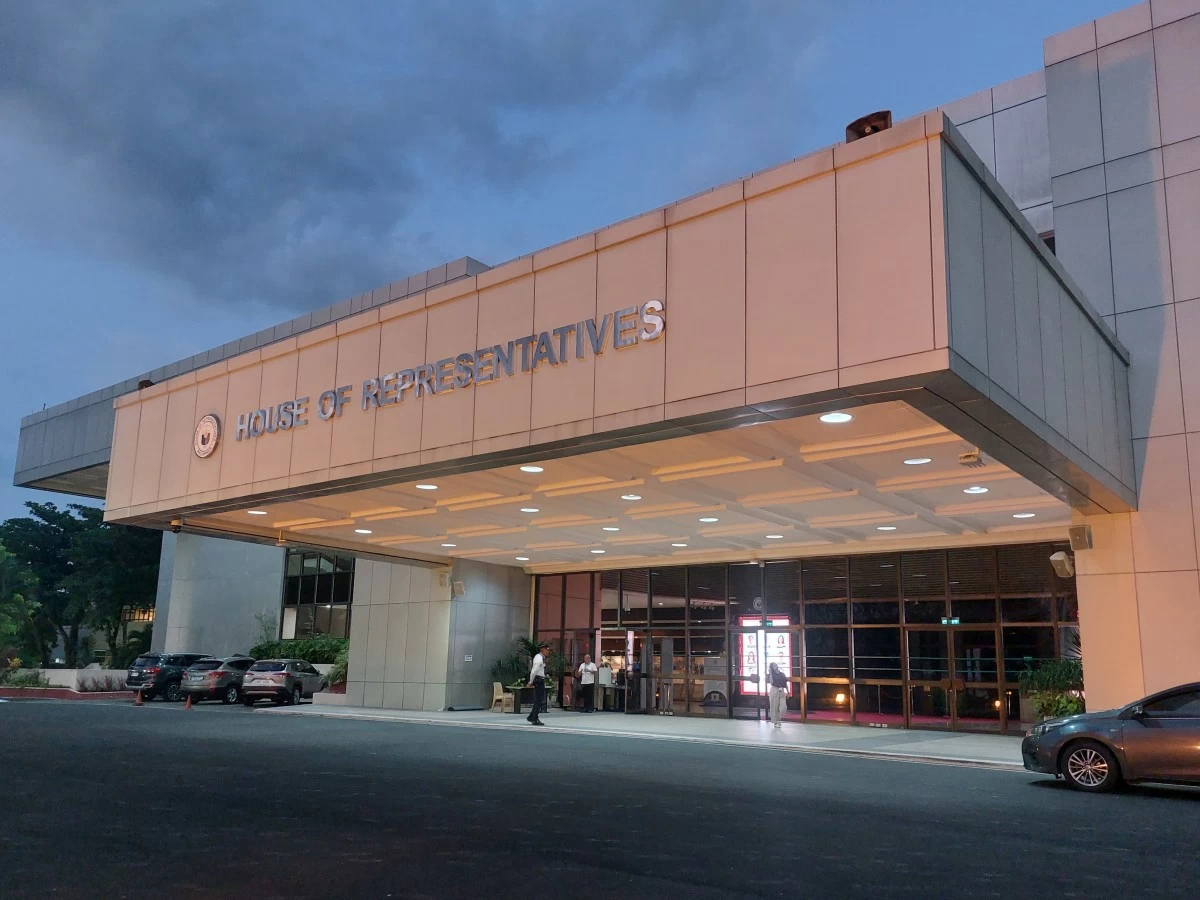
The House of Representatives (Ellson Quismorio/ MANILA BULLETIN)
The Lakas-Christian Muslim Democrats (Lakas-CMD) led by its president, Leyte 1st district Rep. Martin Romualdez is banking on the party's pet measure in the House of Representatives to deliver relief in the form of a 50 percent electricity discount for qualified households.
The proposal, spelled out in House Bill (HB) No. 8191, has taken on a more significant meaning even as Filipino consumers face the ripple effects of skyrocketing pump fuel prices as a result of the raging conflict in the Middle East.
HB No. 8191 forms part of Lakas-CMD'sso-called GINHAWA KIT, or the Kuryente–Internet–Trabaho agenda, which aims to ease the burden of rising household expenses on working families.
The measure is viewed as a direct response to costly electricity bills that continue to strain households, particularly those that only earn minimum wage and struggle to make ends meet.
"Lakas-CMD has resolved to put this electricity relief into legislation. When a minimum wage earner works every day and still comes up short at the end of the month, we have a duty to deliver concrete relief—and one of the most direct ways is to cut power costs at home,” Romualdez said.
House Deputy Speakers Quezon 2nd district Rep. David “Jay-Jay” Suarez and Zambales 1st district Rep. Jay Khonghun filed HB No.8191 on behalf of Lakas-CMD last week.
Suarez said that under the proposed “Ginhawa sa Kuryente Act", the 50 percent discount was “designed for households with at least one minimum wage earner, applied to a single residential service account corresponding to the household’s principal residence, subject to verification, anti-leakage safeguards and periodic revalidation to keep the benefit targeted and credible".
Khonghun said: “Members of Lakas-CMD stressed that this is the kind of relief families can feel right away because electricity is a basic need tied to health, education, safety and livelihood, and a power bill that keeps climbing forces families to make sacrifices on food, transport, school requirements and medicine.”
Alongside the minimum wage earner discount, Romualdez say that the bill also strengthens the lifeline rate for marginalized end-users “by requiring distribution utilities to apply the lifeline benefit automatically to qualified households through secure eligibility matching and account tagging, removing the old burden where the less fortunate families often had to navigate paperwork just to get help they already qualified for".
For qualified marginalized end-users whose monthly consumption does not exceed 50 kilowatt-hours (kWh), the measure provides that the lifeline rate will include a 100 percent discount on applicable electricity charges, with the Energy Regulatory Commission (ERC) setting the detailed parameters, a provision the authors described as a practical protection for households that already live on the edge.
Lakas-CMD stalwarts say automatic enrollment matters because many intended beneficiaries fall through the cracks when the system relies on manual, beneficiary-initiated registration, a setup that tends to exclude families in remote areas or those without time, documents or access to utility offices.
Deputy Speaker Iloilo 1st district Rep. Janette Garin described the measure as “a core component of the party’s GINHAWA KIT legislative package, which focuses on easing the cost of living through measures addressing electricity costs, internet access, and employment opportunities".
She said the kuryente component was designed to deliver the fastest and most tangible relief at the household level.
Lakas-CMD says the bill also aims to make the system fairer for renters and shared connections and households with service accounts that may not be registered under their name.
It directs the Energy Regulatory Commission (ERC) to craft rules that prevent exclusion and to establish a clear, accessible grievance and correction mechanism.
To protect the program from abuse, the measure includes several safeguards, such as a one-household, one-account rule, limitations to a household’s principal residence, and verification standards designed to be simple yet auditable.
The bill also provides for time-bound eligibility with periodic revalidation, as well as penalties for fraud or misrepresentation.
HB No.8191 also proposes the creation of an inter-agency monitoring and oversight committee led by the Department of Social Welfare and Development (DSWD), with the Energy Regulatory Commission (ERC) and the Department of Energy (DOE) serving as co-chairperson.
The panel will monitor implementation, track eligibility matching rates, identify exclusion errors and leakage risks, and ensure compliance by service providers, while keeping data sharing aligned with the Data Privacy Act.