






Manila Bulletin
 Business
The Economy
Ultra oil price hike coming: Diesel up ₱19.62, gasoline up ₱10.43
Business
The Economy
Ultra oil price hike coming: Diesel up ₱19.62, gasoline up ₱10.43
Business
The Economy
Ultra oil price hike coming: Diesel up ₱19.62, gasoline up ₱10.43
Ultra oil price hike coming: Diesel up ₱19.62, gasoline up ₱10.43
Published Mar 7, 2026 10:43 am


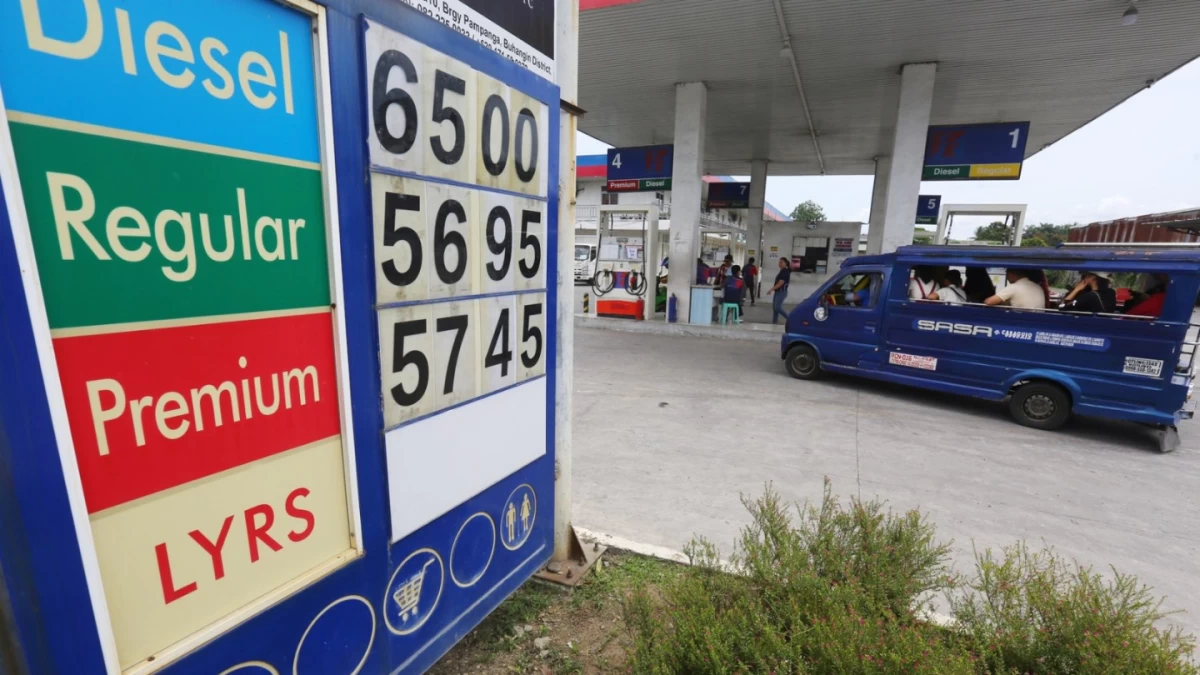
A Gas station in Davao City displays current pump prices as of March 5, 2026, amid warnings of a significant price increase next week. Energy officials and local retailers are monitoring the market closely as geopolitical instability in the Middle East continues to drive up global oil costs. (Photo by Keith Bacongco I MB)
Local energy market is bracing for a record-breaking surge in pump prices next week as escalating Middle East tensions drive global benchmarks to historic highs, prompting calls for emergency interventions and the total overhaul of the country’s aging deregulation framework.
Based on the full five days of trading for the Mean of Platts Singapore (MOPS), the industry’s regional pricing gauge, kerosene is projected to lead the spike with an unprecedented increase of ₱24.92 per liter.
Diesel, the backbone of the nation’s transport and logistics sector, is estimated to rise by ₱19.62 per liter, while gasoline may see an upward adjustment of ₱10.43 per liter. Final price movements are scheduled for official announcement on Monday, March 9.
The magnitude of the looming hike threatens to push fuel costs into uncharted territory. In early March, gasoline prices in Metro Manila were between ₱53.70 and ₱76.50 per liter, while diesel traded from ₱56.80 to ₱74.81. Should the projected increases materialize in full, motorists could face gasoline prices as high as ₱86.93 per liter and diesel costs peaking near ₱94.43.
Energy Secretary Sharon Garin said the Department of Energy (DOE) is in active negotiations with private oil firms to implement the hikes in stages to avoid a sudden inflationary shock.
While the industry has not yet committed to a specific timeline, Garin noted that companies are assessing the proposal and are expected to provide a formal response over the weekend.
On Saturday, the DOE has ordered all oil companies and retail outlets to strictly adhere to official fuel pricing regulations, saying it will crack down on hoarding and unauthorized price hikes.
On Saturday, the DOE has ordered all oil companies and retail outlets to strictly adhere to official fuel pricing regulations, saying it will crack down on hoarding and unauthorized price hikes.
The DOE directive, issued following instructions from President Ferdinand Marcos Jr., mobilizes a multi-agency task force to oversee the domestic petroleum sector.
Energy officials warned that any entity found engaging in predatory pricing or the illegal stockpiling of petroleum products will face severe administrative and criminal penalties.
The government’s heightened surveillance comes as pump prices for the period of March 6 to March 9 showed a wide variance in the country.
High-octane Gasoline (RON 97/100) is currently trading between ₱53.70 and ₱76.50 per liter, while the more commonly used Gasoline RON 95 is priced from ₱50.00 to ₱71.04 per liter. Regular Gasoline RON 91 is retailing for as low as ₱49.00 and as high as ₱64.70 per liter.
The divergence in pricing is also evident in the middle distillates market. Standard Diesel prices currently range from ₱49.00 to ₱66.59 per liter, while premium Diesel Plus variants are selling for ₱56.80 to ₱74.81 per liter. Kerosene, a vital fuel for many rural households and specific industrial applications, remains the most expensive per liter, with prices fluctuating between ₱78.90 and ₱99.89.
Meanwhile, the volatility has reignited a fierce debate over the Downstream Oil Industry Deregulation Act of 1998. Garin argued that the nearly three-decade-old law leaves the government toothless during global supply crises, lacking the mechanisms to cap prices or enforce transparency in cost structures.
She noted that the executive branch will push Congress to amend the law to include stiffer penalties and broader disclosure requirements once the legislative session resumes.
A central point of contention remains the “unbundling” policy, which would require companies to detail the various cost components of a liter of fuel.
Although the Supreme Court previously ruled against the energy department’s attempt to mandate such transparency, Garin suggested that a legislative mandate could override previous legal hurdles to the benefit of consumers.
Industry players, including Jetti Petroleum President Leo Bellas, acknowledged the burden on retailers but signaled a willingness to cooperate with staggered price implementation.
“With the staggered implementation, the oil companies will initially have to bear the difference until the entire amount of the price increase has been fully implemented,” he told Manila Bulletin. “While unfavorable, we believe that by staggering the implementation will help cushion the immediate effects of the hefty price increase for consumers.”
To combat opportunistic pricing, the DOE has intensified field inspections. In Tagum City, authorities recently flagged a retailer for prematurely hiking diesel prices by ₱8.35 per liter ahead of the scheduled adjustment, ordering an immediate reversal to prevent profiteering.