






Manila Bulletin
 Business
The Stock Market
Modern matriarchs: The digital transformation of provincial women
Business
The Stock Market
Modern matriarchs: The digital transformation of provincial women
Business
The Stock Market
Modern matriarchs: The digital transformation of provincial women
Modern matriarchs: The digital transformation of provincial women
Published Mar 7, 2026 08:00 am



The shift from the rice terraces of Ifugao to the high-stakes world of machine learning is not a journey most would expect to take from a kitchen table. Yet, for hundreds of women in the Philippines, the distance between rural life and the global tech economy is shrinking.
As the sun rises over the highlands of Benguet and the coastal stretches of Davao del Norte, a quiet digital transformation is taking place. It is not being led by engineers or venture capitalists in Makati, but by mothers, caregivers, and provincial residents who are becoming the unlikely backbone of the artificial intelligence (AI) revolution.
To mark the start of 2026 and the arrival of Women’s Month, the Aboitiz Foundation is betting heavily on this transition. The foundation, which serves as the social arm of the Aboitiz Group, recently celebrated the graduation of 231 women from its Elevate AIDA program. The acronym stands for Artificial Intelligence Data Annotation, a technical term for a remarkably human task. These women are being trained to bridge the gap between raw data and machine intelligence, providing the human intuition that AI needs to function.

Elevate AIDA participants from Cebu City celebrate their graduation last January, equipped with new digital skills that open pathways to sustainable employment and financial independence.
This initiative is part of a broader evolution for the Aboitiz Group, which has rebranded itself as the country’s first “Techglomerate.” While the parent company manages interests in power, banking, and infrastructure, its foundation is focused on a more granular level of development.
Solving the caregiving penalty
By teaching women in far-flung provinces how to label data, Aboitiz is attempting to solve a chronic problem in the Philippine labor market: the “caregiving penalty” that forces educated women out of the workforce.
The economic logic is straightforward. For an AI to recognize a pedestrian in a self-driving car’s camera or to understand a specific regional dialect, a human must first tell the machine what it is looking at. This process of data annotation has traditionally been outsourced to hubs in India or East Africa. However, Aboitiz and its partner, the social enterprise Connected Women, are proving that this work can be done just as effectively from a living room in Batangas or a community center in Cebu.

Ginggay Hontiveros-Malvar, President of the Aboitiz Foundation
“Aboitiz Foundation believes that when women are equipped with future-ready skills, they are better positioned to uplift not only themselves but also their families and communities,” says Ginggay Hontiveros-Malvar, President of the Aboitiz Foundation.
“Through Elevate AIDA, we are helping open doors to the digital economy for women who may otherwise be left behind. These graduations are not just the culmination of training—they mark the beginning of new possibilities for sustainable income, greater confidence, and more resilient communities across the country,” she added.
The program is designed specifically for women who face barriers to traditional employment. In the Philippines, cultural expectations often place the burden of managing the household and caring for the elderly or children squarely on women. This frequently results in a “brain drain” where skilled women are sidelined because they cannot commit to a nine-to-five office job in a distant city. The online learning model of Elevate AIDA flips this script, allowing participants to pursue flexible, home-based work that fits around their lives.
A decentralized nation of graduates
The recent graduations held throughout January show the geographic scale of this ambition. In the north, 44 women in Ifugao completed their training with the support of SN Aboitiz Power and Union Bank of the Philippines. In the industrial heartland of Malvar, Batangas, another 48 women were supported by Aboitiz Construction. In the Visayas, 49 women in Cebu City partnered with Visayan Electric to enter the program. The largest cohort came from Mindanao, where Davao Light supported 90 graduates from Tagum City and Samal Island.
This decentralized approach is a hallmark of the Aboitiz strategy. Rather than running a centralized charity out of Manila, the foundation uses its business units to anchor the program in the communities where they already operate. This creates a sense of local ownership and ensures that the training is backed by the infrastructure and resources of the “Techglomerate.”
Merrany, one of the pioneers of the program, represents the human face of this data-driven shift. For her, the training was more than just a new skill; it was a lifeline. Like many of her peers, she found hope and new opportunities through the foundation’s flagship program, with her family by her side as she navigated the complexities of data annotation.
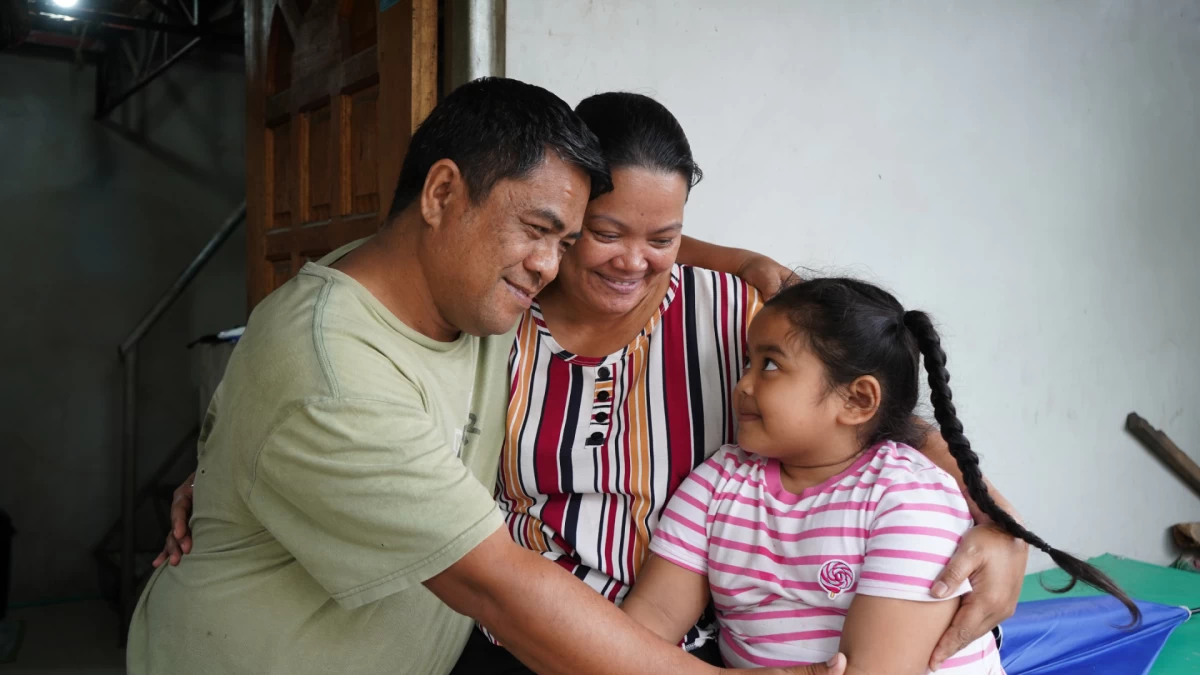
Merrany, one of the pioneers of Elevate AIDA, found hope and new opportunities through the Aboitiz Foundation’s flagship program, with her family by her side as she steps into this journey of growth.
Her story is becoming increasingly common as the program scales up, proving that digital literacy can be a powerful tool for social mobility.
The impact of the program extends beyond the individual graduates. When a woman in a rural province begins earning a digital income, the “multiplier effect” kicks in. Studies consistently show that women are more likely to reinvest their earnings into their children’s education, better nutrition for the family, and local businesses. By empowering 231 women, the program is effectively injecting new capital into local economies that have historically been excluded from the tech boom.
However, the path from graduation to a steady paycheck is not without its hurdles. The Philippines still struggles with inconsistent internet speeds in rural areas, and a high percentage of the population remains unbanked.
To address these gaps, the Aboitiz Foundation does not stop at technical training. After graduation, Connected Women provides upskilling sessions and assistance in navigating online job platforms. To ensure these women can actually manage and protect their earnings, UnionBank conducts sessions on financial literacy and cybersecurity.
This approach is necessary because the digital economy can be a daunting space for the uninitiated. Issues like online safety and secure digital payments are just as important as the ability to label an image correctly. By providing a “closed-loop” system—where the skill, the job access, and the financial tools are all provided—Aboitiz is lowering the barrier to entry for women who might otherwise be intimidated by the tech world.
New teachers of global intelligence
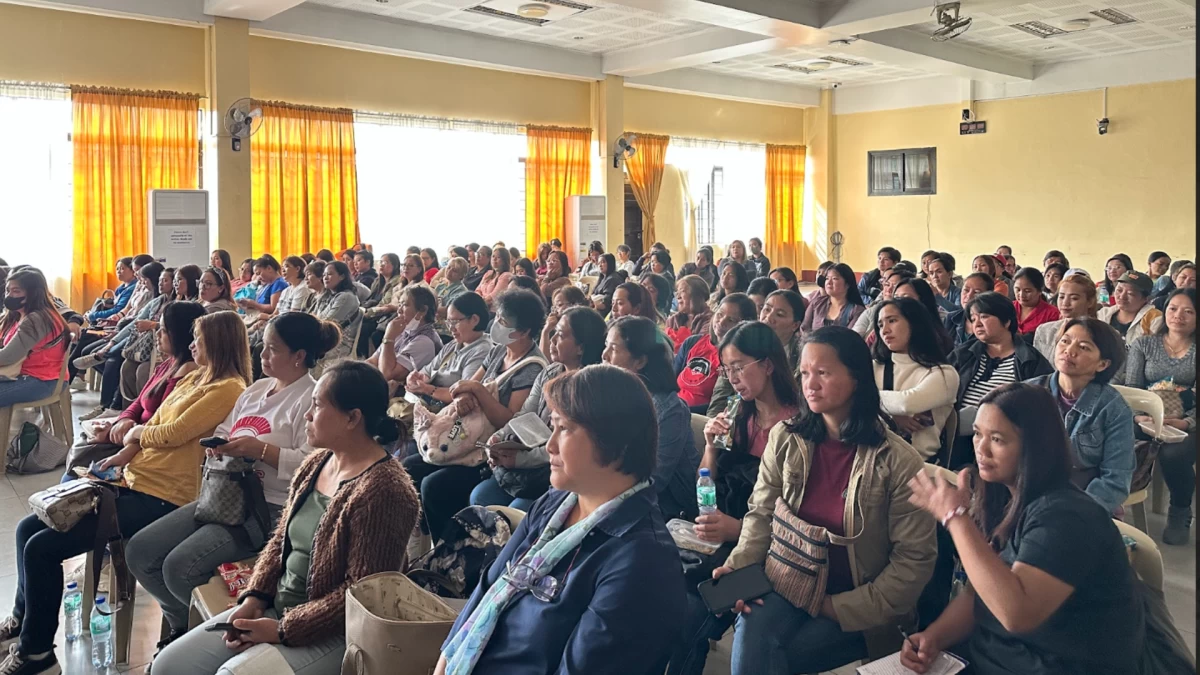
A total of 148 women in Benguet attended the first Elevate AIDA orientation for 2026, marking the start of their journey toward mastering digital skills to unlock career opportunities in the global tech economy.
The scale of the ambition is significant. The foundation has set a nationwide goal to upskill 300,000 women. The appetite for this kind of opportunity is evident. Just this past February, an orientation session at the Benguet Capitol drew 148 women who were eager to start their journey. This level of interest suggests that the digital divide is not caused by a lack of will, but by a lack of access.
As AI continues to dominate global business headlines, there is often a fear that technology will replace human labor. But the Elevate AIDA program suggests a different narrative. In this version of the future, technology acts as an equalizer, allowing a woman in a remote village to participate in the same economy as a coder in San Francisco.
As AI models become more complex, the need for high-quality, human-verified data only increases. The “Data Mothers” of the Philippines are not just workers; they are the teachers of the next generation of intelligence.