






Manila Bulletin
 Philippines
National
DMW says supplemental funds needed for large-scale OFW repatriation from Middle East
Philippines
National
DMW says supplemental funds needed for large-scale OFW repatriation from Middle East
Philippines
National
DMW says supplemental funds needed for large-scale OFW repatriation from Middle East
DMW says supplemental funds needed for large-scale OFW repatriation from Middle East
By Dhel Nazario
Published Mar 7, 2026 01:34 pm


At A Glance
- The Department of Migrant Workers (DMW) said additional government funding may be necessary to support the repatriation of overseas Filipino workers (OFWs) in the event of a worst-case scenario in the Middle East.
The Department of Migrant Workers (DMW) said additional government funding may be necessary to support the repatriation of overseas Filipino workers (OFWs) in the event of a worst-case scenario in the Middle East.
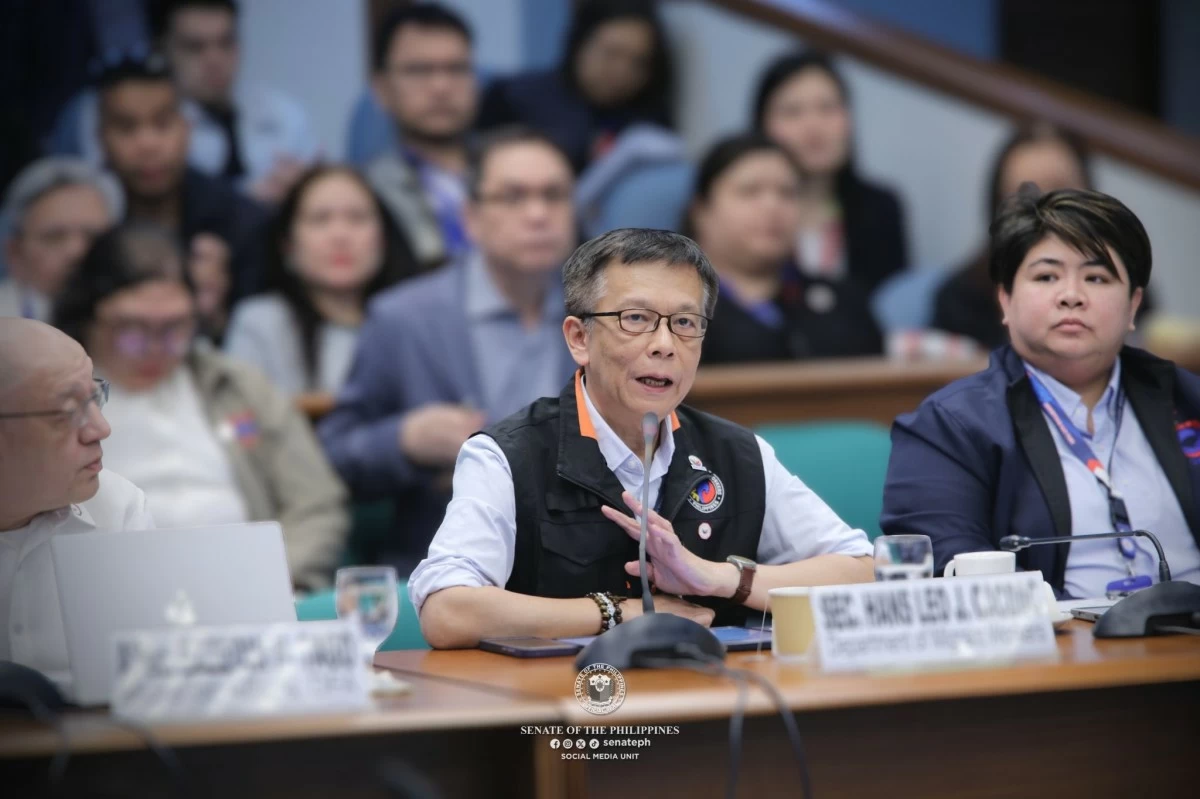
DMW Secretary Hans Leo Cacdac (Senate of the Philippines)
During the Senate Committee on Foreign Relations hearing on Friday, March 6, DMW Secretary Hans Leo Cacdac said the agency’s current budget could still cover repatriation needs under present conditions.
However, he warns that a surge in requests from OFWs seeking to return home could quickly exhaust available resources.
“Yes po. We need the funding in a worst-case scenario,” Cacdac said when asked whether or not additional appropriations from Congress were required to sustain repatriation efforts.
The issue was raised during questioning by Senator Risa Hontiveros, who wondered if Congress would need to pass a supplemental budget not only for OFW assistance but also for potential support to sectors such as agriculture and transportation that may be affected by regional instability.
Cacdac explained that the government can manage with the existing budget for now, given the current level of repatriation requests. However, the situation could change if the number of Filipinos seeking to leave affected areas increase significantly.
The emergency repatriation program is funded through the Emergency Repatriation Fund (ERF), which is being managed by the Overseas Workers Welfare Administration (OWWA).
OWWA Administrator Patricia Yvonne Caunan told lawmakers that the fund currently has limited capacity to handle a large-scale repatriation operation.
Under the 2026 General Appropriations Act (GAA), the ERF received P1.286 billion. With an additional P474 million in continuing funds, the total available allocation initially reached about P1.76 billion.
However, Caunan said around 15 percent of the fund has already been utilized as of March, leaving roughly P1.5 billion available for the rest of the year.
Based on simulations conducted by OWWA, the current fund could support the repatriation of roughly 10,000 overseas Filipinos if the average cost per repatriation rises to around P150,000.
The agency noted that repatriation expenses have increased amid the crisis. Prior to the escalation of tensions, the average cost to bring an OFW back home—including travel and logistics until reaching their hometowns—ranged between P135,000 and P140,000.
If costs climb to around P150,000 per worker, the existing funds may not be sufficient should repatriation requests increase significantly.
According to data cited during the hearing, there are about 2.4 million Filipinos currently living and working in the Middle East. Government agencies ran simulations to estimate potential repatriation demand.
If at least 0.5 percent of Filipinos in the region request repatriation—equivalent to roughly 12,000 individuals—the government would already face a funding gap of about P338 million.
The deficit could widen substantially if the number doubles.
“If around one percent or approximately 24,000 Filipinos request repatriation, the funding gap would reach around P2.2 billion,” Caunan said.
At that level, the total estimated cost for repatriation could reach P3.67 billion based on the projected P150,000 per person.
The DMW and OWWA said they are prepared to submit detailed simulations and cost breakdowns to lawmakers to support discussions on possible additional funding.