ADVERTISEMENT

Truth is everyone's responsibility

Published Mar 6, 2026 12:05 am  |  Updated Mar 5, 2026 05:29 pm
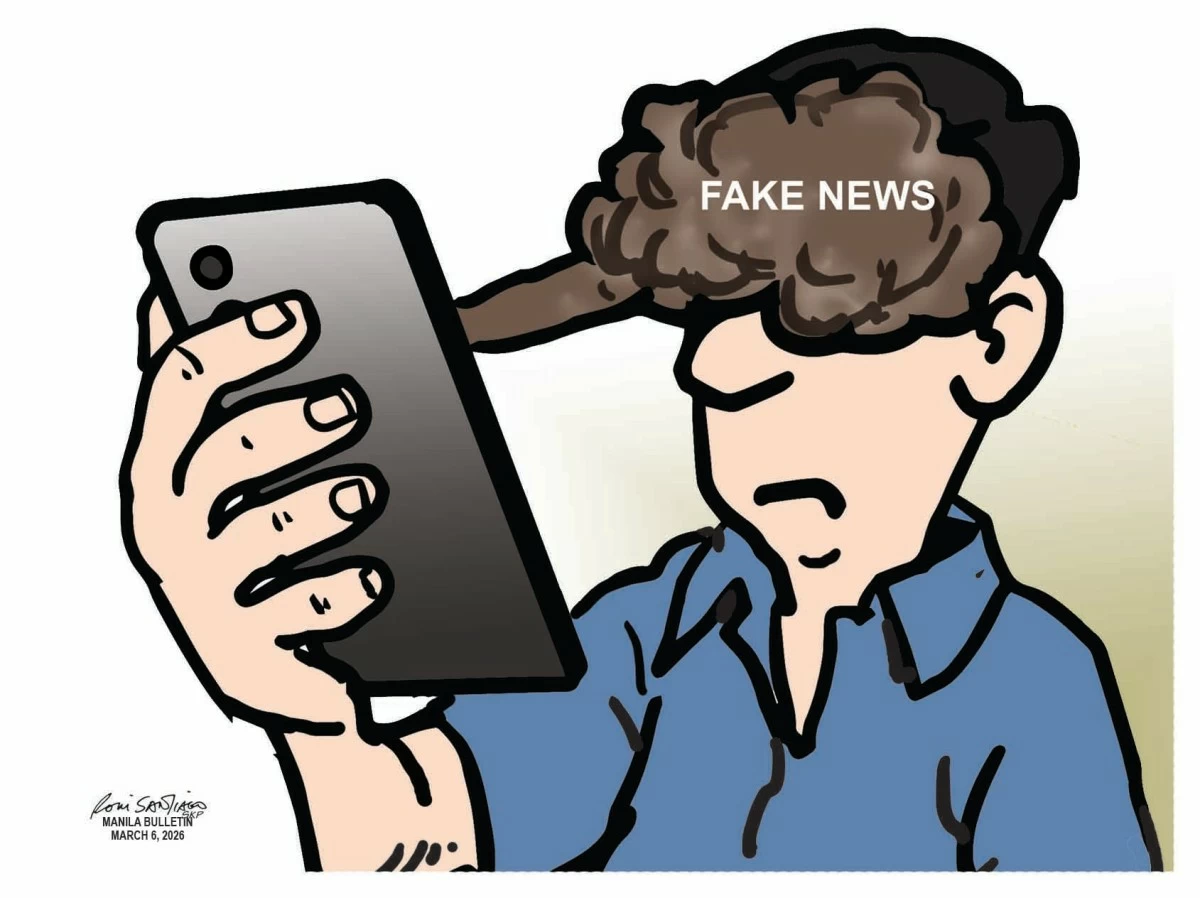
The signing of a memorandum of understanding between leading Philippine news organizations and the Presidential Communications Office (PCO) is a welcome step in confronting one of the most corrosive problems of the digital age—the unchecked spread of fake news. Yet while agreements and declarations matter, the deeper battle lies not in conference rooms but in the daily habits of millions of citizens navigating social media feeds.
Disinformation is no longer a fringe nuisance. It has turned into a structural and institutional threat to democratic life. Lies now travel at the speed of algorithms, wrapped in sensational headlines, viral memes, and manipulated videos designed to provoke outrage rather than understanding. In this environment, truth struggles to compete not because it is weak, but because it is often less dramatic and engaging than deception.
The consequences are profound. Governance suffers when policy debates are built on false premises rather than facts. Public trust in institutions erodes when fabricated narratives paint every decision as conspiracy or betrayal. Elections, the lifeblood of democracy, become vulnerable to manipulation when voters are bombarded with misleading claims disguised as legitimate information.
The economic costs are equally serious. False reports about companies, industries, or national policies can trigger unnecessary panic in markets, damage reputations, and discourage investment. Tourism can decline because of exaggerated safety scares. Businesses may suffer when rumors spread faster than corrections.
For the public, the damage is personal. Families and communities fracture over fabricated stories that inflame political or social tensions. Health misinformation discourages people from seeking proper medical care. In times of crisis—natural disasters, public emergencies, or national security concerns—misinformation can endanger lives by spreading confusion instead of clarity.
Stopping this cycle requires more than fact-checking after the damage has been done. Prevention begins with education.
Media literacy must become a national priority. Citizens must learn to ask simple but powerful questions before sharing any information: Who published this? Is the source credible? Are there multiple outlets reporting the same claim? Does the story rely on anonymous posts, maliciously cropped images and spliced videos, or emotional language designed to provoke anger?
The public must also recognize the responsibility that comes with the power to share. A single click can amplify falsehoods to thousands of people. Choosing not to share unverified information is one of the most effective acts of civic responsibility in the digital era.
The government, for its part, must lead through transparency. The best antidote to disinformation is timely, accurate, and accessible public information. It must always be open to scrutiny. When official communication is slow, vague, or inconsistent, rumors rush in to fill the vacuum. Credibility must be earned through openness, not enforced through intimidation or censorship.
Media organizations must continue to uphold the highest standards of journalism. In an era when speed often competes with accuracy, credibility remains the most valuable currency. Rigorous verification, clear sourcing, and swift corrections when errors occur are essential in rebuilding public trust.
The private sector—especially technology companies that operate digital platforms—also carries responsibility. Algorithms that reward sensationalism over accuracy have helped misinformation thrive. Platforms must strengthen content moderation, support independent fact-checkers, and redesign systems that currently favor virality over reliability.
Ultimately, however, the fight against fake news will be won or lost at the level of individual conscience. Truth survives only when citizens value it enough to protect it.
The spread of misinformation is now a societal problem, and not merely a technological one. Ending it requires a collective commitment—from government, media, businesses, educators, and ordinary citizens—to slow down, verify, and choose truth over convenience.
Democracy depends not only on the freedom to speak, but on the discipline to seek the truth before we do.
ADVERTISEMENT
.most-popular .layout-ratio{ padding-bottom: 79.13%; } @media (min-width: 768px) and (max-width: 1024px) { .widget-title { font-size: 15px !important; } }

{{ articles_filter_1561_widget.title }}

.most-popular .layout-ratio{ padding-bottom: 79.13%; } @media (min-width: 768px) and (max-width: 1024px) { .widget-title { font-size: 15px !important; } }

{{ articles_filter_1562_widget.title }}

.most-popular .layout-ratio{ padding-bottom: 79.13%; } @media (min-width: 768px) and (max-width: 1024px) { .widget-title { font-size: 15px !important; } }

{{ articles_filter_1563_widget.title }}

{{ articles_filter_1564_widget.title }}

.mb-article-details { position: relative; } .mb-article-details .article-body-preview, .mb-article-details .article-body-summary{ font-size: 17px; line-height: 30px; font-family: "Libre Caslon Text", serif; color: #000; } .mb-article-details .article-body-preview iframe , .mb-article-details .article-body-summary iframe{ width: 100%; margin: auto; } .read-more-background { background: linear-gradient(180deg, color(display-p3 1.000 1.000 1.000 / 0) 13.75%, color(display-p3 1.000 1.000 1.000 / 0.8) 30.79%, color(display-p3 1.000 1.000 1.000) 72.5%); position: absolute; height: 200px; width: 100%; bottom: 0; display: flex; justify-content: center; align-items: center; padding: 0; } .read-more-background a{ color: #000; } .read-more-btn { padding: 17px 45px; font-family: Inter; font-weight: 700; font-size: 18px; line-height: 16px; text-align: center; vertical-align: middle; border: 1px solid black; background-color: white; } .hidden { display: none; }
function initializeAllSwipers() { // Get all hidden inputs with cms_article_id document.querySelectorAll('[id^="cms_article_id_"]').forEach(function (input) { const cmsArticleId = input.value; const articleSelector = '#article-' + cmsArticleId + ' .body_images'; const swiperElement = document.querySelector(articleSelector); if (swiperElement && !swiperElement.classList.contains('swiper-initialized')) { new Swiper(articleSelector, { loop: true, pagination: false, navigation: { nextEl: '#article-' + cmsArticleId + ' .swiper-button-next', prevEl: '#article-' + cmsArticleId + ' .swiper-button-prev', }, }); } }); } setTimeout(initializeAllSwipers, 3000); const intersectionObserver = new IntersectionObserver( (entries) => { entries.forEach((entry) => { if (entry.isIntersecting) { const newUrl = entry.target.getAttribute("data-url"); if (newUrl) { history.pushState(null, null, newUrl); let article = entry.target; // Extract metadata const author = article.querySelector('.author-section').textContent.replace('By', '').trim(); const section = article.querySelector('.section-info ').textContent.replace(' ', ' '); const title = article.querySelector('.article-title h1').textContent; // Parse URL for Chartbeat path format const parsedUrl = new URL(newUrl, window.location.origin); const cleanUrl = parsedUrl.host + parsedUrl.pathname; // Update Chartbeat configuration if (typeof window._sf_async_config !== 'undefined') { window._sf_async_config.path = cleanUrl; window._sf_async_config.sections = section; window._sf_async_config.authors = author; } // Track virtual page view with Chartbeat if (typeof pSUPERFLY !== 'undefined' && typeof pSUPERFLY.virtualPage === 'function') { try { pSUPERFLY.virtualPage({ path: cleanUrl, title: title, sections: section, authors: author }); } catch (error) { console.error('ping error', error); } } // Optional: Update document title if (title && title !== document.title) { document.title = title; } } } }); }, { threshold: 0.1 } ); function showArticleBody(button) { const article = button.closest("article"); const summary = article.querySelector(".article-body-summary"); const body = article.querySelector(".article-body-preview"); const readMoreSection = article.querySelector(".read-more-background"); // Hide summary and read-more section summary.style.display = "none"; readMoreSection.style.display = "none"; // Show the full article body body.classList.remove("hidden"); } document.addEventListener("DOMContentLoaded", () => { let loadCount = 0; // Track how many times articles are loaded const offset = [1, 2, 3, 4, 5, 6, 7, 8, 9, 10]; // Offset values const currentUrl = window.location.pathname.substring(1); let isLoading = false; // Prevent multiple calls if (!currentUrl) { console.log("Current URL is invalid."); return; } const sentinel = document.getElementById("load-more-sentinel"); if (!sentinel) { console.log("Sentinel element not found."); return; } function isSentinelVisible() { const rect = sentinel.getBoundingClientRect(); return ( rect.top < window.innerHeight && rect.bottom >= 0 ); } function onScroll() { if (isLoading) return; if (isSentinelVisible()) { if (loadCount >= offset.length) { console.log("Maximum load attempts reached."); window.removeEventListener("scroll", onScroll); return; } isLoading = true; const currentOffset = offset[loadCount]; window.loadMoreItems().then(() => { let article = document.querySelector('#widget_1690 > div:nth-last-of-type(2) article'); intersectionObserver.observe(article) loadCount++; }).catch(error => { console.error("Error loading more items:", error); }).finally(() => { isLoading = false; }); } } window.addEventListener("scroll", onScroll); });

Sign up by email to receive news.