







Stocks fall as Middle East conflict drags peso to 59
Published Mar 6, 2026 05:25 pm


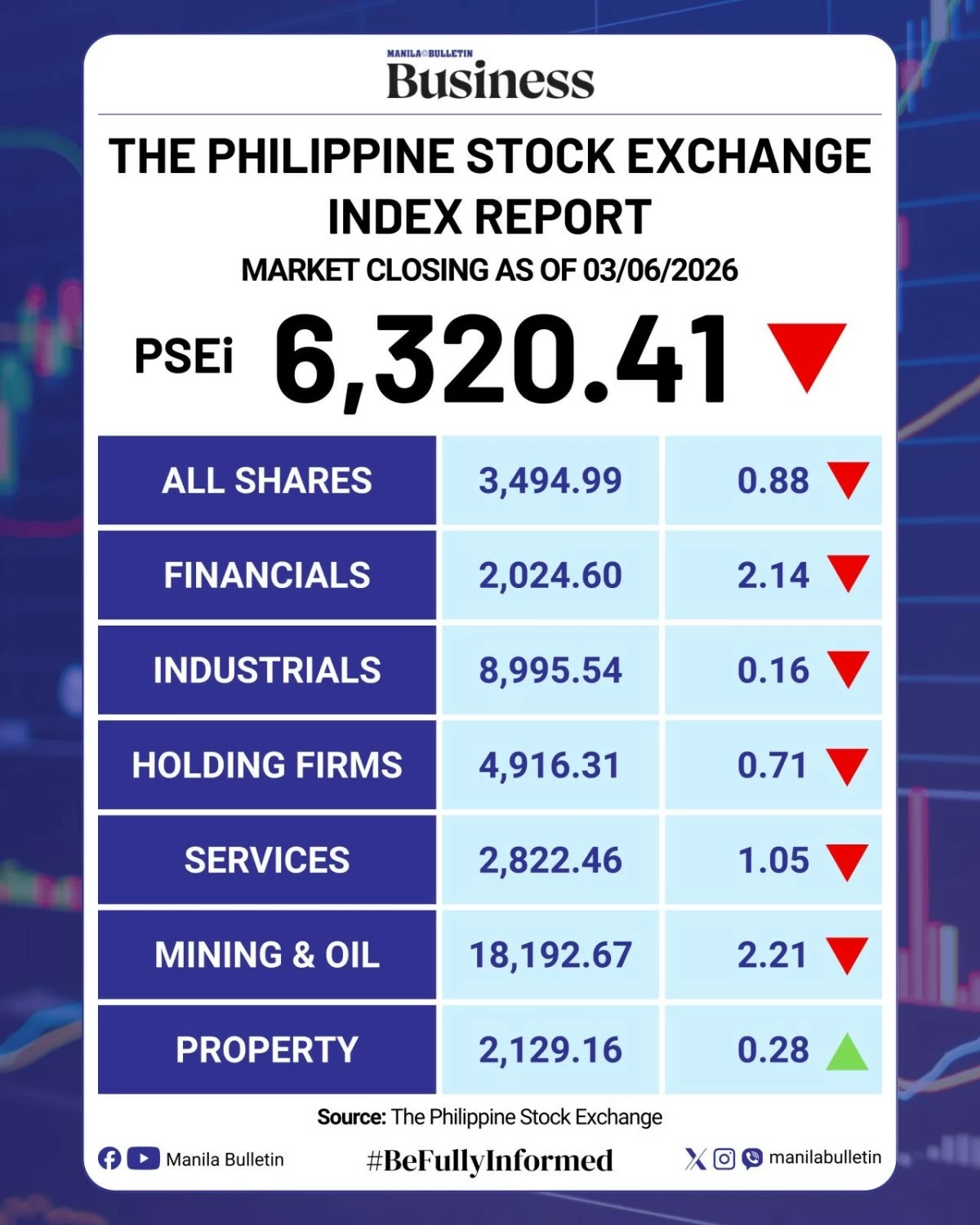
Stock benchmark tumbled to end the week on a somber note, joining the regional retreat as escalating geopolitical tensions in the Middle East drove the peso back toward record lows and clouded the outlook for domestic inflation.
The Philippine Stock Exchange index (PSEi) shed 60.12 points, or 0.94 percent, to finish Friday’s session at 6,320.41. The decline was characterized by broad-based selling, with losers overwhelming gainers 116 to 69, while 62 issues remained unchanged.
Trading activity saw a slight uptick in participation, with 1.66 billion shares worth ₱7.66 billion changing hands.
Market sentiment remained fragile as the local currency weakened to the 59 level against the United States (US) dollar, a threshold that historically triggers anxiety regarding imported inflation and higher input costs for listed firms.
Michael Ricafort, chief economist at Rizal Commercial Banking Corp., noted that the exchange rate has climbed to its highest level since Jan. 27, 2026, reflecting a flight to safety among global investors.
“The Philippine market declined by nearly one percent as investors remained cautious amid the ongoing conflict in the Middle East, which continues to weigh on global sentiment and heighten uncertainty,” said Luis Limlingan, managing director at Regina Capital Development Corp.
Limlingan noted that the peso’s breach of the 59 level further dampened appetite for equities across most key sectors.
The Mining and Oil sector led the downward move, weighed down by a correction in global gold prices. Conversely, the Property counter managed a modest advance, providing a slim buffer against a deeper index slide. Beyond the geopolitical backdrop, domestic fundamentals also pressured the tape.
Recent manufacturing data indicated a softening in industrial activity, while hawkish commentary from the central bank added to the selling pressure.
Bangko Sentral ng Pilipinas Governor Eli Remolona Jr. signaled that the monetary authority remains prepared to resume interest rate hikes if global crude oil prices surge past $100 per barrel.
Such a move would be intended to anchor inflation expectations, though investors fear higher borrowing costs could further crimp corporate earnings.
Japhet Tantiangco, research manager at Philstocks Financial Inc., said the prospect of a prolonged conflict involving Iran has fundamentally shifted investor behavior.
The primary concern remains that a sustained spike in energy costs will derail the local disinflation trend, forcing the central bank’s hand and potentially stalling economic growth through the remainder of the year.