






Manila Bulletin
 Philippines
National
Past pro-China policies influenced Pinoy spies to betray their own country, says De Lima
Philippines
National
Past pro-China policies influenced Pinoy spies to betray their own country, says De Lima
Philippines
National
Past pro-China policies influenced Pinoy spies to betray their own country, says De Lima
Past pro-China policies influenced Pinoy spies to betray their own country, says De Lima
Published Mar 6, 2026 11:17 pm


At A Glance
- Mamamayang Liberal (ML) Party-list Rep. Leila de Lima is partly blaming the "pro-China policies" of the previous Duterte administration for influencing alleged Filipino spies into betraying the Philippines.
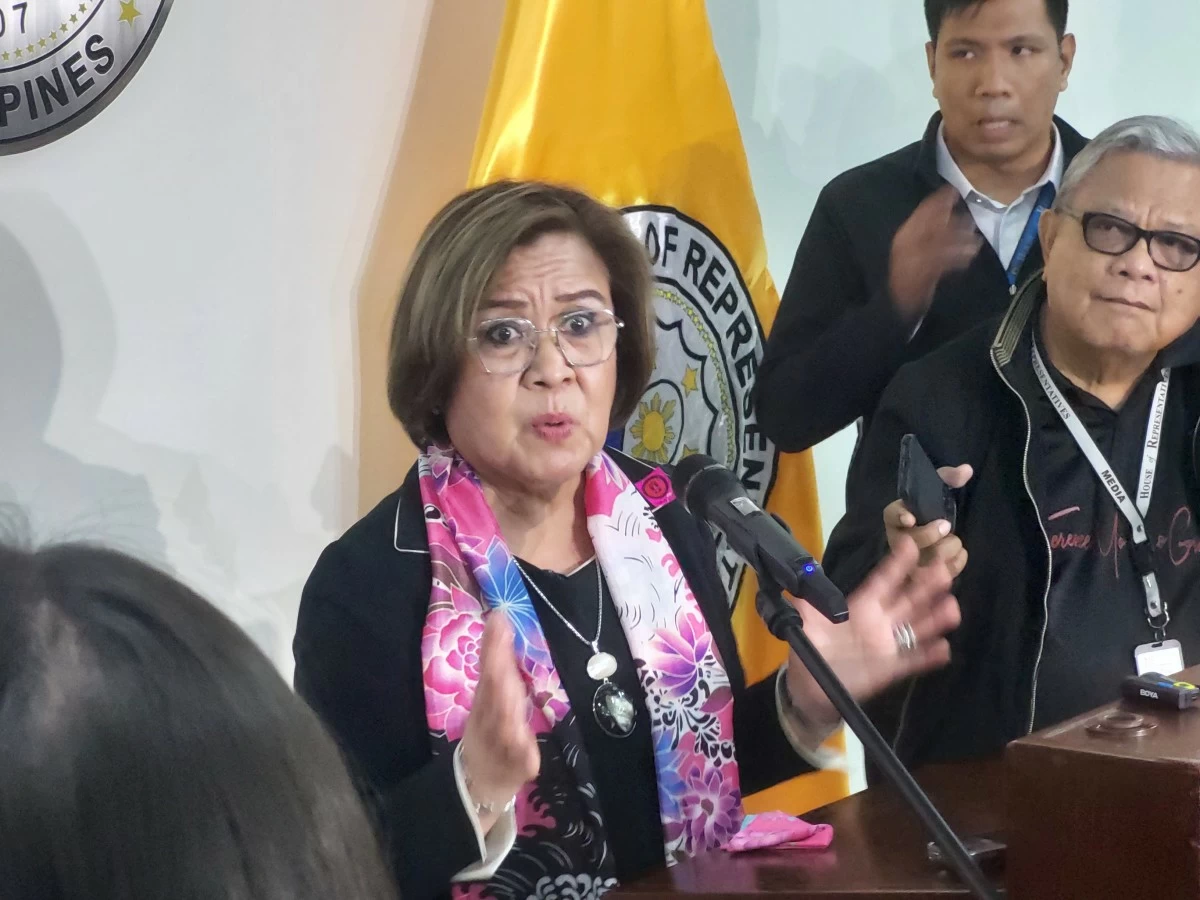
Mamamayang Liberal (ML) Party-list Rep. Leila de Lima (Ellson Quismorio/ MANILA BULLETIN)
Mamamayang Liberal (ML) Party-list Rep. Leila de Lima is partly blaming the "pro-China policies" of the previous Duterte administration for influencing alleged Filipino spies into betraying the Philippines.
"It is no longer a surprise that there are spies in our country, but it is deeply troubling that some Filipinos themselves are collaborating with them — mga kapwa Pilipino na ipinagkakanulo ang sariling bansa (Fellow Filipinos who betray their own country)," De Lima said on Friday night, March 6.
The senior deputy minority leader is referring to what the National Security Council (NSC) recently reported as a “serious national security matter” involving Filipino nationals allegedly acting on behalf of the Chinese intelligence network.
"Rason siguro ng ilan sa kanila na malaki ang bayad para sa kanilang serbisyo (Perhaps some of them justify it by saying they are paid well for their services)," De Lima said about the co-opted Filipino spies.
"Pero nakikita natin na malaking impluwensya dito yung pro-China na polisiya ng nakaraang administrasyon, yung mga 'Tsinador' at mga kasalukuyang opisyal na mas pinapanigan pa ang dayuhan sa usapin ng pagtatanggol sa ating soberanya, pati na yung mga bayarang trolls na nagkakalat ng disinformation at fake news ukol sa West Philippine Sea (WPS)," she noted.
(But we can see that a major influence here is the pro‑China policy of the previous administration, along with pro-China senators and current officials who side more with foreigners when it comes to defending our sovereignty, as well as the paid trolls spreading disinformation and fake news about the WPS.)
"Kung may mga ganyan ang paninindigan at takbo ng isip, anong pipigil sa iba para magpagamit na rin sa dayuhan? (If that is the kind of conviction and mindset they hold, what would stop others from also allowing themselves to be used by foreigners?)" she asked.
The current Marcos administration, which since 2022 has scaled back on the government's pro-China rhetoric and favored a more pro-Filipino stance, has acknowledged this spying operations.
It has asked government offices to be "cautious and observant" in relation to the NSC report.
In this regard, De Lima, a former senator and Department of Justice (DOJ) secretary, said it was about time that Congress passed the Anti-Espionage Act.
"As there may be more spies in the country, we renew our call for the passage of our proposed House Bill (HB) No. 1844 or the 'Anti-Espionage Act' to strengthen our national security policies and counter-espionage measures to adequately respond to threats against our country," she said.
"This is long overdue: We must provide our security agencies with adequate resources to conduct a nationwide crackdown on spies, particularly around our most sensitive defense installations," she added.
For De Lima, there is no debate as to the importance of the proposed law given the current national security landscape.
"Wala na dapat pang nanggugulo, nagpapalito at pinagtatalunan pa (There should no longer be any disturbance, confusion, or further arguments). We Filipinos must be united in our fight to end all forms of espionage and protect our national sovereignty, territorial integrity, and national interests," she said.