ADVERTISEMENT

New task force created to make sure Philippines doesn't run out of oil

Published Mar 6, 2026 01:18 pm
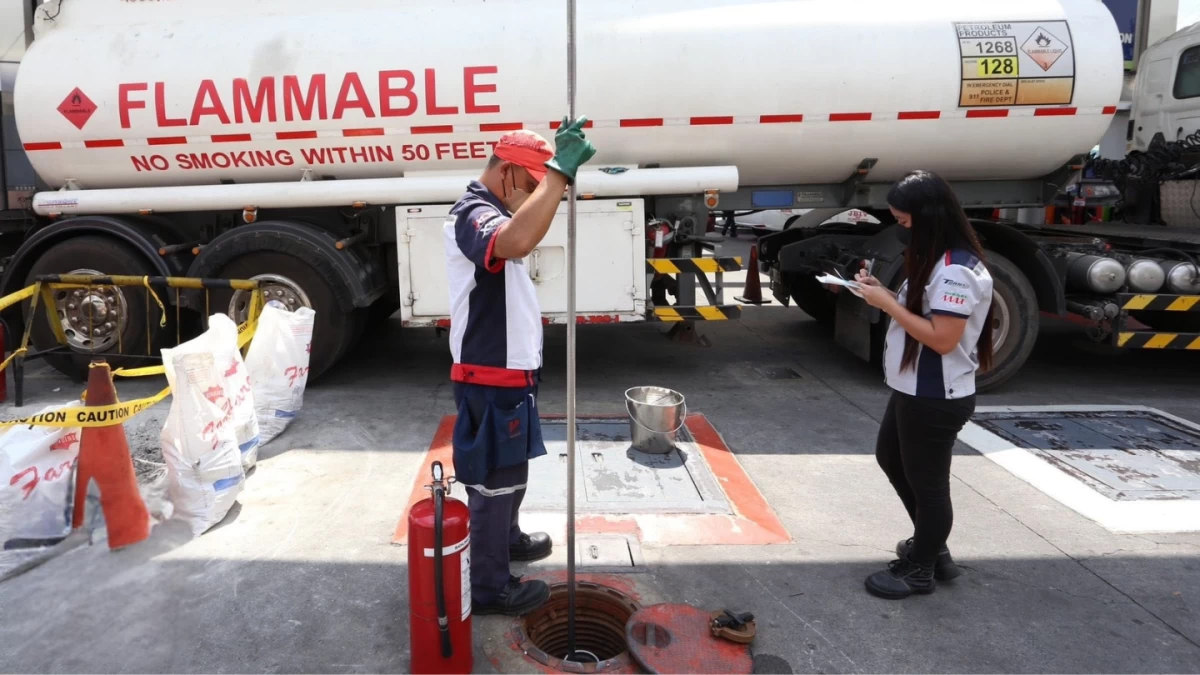
Pump attendants work together to refill a petrol station from an oil tanker in Quezon City on Friday, March 6. With another round of price hikes expected to be announced by the Department of Energy, the government is intensifying its monitoring of national fuel inventory to ensure stable supply. (Photo by: Santi San Juan I MB)
The Bureau of Customs is intensifying its oversight of oil imports and domestic inventory levels following President Marcos's directive, as the government moves to insulate the local economy from supply chain shocks triggered by escalating Middle East tensions.
In a statement on Friday, March 6, Customs Commissioner Ariel Nepomuceno announced that he ordered all national ports to monitor fuel volumes and assess the adequacy of incoming supplies.
The move from BOC comes as regional conflict involving the United States (US), Israel, and Iran threatens critical infrastructure.
Market concerns have mounted following reports of missile strikes on logistics hubs and the potential for a temporary closure of the Strait of Hormuz, a primary artery for global crude shipments.
The bureau is establishing the BOC Oil Inventory Level (BOC-OIL) Task Force to spearhead the monitoring effort. The specialized unit will be led by Allen Dela Cruz, alongside Victor Pablo C. Trinidad from the agency’s legal service.
The BOC said the task force is mandated to work in coordination with the Department of Energy and the Bureau of Internal Revenue to conduct joint inspections of oil depots, bulk storage terminals, and other petroleum facilities in the country.
“Given the current geopolitical developments, it is important for the bureau to closely track the movement of oil importations and monitor available inventory levels,” Nepomuceno said.
He added that the data will allow the agency to provide the Marcos administration with the updates necessary to ensure the country remains prepared for any potential disruptions.
Under the new protocol, district ports must submit regular reports on oil shipments within their jurisdictions. These figures will be consolidated and reviewed during the agency’s weekly collection meetings to track incoming shipments and prevailing supply levels in real-time.
To ensure the integrity of the data, the BOC-OIL Task Force has been authorized to validate reports through physical inspections and document reviews.
The task force also has the authority to request material information from industry stakeholders and may recommend the issuance of summons to ensure compliance from private entities.
All findings will be channeled to the Office of the Commissioner to inform policy and operational responses.
The bureau’s enforcement group has been directed to deploy personnel to support the initiative, which officials described as a proactive measure to maintain economic stability and transparency in the domestic energy market.
ADVERTISEMENT
.most-popular .layout-ratio{ padding-bottom: 79.13%; } @media (min-width: 768px) and (max-width: 1024px) { .widget-title { font-size: 15px !important; } }

{{ articles_filter_1561_widget.title }}

.most-popular .layout-ratio{ padding-bottom: 79.13%; } @media (min-width: 768px) and (max-width: 1024px) { .widget-title { font-size: 15px !important; } }

{{ articles_filter_1562_widget.title }}

.most-popular .layout-ratio{ padding-bottom: 79.13%; } @media (min-width: 768px) and (max-width: 1024px) { .widget-title { font-size: 15px !important; } }

{{ articles_filter_1563_widget.title }}

{{ articles_filter_1564_widget.title }}

.mb-article-details { position: relative; } .mb-article-details .article-body-preview, .mb-article-details .article-body-summary{ font-size: 17px; line-height: 30px; font-family: "Libre Caslon Text", serif; color: #000; } .mb-article-details .article-body-preview iframe , .mb-article-details .article-body-summary iframe{ width: 100%; margin: auto; } .read-more-background { background: linear-gradient(180deg, color(display-p3 1.000 1.000 1.000 / 0) 13.75%, color(display-p3 1.000 1.000 1.000 / 0.8) 30.79%, color(display-p3 1.000 1.000 1.000) 72.5%); position: absolute; height: 200px; width: 100%; bottom: 0; display: flex; justify-content: center; align-items: center; padding: 0; } .read-more-background a{ color: #000; } .read-more-btn { padding: 17px 45px; font-family: Inter; font-weight: 700; font-size: 18px; line-height: 16px; text-align: center; vertical-align: middle; border: 1px solid black; background-color: white; } .hidden { display: none; }
function initializeAllSwipers() { // Get all hidden inputs with cms_article_id document.querySelectorAll('[id^="cms_article_id_"]').forEach(function (input) { const cmsArticleId = input.value; const articleSelector = '#article-' + cmsArticleId + ' .body_images'; const swiperElement = document.querySelector(articleSelector); if (swiperElement && !swiperElement.classList.contains('swiper-initialized')) { new Swiper(articleSelector, { loop: true, pagination: false, navigation: { nextEl: '#article-' + cmsArticleId + ' .swiper-button-next', prevEl: '#article-' + cmsArticleId + ' .swiper-button-prev', }, }); } }); } setTimeout(initializeAllSwipers, 3000); const intersectionObserver = new IntersectionObserver( (entries) => { entries.forEach((entry) => { if (entry.isIntersecting) { const newUrl = entry.target.getAttribute("data-url"); if (newUrl) { history.pushState(null, null, newUrl); let article = entry.target; // Extract metadata const author = article.querySelector('.author-section').textContent.replace('By', '').trim(); const section = article.querySelector('.section-info ').textContent.replace(' ', ' '); const title = article.querySelector('.article-title h1').textContent; // Parse URL for Chartbeat path format const parsedUrl = new URL(newUrl, window.location.origin); const cleanUrl = parsedUrl.host + parsedUrl.pathname; // Update Chartbeat configuration if (typeof window._sf_async_config !== 'undefined') { window._sf_async_config.path = cleanUrl; window._sf_async_config.sections = section; window._sf_async_config.authors = author; } // Track virtual page view with Chartbeat if (typeof pSUPERFLY !== 'undefined' && typeof pSUPERFLY.virtualPage === 'function') { try { pSUPERFLY.virtualPage({ path: cleanUrl, title: title, sections: section, authors: author }); } catch (error) { console.error('ping error', error); } } // Optional: Update document title if (title && title !== document.title) { document.title = title; } } } }); }, { threshold: 0.1 } ); function showArticleBody(button) { const article = button.closest("article"); const summary = article.querySelector(".article-body-summary"); const body = article.querySelector(".article-body-preview"); const readMoreSection = article.querySelector(".read-more-background"); // Hide summary and read-more section summary.style.display = "none"; readMoreSection.style.display = "none"; // Show the full article body body.classList.remove("hidden"); } document.addEventListener("DOMContentLoaded", () => { let loadCount = 0; // Track how many times articles are loaded const offset = [1, 2, 3, 4, 5, 6, 7, 8, 9, 10]; // Offset values const currentUrl = window.location.pathname.substring(1); let isLoading = false; // Prevent multiple calls if (!currentUrl) { console.log("Current URL is invalid."); return; } const sentinel = document.getElementById("load-more-sentinel"); if (!sentinel) { console.log("Sentinel element not found."); return; } function isSentinelVisible() { const rect = sentinel.getBoundingClientRect(); return ( rect.top < window.innerHeight && rect.bottom >= 0 ); } function onScroll() { if (isLoading) return; if (isSentinelVisible()) { if (loadCount >= offset.length) { console.log("Maximum load attempts reached."); window.removeEventListener("scroll", onScroll); return; } isLoading = true; const currentOffset = offset[loadCount]; window.loadMoreItems().then(() => { let article = document.querySelector('#widget_1690 > div:nth-last-of-type(2) article'); intersectionObserver.observe(article) loadCount++; }).catch(error => { console.error("Error loading more items:", error); }).finally(() => { isLoading = false; }); } } window.addEventListener("scroll", onScroll); });

Sign up by email to receive news.