ADVERTISEMENT

GSIS, JICA overhaul Philippine public asset valuation to cut risk

Published Mar 6, 2026 02:24 pm
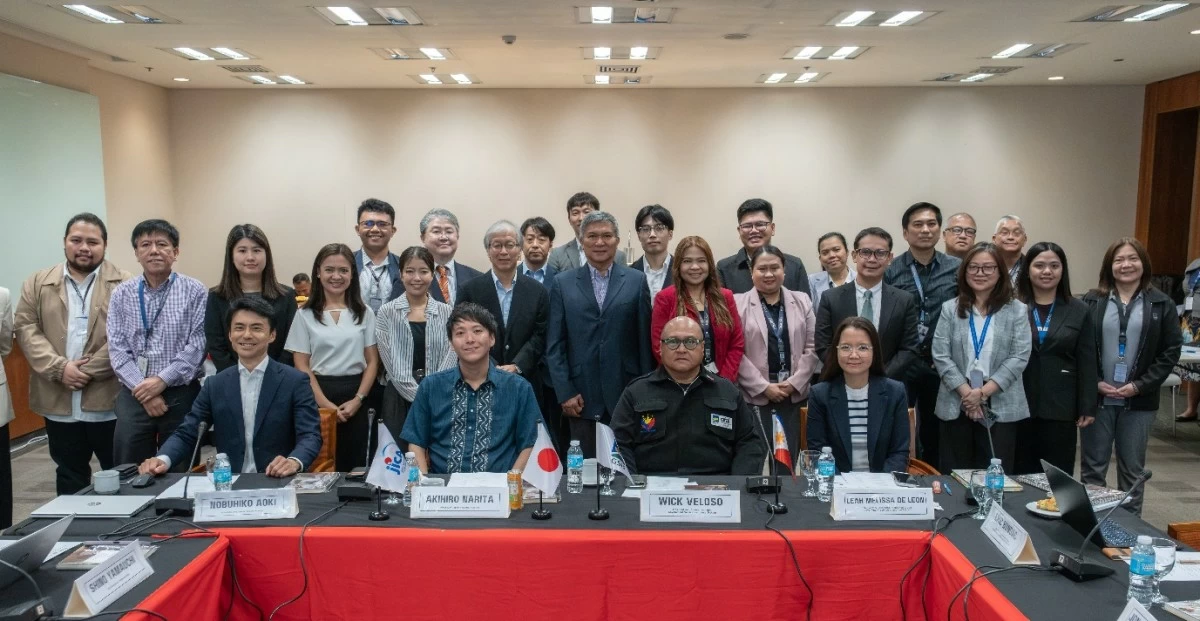
Government Service Insurance System (GSIS) President and General Manager Wick Veloso leads GSIS officials in the 2nd Joint Coordinating Committee Meeting of the GSIS–Japan International Cooperation Agency (JICA) Technical Cooperation Project on March 5. He was joined by representatives from the Embassy of Japan, Department of Finance, Bureau of the Treasury, Department of Economy, Planning, and Development (formerly NEDA), and the Philippine Institute of Volcanology and Seismology, to advance efforts to strengthen the valuation and risk assessment of government assets.
State-run Government Service Insurance System (GSIS) and the Japan International Cooperation Agency (JICA) advanced a joint initiative to overhaul how the government values and insures public infrastructure, aiming to fix a legacy of outdated records that leaves the state vulnerable to disaster costs.
At a meeting of the GSIS-JICA Joint Coordinating Committee on March 5, officials moved forward with a technical cooperation project designed to establish a science-based methodology for calculating the replacement costs of state-owned assets.
The partnership seeks to modernize the underwriting process for thousands of properties, ranging from schools and hospitals to bridges and municipal halls, ensuring that insurance premiums and coverage levels accurately reflect real-world risks.
GSIS President and General Manager Wick Veloso said the collaboration addresses a fundamental weakness in the state insurer’s operations: a lack of reliable data from client agencies.
Many government entities continue to carry incomplete or obsolete property records, making it difficult to determine the true value of infrastructure. This project helps establish a reliable baseline for valuing those assets and assessing the specific hazards they face, Veloso said.
The urgency of the project is underscored by the Philippines' exposure to extreme weather and seismic activity. As the primary insurer of public assets, GSIS is a linchpin in the national strategy to manage fiscal shocks following natural disasters.
Nobuhiko Aoki, a senior representative for JICA, said the technical cooperation is a pillar of the Philippine Disaster Risk Financing Strategy.
He noted that as climate-related disasters pose increasing macroeconomic risks across the region, ensuring that the GSIS has sufficient and accessible post-disaster financing is a priority for regional stability.
To improve the precision of its risk assessments, GSIS is integrating hazard data from the GeoRiskPH platform. This follows a formal agreement with the Philippine Institute of Volcanology and Seismology to utilize nationwide data on earthquakes, volcanic activity, landslides, and liquefaction.
By layering scientific hazard maps over standardized valuation tools, GSIS expects to move toward a model where insurance premiums are tied directly to actual disaster probability.
The initiative will eventually be housed within the General Insurance Information System, a new digital platform intended to automate asset valuation and unify underwriting standards.
Once fully operational, the system will allow GSIS to utilize advanced analytics for disaster risk assessment, potentially reducing the time it takes for the government to recover costs and restore public services following a major event.
ADVERTISEMENT
.most-popular .layout-ratio{ padding-bottom: 79.13%; } @media (min-width: 768px) and (max-width: 1024px) { .widget-title { font-size: 15px !important; } }

{{ articles_filter_1561_widget.title }}

.most-popular .layout-ratio{ padding-bottom: 79.13%; } @media (min-width: 768px) and (max-width: 1024px) { .widget-title { font-size: 15px !important; } }

{{ articles_filter_1562_widget.title }}

.most-popular .layout-ratio{ padding-bottom: 79.13%; } @media (min-width: 768px) and (max-width: 1024px) { .widget-title { font-size: 15px !important; } }

{{ articles_filter_1563_widget.title }}

{{ articles_filter_1564_widget.title }}

.mb-article-details { position: relative; } .mb-article-details .article-body-preview, .mb-article-details .article-body-summary{ font-size: 17px; line-height: 30px; font-family: "Libre Caslon Text", serif; color: #000; } .mb-article-details .article-body-preview iframe , .mb-article-details .article-body-summary iframe{ width: 100%; margin: auto; } .read-more-background { background: linear-gradient(180deg, color(display-p3 1.000 1.000 1.000 / 0) 13.75%, color(display-p3 1.000 1.000 1.000 / 0.8) 30.79%, color(display-p3 1.000 1.000 1.000) 72.5%); position: absolute; height: 200px; width: 100%; bottom: 0; display: flex; justify-content: center; align-items: center; padding: 0; } .read-more-background a{ color: #000; } .read-more-btn { padding: 17px 45px; font-family: Inter; font-weight: 700; font-size: 18px; line-height: 16px; text-align: center; vertical-align: middle; border: 1px solid black; background-color: white; } .hidden { display: none; }
function initializeAllSwipers() { // Get all hidden inputs with cms_article_id document.querySelectorAll('[id^="cms_article_id_"]').forEach(function (input) { const cmsArticleId = input.value; const articleSelector = '#article-' + cmsArticleId + ' .body_images'; const swiperElement = document.querySelector(articleSelector); if (swiperElement && !swiperElement.classList.contains('swiper-initialized')) { new Swiper(articleSelector, { loop: true, pagination: false, navigation: { nextEl: '#article-' + cmsArticleId + ' .swiper-button-next', prevEl: '#article-' + cmsArticleId + ' .swiper-button-prev', }, }); } }); } setTimeout(initializeAllSwipers, 3000); const intersectionObserver = new IntersectionObserver( (entries) => { entries.forEach((entry) => { if (entry.isIntersecting) { const newUrl = entry.target.getAttribute("data-url"); if (newUrl) { history.pushState(null, null, newUrl); let article = entry.target; // Extract metadata const author = article.querySelector('.author-section').textContent.replace('By', '').trim(); const section = article.querySelector('.section-info ').textContent.replace(' ', ' '); const title = article.querySelector('.article-title h1').textContent; // Parse URL for Chartbeat path format const parsedUrl = new URL(newUrl, window.location.origin); const cleanUrl = parsedUrl.host + parsedUrl.pathname; // Update Chartbeat configuration if (typeof window._sf_async_config !== 'undefined') { window._sf_async_config.path = cleanUrl; window._sf_async_config.sections = section; window._sf_async_config.authors = author; } // Track virtual page view with Chartbeat if (typeof pSUPERFLY !== 'undefined' && typeof pSUPERFLY.virtualPage === 'function') { try { pSUPERFLY.virtualPage({ path: cleanUrl, title: title, sections: section, authors: author }); } catch (error) { console.error('ping error', error); } } // Optional: Update document title if (title && title !== document.title) { document.title = title; } } } }); }, { threshold: 0.1 } ); function showArticleBody(button) { const article = button.closest("article"); const summary = article.querySelector(".article-body-summary"); const body = article.querySelector(".article-body-preview"); const readMoreSection = article.querySelector(".read-more-background"); // Hide summary and read-more section summary.style.display = "none"; readMoreSection.style.display = "none"; // Show the full article body body.classList.remove("hidden"); } document.addEventListener("DOMContentLoaded", () => { let loadCount = 0; // Track how many times articles are loaded const offset = [1, 2, 3, 4, 5, 6, 7, 8, 9, 10]; // Offset values const currentUrl = window.location.pathname.substring(1); let isLoading = false; // Prevent multiple calls if (!currentUrl) { console.log("Current URL is invalid."); return; } const sentinel = document.getElementById("load-more-sentinel"); if (!sentinel) { console.log("Sentinel element not found."); return; } function isSentinelVisible() { const rect = sentinel.getBoundingClientRect(); return ( rect.top < window.innerHeight && rect.bottom >= 0 ); } function onScroll() { if (isLoading) return; if (isSentinelVisible()) { if (loadCount >= offset.length) { console.log("Maximum load attempts reached."); window.removeEventListener("scroll", onScroll); return; } isLoading = true; const currentOffset = offset[loadCount]; window.loadMoreItems().then(() => { let article = document.querySelector('#widget_1690 > div:nth-last-of-type(2) article'); intersectionObserver.observe(article) loadCount++; }).catch(error => { console.error("Error loading more items:", error); }).finally(() => { isLoading = false; }); } } window.addEventListener("scroll", onScroll); });

Sign up by email to receive news.