






Manila Bulletin
 Business
Trade & Industry
Unilever opens first-ever factory outside Luzon with new Cebu site
Business
Trade & Industry
Unilever opens first-ever factory outside Luzon with new Cebu site
Business
Trade & Industry
Unilever opens first-ever factory outside Luzon with new Cebu site
Unilever opens first-ever factory outside Luzon with new Cebu site
Published Mar 5, 2026 08:42 am


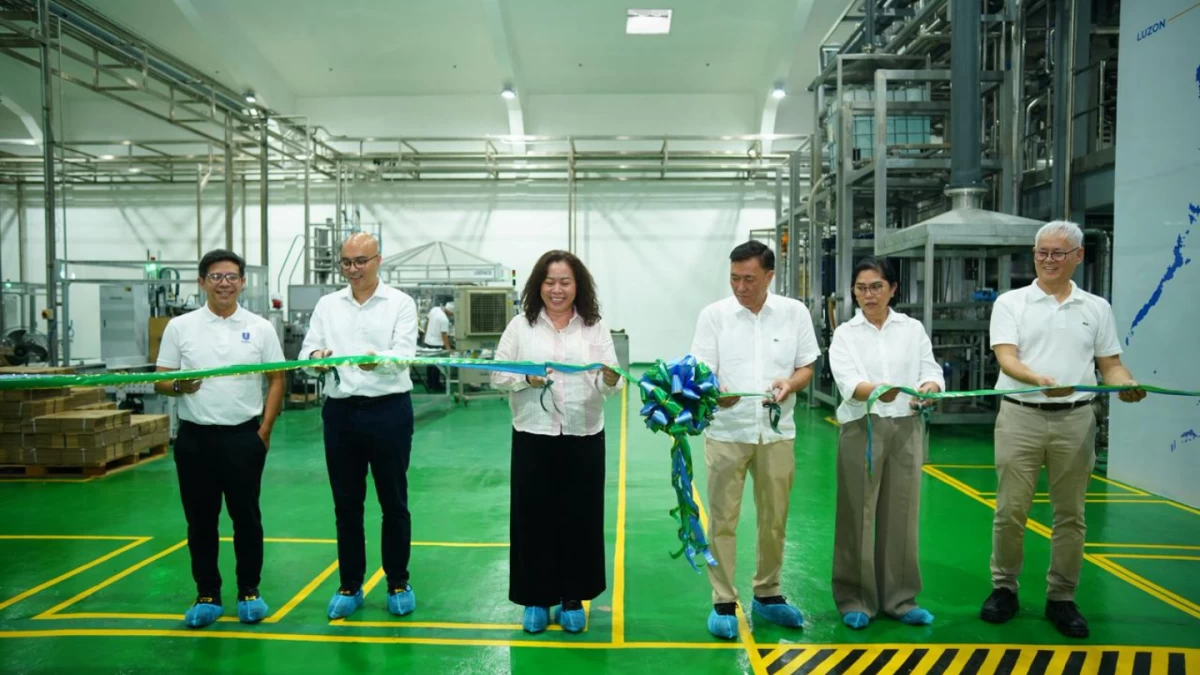
Unilever Philippines marks a historic milestone as it opens its first manufacturing facility outside Luzon in Mandaue City, Cebu. Leading the ribbon-cutting ceremony are (L-R) Atty. Joseph Fabul, Head of Communications and Corporate Affairs; Navdeep Singh, Head of Supply Chain; and Van Nguyen-Thi-Bich, General Manager for Home Care, Unilever Greater Asia. The new 1,600-square-meter site is designed to bring Home Care products closer to consumers in Visayas and Mindanao.
Unilever Philippines is expanding its manufacturing footprint outside of the capital region for the first time, commissioning the new collaborative facility in Cebu to bolster its Home Care business.
In a statement, Unilever said the 1,600-square-meter site in Mandaue City will focus on producing liquid products, including Surf fabric conditioners and Fabclean liquids, as the consumer goods giant moves to capture rising demand in the Visayas and Mindanao regions.
The move was a shift in the company’s domestic strategy, which has historically centered its production hubs in Luzon.
Following the 2023 inauguration of a major facility in Cavite, Unilever said the Cebu expansion is designed to bring production closer to consumer markets in the central and southern Philippines.
Unilever currently reaches nine out of 10 Filipino households, and the company views regional localization as a key lever for maintaining its market-leading position.
Van Nguyen-thi-bich, General Manager for Home Care at Unilever Greater Asia, said the collaboration with local partners is a critical component in building a more agile and resilient supply chain.
By localizing production, the company aims to serve Filipino households with greater efficiency while simultaneously fostering economic opportunities within regional hubs.
The strategic benefits of the Mandaue site extend beyond market reach. By eliminating the need for sea shipments from Luzon to the southern islands, Unilever expects to significantly shorten lead times and lower transport costs.
The logistical shift is also central to the company’s environmental goals, as reducing long-haul shipping will lower logistics-related emissions and ease port congestion. This alignment supports Unilever’s broader long-term net-zero agenda.
To ensure operational excellence at the new site, Unilever said it is deploying its refreshed Unilever Manufacturing System. This digital framework represents an evolution of traditional World Class Manufacturing standards, integrating artificial intelligence, advanced analytics, and digital technologies.
The goal is to create a leaner, more responsive supply chain that can adapt to the volatile demand patterns characteristic of the fast-moving consumer goods sector.
The Philippines continues to rank among the fastest-growing markets for consumer goods in Southeast Asia, showing consistent momentum across beauty, personal care, and home care categories.
Navdeep Singh, Head of Supply Chain for the Philippines and Vice President of Customer Operations at Unilever Greater Asia, noted that the distributed production footprint strengthens the country’s consumer goods industry.
He added that the Cebu facility allows for quicker consumer access to products while reducing the overall carbon footprint of the business.