







The price of impunity
Published Mar 5, 2026 12:01 am
|
Updated Mar 4, 2026 11:18 am


When leaders in politics and business get away with whatever they please, the damage is not confined to a single scandal, administration, or balance sheet. The deeper injury is institutional. Impunity—the absence of credible consequences for wrongdoing—reshapes incentives across society. It teaches that power protects itself, rules are negotiable, and accountability is optional.
Economists have long argued that deterrence depends less on the severity of punishment than on its certainty. Gary Becker’s foundational work on crime and punishment demonstrated that when the probability of detection and sanction is low, wrongdoing becomes rational. In political systems where enforcement is weak or selective, the calculus tilts decisively toward abuse. Corruption is no longer deviant behavior; it becomes strategic behavior.
Contemporary research reinforces this logic. Cross-country empirical studies link a weak rule of law and high impunity with poorer development outcomes, lower institutional trust, and higher inequality. Transparency International’s Corruption Perceptions Index consistently shows that countries with stronger enforcement and institutional independence enjoy higher investment and superior public service delivery. The World Justice Project’s Rule of Law Index likewise demonstrates that constraints on government power correlate with stronger economic performance and social stability.
Impunity is thus not merely a moral problem; it is a growth problem.
The Philippine experience provides sobering evidence. The kleptocracy of the Marcos dictatorship left not only billions in alleged ill-gotten wealth but a template for how state machinery can be repurposed for private gain. Decades later, asset recovery remains unfinished business. The 2009 Maguindanao massacre exposed the lethal combination of political dynasties, private armies, and weak local enforcement. Justice, though eventually delivered to some degree, arrived only after years of testing the resilience of courts and witnesses.
More recently, corruption allegations tied to public spending and infrastructure projects have again strained public trust. Each cycle follows a familiar arc: exposure, outrage, investigation, and delay. When cases drag on for years or collapse quietly, the public absorbs the message: nothing really happens.
The economic consequences are tangible. Investors price in political risk. Entrepreneurs without connections face uneven playing fields. Public funds leak through procurement distortions and regulatory capture. When contracts depend on proximity to power rather than merit, productivity suffers. Impunity becomes an invisible tax on honest enterprise.
Why, then, do familiar surnames continue to dominate Philippine politics?
Political science research on dynasties in the Philippines shows that entrenched family networks are associated with weaker development outcomes. Several factors explain their persistence. First, name recall is powerful; in low-information elections, a familiar surname reduces voter uncertainty where policy differences are poorly communicated. Second, political machinery—including local alliances, patronage networks, and campaign financing—is often inherited. Third, poverty itself fosters dependence on personalized politics, leading voters to rely on known patrons rather than abstract institutions.
Impunity feeds this cycle. When political families can leverage office to consolidate resources and influence, they reinforce their electoral advantage. Weak campaign finance enforcement and the absence of enabling anti-dynasty legislation allow power to circulate within narrow circles. Over time, elections remain competitive in form but concentrated in substance.
Yet, the ballot remains the most powerful corrective mechanism available.
Voter choice can either entrench impunity or disrupt it. When citizens prioritize charisma, familiarity, or short-term patronage over competence and integrity, they inadvertently reward systems that resist reform. Conversely, when voters demand track records, transparent asset declarations, coherent policy platforms, and respect for institutions, they raise the political cost of impunity.
Three shifts in voter behavior could be transformative. First, voters must reward institutionalists over strongmen. Leaders who strengthen oversight bodies, respect judicial independence, and tolerate scrutiny build durable systems. Second, the concentration of family power must be scrutinized; while dynastic affiliation should not be an automatic disqualification, it should trigger a deeper examination of performance. Third, the electorate must value economic governance over rhetoric, recognizing that sustainable growth depends on regulatory predictability and fiscal integrity.
Reform is also structural. Enabling anti-dynasty legislation, strengthening campaign finance disclosure, digitalizing procurement systems, and accelerating judicial processes would raise the certainty of consequences. Protecting journalists and whistleblowers would reduce the risks of exposing wrongdoing, while independent oversight institutions must be adequately funded and insulated from political retaliation.
But even the best-designed reforms will falter without voter reinforcement. Impunity persists because it is tolerated; it weakens only when it becomes electorally costly.
The Philippines stands at a recurring crossroads. Our history shows both the depths of abuse and the resilience of democratic renewal. Each election is more than a contest of personalities; it is a referendum on whether we prefer familiarity over reform, lineage over leadership, and spectacle over substance. We need a country where power expects scrutiny the way citizens expect taxes: reliably, predictably, and without pleading.
If impunity is the belief that nothing will happen, then democracy’s answer must be simple and firm: something will. And that “something” begins in the voting booth.
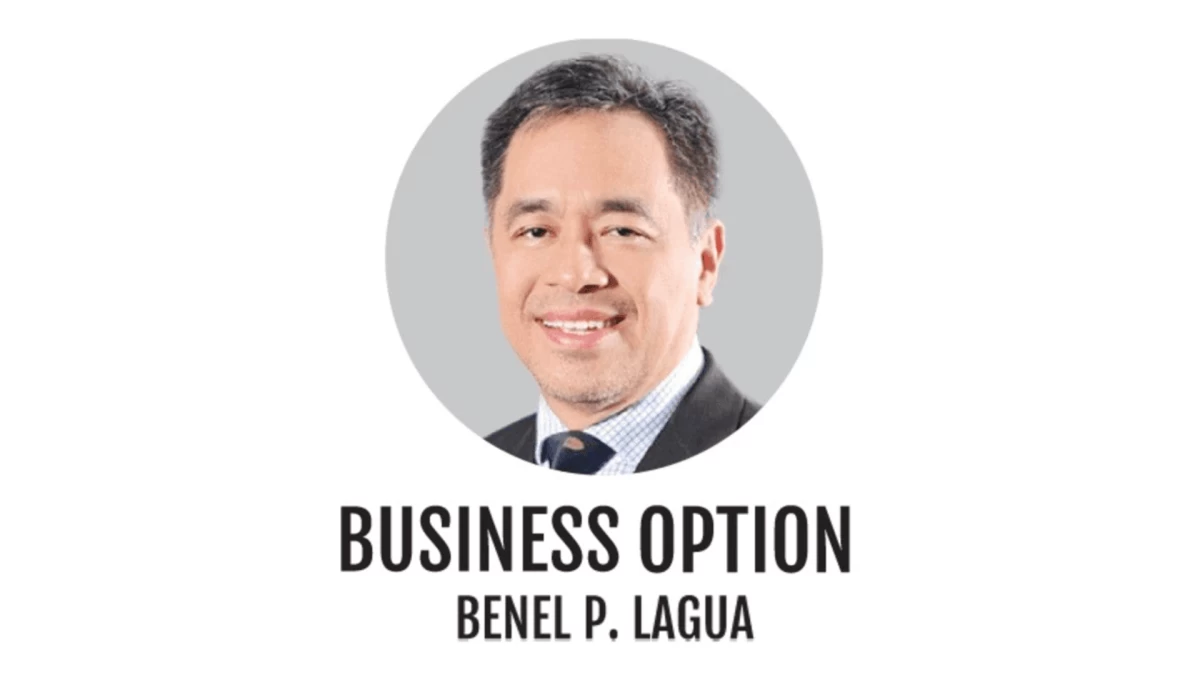
Benel Dela Paz Lagua was previously EVP and Chief Development Officer at the Development Bank of the Philippines. He is an active FINEX member and an advocate of risk-based lending for SMEs. Today, he serves as an independent director for progressive banks and NGOs. The views expressed herein are his own and do not necessarily reflect the opinion of his office or FINEX.