







Stocks snap losses as inflation matches estimates
Published Mar 5, 2026 08:11 pm


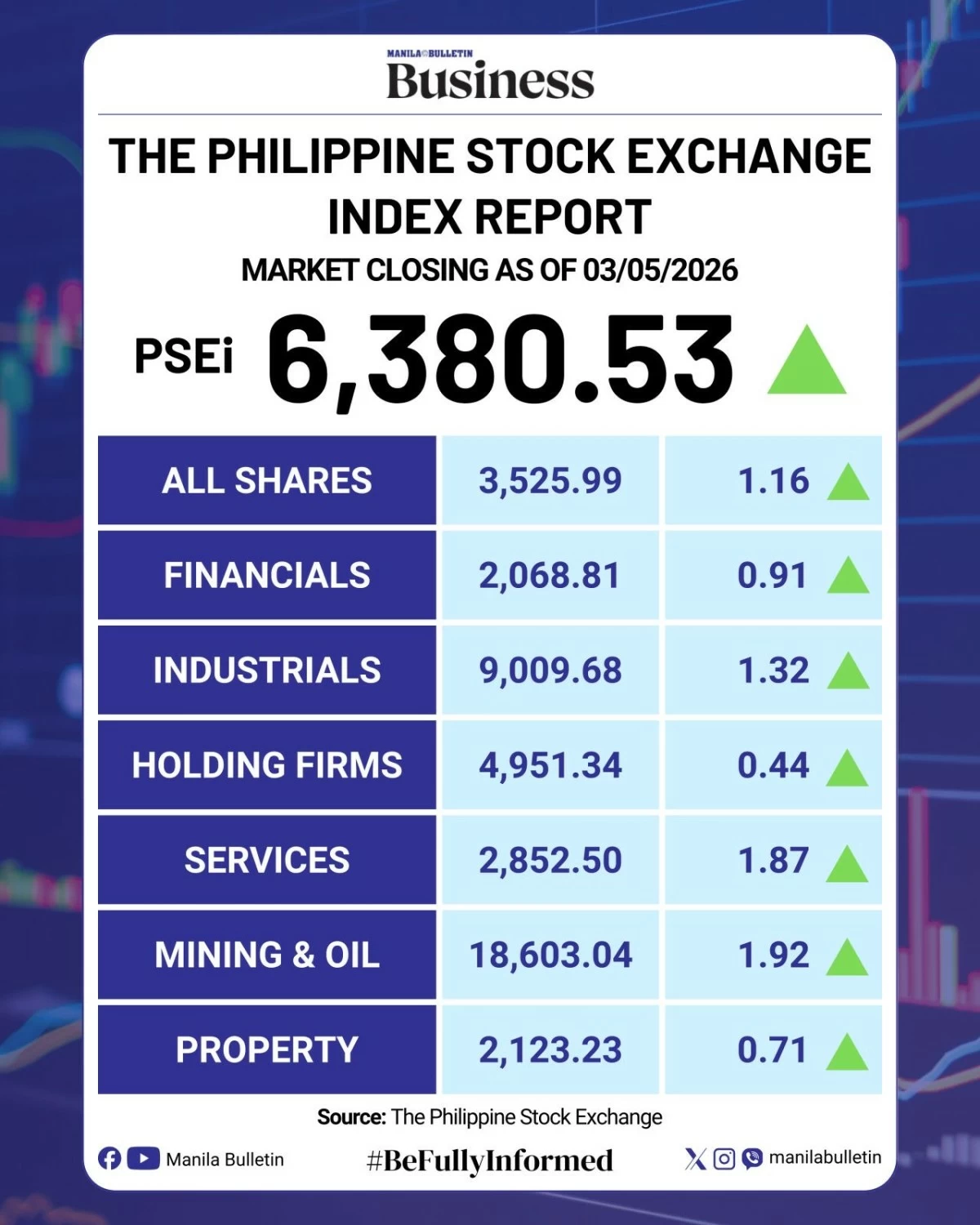
Local stocks advanced on Thursday, March 5, erasing a portion of the previous session’s sharp decline, as manageable inflation reading and cooling geopolitical tensions in the Middle East spurred wave of bargain hunting among local investors.
The Philippine Stock Exchange index (PSEi) climbed 72.69 points, or 1.15 percent, to finish at 6,380.53. The rally was broad-based, with the mining and oil sub-index outperforming other sectors.
Despite the rebound in prices, market participation remained somewhat thin, as trading volume fell to 1.91 billion shares with a total turnover of ₱6.25 billion. Market breadth was positive, with 125 issues advancing against 72 decliners, while 59 stocks remained unchanged.
Investor sentiment shifted toward optimism following reports that the United States (US) and Iran might engage in diplomatic talks, a development that eased fears of a broader conflict in the region.
Luis Limlingan, managing director at Regina Capital Development Corp., noted that the possibility of dialogue helped reduce the geopolitical risk premium that had weighed on the market during the prior session. The recovery was also buoyed by domestic data showing that inflation remains within the central bank’s comfort zone.
The government reported that the headline inflation rate for February reached a 13-month high of 2.4 percent. While this represented the fastest pace of price increases since January 2025, the figure aligned with market expectations and stayed well within the Bangko Sentral ng Pilipinas’ target range of two percent to four percent.
Michael Ricafort, chief economist at Rizal Commercial Banking Corp., said the alignment with estimates provided a sense of stability, reassuring investors that price pressures remain under control for the time being.
Japhet Tantiangco, research manager at Philstocks Financial Inc., attributed the day's gains to investors seeking undervalued stocks after the recent sell-off. He added that the market is banking on the government's ability to implement measures to shield the local economy from potential oil price spikes resulting from Middle East volatility.