ADVERTISEMENT

Philippines and South Korea deepen economic, tech ties

Published Mar 5, 2026 03:03 pm  |  Updated Mar 5, 2026 01:34 pm
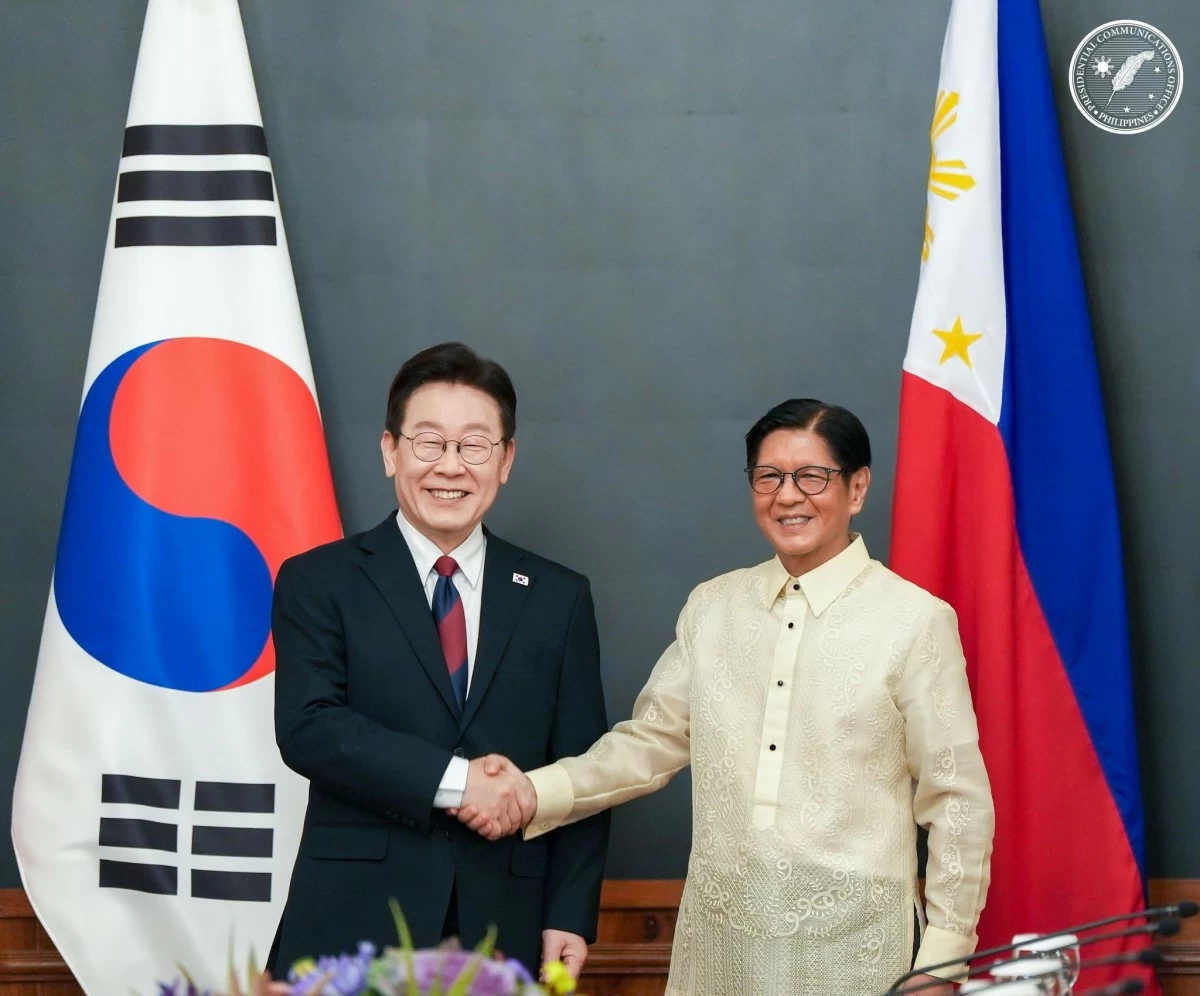
President Ferdinand 'Bongbong' Marcos Jr. and South Korean President Lee Jae-Myung (PCO)

The Philippines and the South Korea have elevated their economic and trade partnership through a series of strategic agreements, highlighting the expanding scope of cooperation between the two nations, according to the Department of Trade and Industry (DTI).

During the state visit of South Korean President Lee Jae Myung this week, the DTI and South Korea’s Ministry of Trade, Industry, and Resources (MOTIR) signed an upgraded memorandum of understanding (MOU) to strengthen collaboration in trade, investment, and economic cooperation.
The agreement establishes a more robust and action-oriented joint commission on trade, investment, and economic cooperation (JCTIEC), a high-level platform designed to expand bilateral trade, accelerate investments, and complement both countries’ industrial capabilities in strategic sectors such as automotive, shipbuilding, marine equipment, semiconductors, electronics, energy, and the digital economy.
“This MOU reinforces the strategic character of our partnership with South Korea. By institutionalizing a more responsive and forward-looking cooperation mechanism, we are ensuring that trade and investment remain central pillars of a resilient and future-ready Philippine economy,” DTI Secretary Cristina A. Roque said in a statement.

In addition, the two countries deepened their cooperation on innovation and intellectual property (IP) through an MOU between the DTI and South Korea’s Ministry of Intellectual Property (MOIP). The agreement aims to help startups and micro, small, and medium enterprises (MSMEs) turn ideas into globally competitive products and strengthen the Philippines’ innovation ecosystem.

“This agreement reflects our commitment to place innovation and IP at the center of economic development. Working closely with South Korea allows us to protect Filipino IPs and translate that into competitive industries, high-quality jobs, and long-term growth,” Roque said.
Cooperation under the MOU covers human resource development, IP protection and enforcement, IP commercialization, user outreach, global collaboration, and emerging areas such as artificial intelligence (AI) and green technologies, building on South Korea’s globally recognized leadership in IP and innovation.

The bilateral relationship was further reinforced as seven major business agreements were signed between Philippine and South Korean firms, covering sectors from energy security and advanced manufacturing to aerospace innovation, healthcare technology, food retail, and critical minerals.

Highlights include a cooperation framework between Manila Electric Co. (Meralco) and Korea Hydro & Nuclear Power Co. Ltd. (KHNP) for potential Philippine nuclear power development, partnerships between the Technical Education and Skills Development Authority (TESDA) and HD Hyundai Heavy Industries to enhance technical education and shipbuilding skills, and collaborations in the space sector through the Philippine Space Agency (PhilSA) and South Korea’s Perigee Aerospace Inc.
“These agreements demonstrate how strong diplomatic ties translate into concrete economic gains. Through the Philippines-South Korea free trade agreement (FTA), we are creating the conditions for more investments, deeper industrial cooperation, and better opportunities for Filipino businesses and workers,” Roque said.

For the DTI, these initiatives signal a forward-looking economic partnership that not only reinforces traditional trade and investment flows but also opens opportunities in high-value industries, innovation, and technology-driven sectors.

The strengthened framework and strategic agreements aim to enhance supply chain resilience, encourage technology transfer, foster industrial upgrading, and generate high-quality jobs, positioning the Philippines and South Korea as long-term strategic partners in a rapidly evolving global economy, according to the DTI.
ADVERTISEMENT
.most-popular .layout-ratio{ padding-bottom: 79.13%; } @media (min-width: 768px) and (max-width: 1024px) { .widget-title { font-size: 15px !important; } }

{{ articles_filter_1561_widget.title }}

.most-popular .layout-ratio{ padding-bottom: 79.13%; } @media (min-width: 768px) and (max-width: 1024px) { .widget-title { font-size: 15px !important; } }

{{ articles_filter_1562_widget.title }}

.most-popular .layout-ratio{ padding-bottom: 79.13%; } @media (min-width: 768px) and (max-width: 1024px) { .widget-title { font-size: 15px !important; } }

{{ articles_filter_1563_widget.title }}

{{ articles_filter_1564_widget.title }}

.mb-article-details { position: relative; } .mb-article-details .article-body-preview, .mb-article-details .article-body-summary{ font-size: 17px; line-height: 30px; font-family: "Libre Caslon Text", serif; color: #000; } .mb-article-details .article-body-preview iframe , .mb-article-details .article-body-summary iframe{ width: 100%; margin: auto; } .read-more-background { background: linear-gradient(180deg, color(display-p3 1.000 1.000 1.000 / 0) 13.75%, color(display-p3 1.000 1.000 1.000 / 0.8) 30.79%, color(display-p3 1.000 1.000 1.000) 72.5%); position: absolute; height: 200px; width: 100%; bottom: 0; display: flex; justify-content: center; align-items: center; padding: 0; } .read-more-background a{ color: #000; } .read-more-btn { padding: 17px 45px; font-family: Inter; font-weight: 700; font-size: 18px; line-height: 16px; text-align: center; vertical-align: middle; border: 1px solid black; background-color: white; } .hidden { display: none; }
function initializeAllSwipers() { // Get all hidden inputs with cms_article_id document.querySelectorAll('[id^="cms_article_id_"]').forEach(function (input) { const cmsArticleId = input.value; const articleSelector = '#article-' + cmsArticleId + ' .body_images'; const swiperElement = document.querySelector(articleSelector); if (swiperElement && !swiperElement.classList.contains('swiper-initialized')) { new Swiper(articleSelector, { loop: true, pagination: false, navigation: { nextEl: '#article-' + cmsArticleId + ' .swiper-button-next', prevEl: '#article-' + cmsArticleId + ' .swiper-button-prev', }, }); } }); } setTimeout(initializeAllSwipers, 3000); const intersectionObserver = new IntersectionObserver( (entries) => { entries.forEach((entry) => { if (entry.isIntersecting) { const newUrl = entry.target.getAttribute("data-url"); if (newUrl) { history.pushState(null, null, newUrl); let article = entry.target; // Extract metadata const author = article.querySelector('.author-section').textContent.replace('By', '').trim(); const section = article.querySelector('.section-info ').textContent.replace(' ', ' '); const title = article.querySelector('.article-title h1').textContent; // Parse URL for Chartbeat path format const parsedUrl = new URL(newUrl, window.location.origin); const cleanUrl = parsedUrl.host + parsedUrl.pathname; // Update Chartbeat configuration if (typeof window._sf_async_config !== 'undefined') { window._sf_async_config.path = cleanUrl; window._sf_async_config.sections = section; window._sf_async_config.authors = author; } // Track virtual page view with Chartbeat if (typeof pSUPERFLY !== 'undefined' && typeof pSUPERFLY.virtualPage === 'function') { try { pSUPERFLY.virtualPage({ path: cleanUrl, title: title, sections: section, authors: author }); } catch (error) { console.error('ping error', error); } } // Optional: Update document title if (title && title !== document.title) { document.title = title; } } } }); }, { threshold: 0.1 } ); function showArticleBody(button) { const article = button.closest("article"); const summary = article.querySelector(".article-body-summary"); const body = article.querySelector(".article-body-preview"); const readMoreSection = article.querySelector(".read-more-background"); // Hide summary and read-more section summary.style.display = "none"; readMoreSection.style.display = "none"; // Show the full article body body.classList.remove("hidden"); } document.addEventListener("DOMContentLoaded", () => { let loadCount = 0; // Track how many times articles are loaded const offset = [1, 2, 3, 4, 5, 6, 7, 8, 9, 10]; // Offset values const currentUrl = window.location.pathname.substring(1); let isLoading = false; // Prevent multiple calls if (!currentUrl) { console.log("Current URL is invalid."); return; } const sentinel = document.getElementById("load-more-sentinel"); if (!sentinel) { console.log("Sentinel element not found."); return; } function isSentinelVisible() { const rect = sentinel.getBoundingClientRect(); return ( rect.top < window.innerHeight && rect.bottom >= 0 ); } function onScroll() { if (isLoading) return; if (isSentinelVisible()) { if (loadCount >= offset.length) { console.log("Maximum load attempts reached."); window.removeEventListener("scroll", onScroll); return; } isLoading = true; const currentOffset = offset[loadCount]; window.loadMoreItems().then(() => { let article = document.querySelector('#widget_1690 > div:nth-last-of-type(2) article'); intersectionObserver.observe(article) loadCount++; }).catch(error => { console.error("Error loading more items:", error); }).finally(() => { isLoading = false; }); } } window.addEventListener("scroll", onScroll); });

Sign up by email to receive news.