ADVERTISEMENT

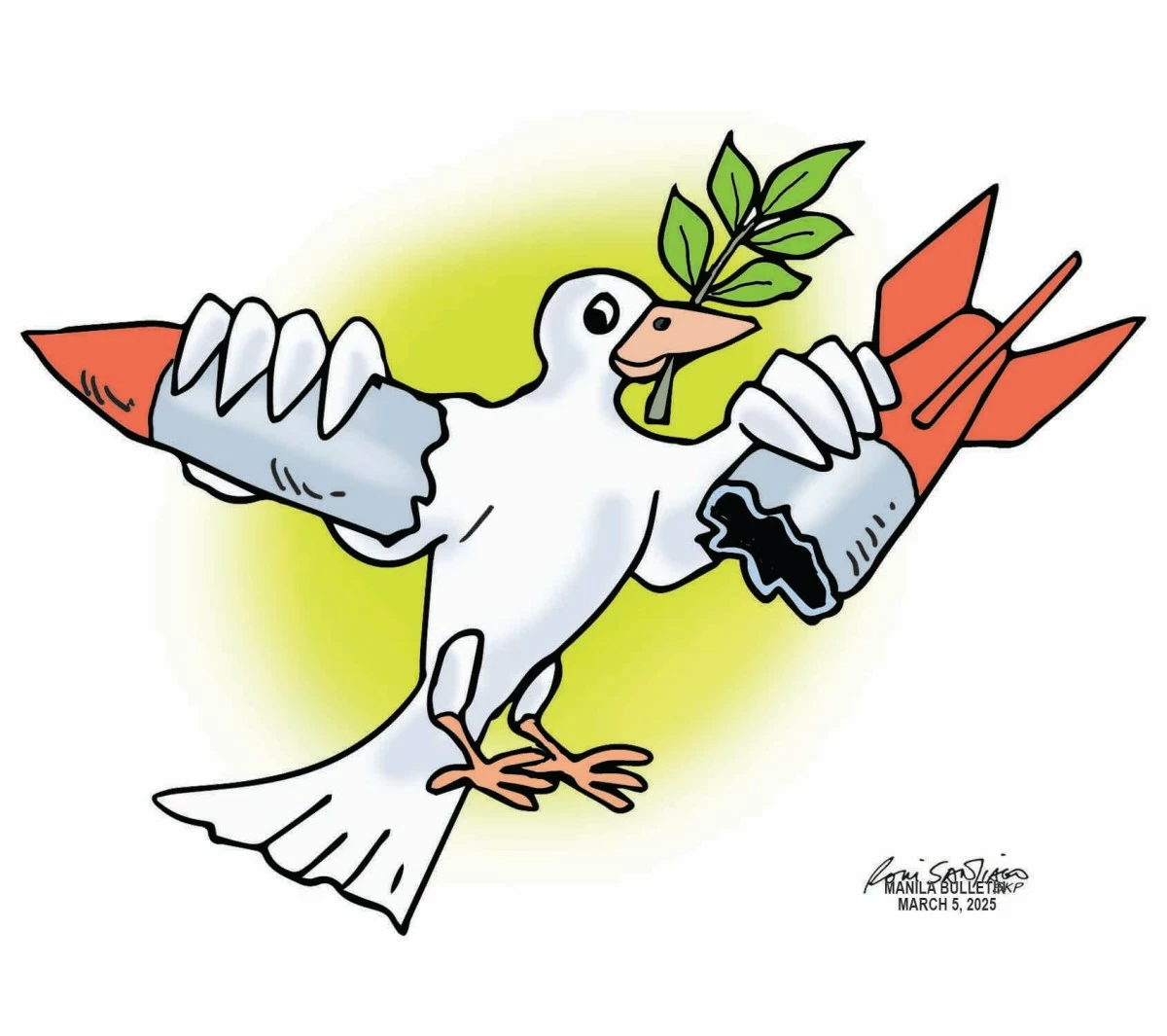
No winners in war

Published Mar 5, 2026 12:01 am  |  Updated Mar 4, 2026 04:28 pm
As the world observes International Day for Disarmament and Non-Proliferation Awareness today, March 5, the persistent conflict in the Middle East casts a long and far-reaching shadow. It is a stark reminder that war, regardless of its justification or rhetoric, extracts a price that far exceeds any proclaimed victory. History has consistently affirmed that armed conflict does not create winners; it only leaves behind survivors burdened with loss.
Wars are often framed as instruments of security or guardians of sovereignty. Yet their tangible outcomes are measured in shattered infrastructure, displaced communities, fractured institutions, and enduring trauma. Beyond the immediate devastation lies an equally profound erosion of social trust and moral clarity. Even those who prevail militarily inherit the heavy responsibilities of reconstruction, reconciliation, and the management of grievances that violence alone cannot resolve.
In the contemporary era, the risks are magnified by the unprecedented destructive capacity of modern weaponry. Technological advancements—ranging from precision-guided systems to cyber warfare—have altered the nature of confrontation. Most alarming remains the continued existence and implicit threat of nuclear arsenals. The rhetoric surrounding such weapons, even when framed as deterrence, contributes to a climate of perpetual tension. The margin for miscalculation grows narrower as the stakes grow higher.
The call by United Nations Secretary-General António Guterres to end nuclear saber-rattling, halt arms races, and invest instead in the architecture of peace is a rational and necessary response to an increasingly fragile global security environment. Disarmament obligations are commitments rooted in the collective interest of humanity’s survival. Their fulfillment signals seriousness of purpose and respect for shared responsibility.
However, disarmament extends beyond the reduction of stockpiles. It requires a transformation in strategic thinking. Security must no longer be defined exclusively in competitive or zero-sum terms. Genuine security is mutual; it rests upon the assurance that no nation’s safety depends upon another’s vulnerability. Arms accumulation may generate a temporary sense of strength, but it simultaneously diverts vital resources from urgent global priorities—public health, sustainable development, climate mitigation, and social stability.
Equally concerning is the normalization of perpetual preparedness for catastrophic violence. When deterrence becomes the cornerstone of international order, it institutionalizes fear as a governing principle. Peace sustained by the threat of annihilation is inherently precarious. A more durable peace demands investment in diplomacy, transparent communication, confidence-building measures, and robust international institutions capable of managing disputes before they escalate.
Rebuilding trust in a polarized world presents formidable challenges. Geopolitical rivalries, ideological divisions, and the rapid dissemination of misinformation complicate dialogue. Nevertheless, retreating into cynicism or accepting conflict as inevitable would constitute an abdication of responsibility. Multilateral cooperation—despite its imperfections—remains indispensable for addressing transnational risks and reinforcing norms against proliferation and aggression.
Peace requires disciplined restraint, principled negotiation, and sustained political courage. It calls upon leaders to temper inflammatory rhetoric, to prioritize long-term stability over short-term advantage, and to recognize the human consequences of strategic decisions. It also calls upon citizens to demand accountability and to resist narratives that glorify militarization while obscuring its costs.
On this day of reflection, commemoration must translate into commitment. Strengthening non-proliferation regimes, honoring disarmament agreements, and revitalizing diplomatic channels are practical steps toward reducing the likelihood of catastrophe. The choice before the international community is clear—continue investing in the instruments of destruction or commit to constructing an enduring framework for peace.
The path toward peace is neither simple nor immediate. Yet the alternative—a world defined by escalating armament and recurring devastation—is untenable. To safeguard future generations, the global community must reaffirm that the preservation of human life and dignity stands above the pursuit of dominance. In that affirmation lies the only victory worthy of humanity. The choice is ours—and the consequences will echo for generations.
ADVERTISEMENT
.most-popular .layout-ratio{ padding-bottom: 79.13%; } @media (min-width: 768px) and (max-width: 1024px) { .widget-title { font-size: 15px !important; } }

{{ articles_filter_1561_widget.title }}

.most-popular .layout-ratio{ padding-bottom: 79.13%; } @media (min-width: 768px) and (max-width: 1024px) { .widget-title { font-size: 15px !important; } }

{{ articles_filter_1562_widget.title }}

.most-popular .layout-ratio{ padding-bottom: 79.13%; } @media (min-width: 768px) and (max-width: 1024px) { .widget-title { font-size: 15px !important; } }

{{ articles_filter_1563_widget.title }}

{{ articles_filter_1564_widget.title }}

.mb-article-details { position: relative; } .mb-article-details .article-body-preview, .mb-article-details .article-body-summary{ font-size: 17px; line-height: 30px; font-family: "Libre Caslon Text", serif; color: #000; } .mb-article-details .article-body-preview iframe , .mb-article-details .article-body-summary iframe{ width: 100%; margin: auto; } .read-more-background { background: linear-gradient(180deg, color(display-p3 1.000 1.000 1.000 / 0) 13.75%, color(display-p3 1.000 1.000 1.000 / 0.8) 30.79%, color(display-p3 1.000 1.000 1.000) 72.5%); position: absolute; height: 200px; width: 100%; bottom: 0; display: flex; justify-content: center; align-items: center; padding: 0; } .read-more-background a{ color: #000; } .read-more-btn { padding: 17px 45px; font-family: Inter; font-weight: 700; font-size: 18px; line-height: 16px; text-align: center; vertical-align: middle; border: 1px solid black; background-color: white; } .hidden { display: none; }
function initializeAllSwipers() { // Get all hidden inputs with cms_article_id document.querySelectorAll('[id^="cms_article_id_"]').forEach(function (input) { const cmsArticleId = input.value; const articleSelector = '#article-' + cmsArticleId + ' .body_images'; const swiperElement = document.querySelector(articleSelector); if (swiperElement && !swiperElement.classList.contains('swiper-initialized')) { new Swiper(articleSelector, { loop: true, pagination: false, navigation: { nextEl: '#article-' + cmsArticleId + ' .swiper-button-next', prevEl: '#article-' + cmsArticleId + ' .swiper-button-prev', }, }); } }); } setTimeout(initializeAllSwipers, 3000); const intersectionObserver = new IntersectionObserver( (entries) => { entries.forEach((entry) => { if (entry.isIntersecting) { const newUrl = entry.target.getAttribute("data-url"); if (newUrl) { history.pushState(null, null, newUrl); let article = entry.target; // Extract metadata const author = article.querySelector('.author-section').textContent.replace('By', '').trim(); const section = article.querySelector('.section-info ').textContent.replace(' ', ' '); const title = article.querySelector('.article-title h1').textContent; // Parse URL for Chartbeat path format const parsedUrl = new URL(newUrl, window.location.origin); const cleanUrl = parsedUrl.host + parsedUrl.pathname; // Update Chartbeat configuration if (typeof window._sf_async_config !== 'undefined') { window._sf_async_config.path = cleanUrl; window._sf_async_config.sections = section; window._sf_async_config.authors = author; } // Track virtual page view with Chartbeat if (typeof pSUPERFLY !== 'undefined' && typeof pSUPERFLY.virtualPage === 'function') { try { pSUPERFLY.virtualPage({ path: cleanUrl, title: title, sections: section, authors: author }); } catch (error) { console.error('ping error', error); } } // Optional: Update document title if (title && title !== document.title) { document.title = title; } } } }); }, { threshold: 0.1 } ); function showArticleBody(button) { const article = button.closest("article"); const summary = article.querySelector(".article-body-summary"); const body = article.querySelector(".article-body-preview"); const readMoreSection = article.querySelector(".read-more-background"); // Hide summary and read-more section summary.style.display = "none"; readMoreSection.style.display = "none"; // Show the full article body body.classList.remove("hidden"); } document.addEventListener("DOMContentLoaded", () => { let loadCount = 0; // Track how many times articles are loaded const offset = [1, 2, 3, 4, 5, 6, 7, 8, 9, 10]; // Offset values const currentUrl = window.location.pathname.substring(1); let isLoading = false; // Prevent multiple calls if (!currentUrl) { console.log("Current URL is invalid."); return; } const sentinel = document.getElementById("load-more-sentinel"); if (!sentinel) { console.log("Sentinel element not found."); return; } function isSentinelVisible() { const rect = sentinel.getBoundingClientRect(); return ( rect.top < window.innerHeight && rect.bottom >= 0 ); } function onScroll() { if (isLoading) return; if (isSentinelVisible()) { if (loadCount >= offset.length) { console.log("Maximum load attempts reached."); window.removeEventListener("scroll", onScroll); return; } isLoading = true; const currentOffset = offset[loadCount]; window.loadMoreItems().then(() => { let article = document.querySelector('#widget_1690 > div:nth-last-of-type(2) article'); intersectionObserver.observe(article) loadCount++; }).catch(error => { console.error("Error loading more items:", error); }).finally(() => { isLoading = false; }); } } window.addEventListener("scroll", onScroll); });

Sign up by email to receive news.