






Manila Bulletin
 Philippines
Luzon
Nueva Ecija is 1st in Southeast Asia to generate carbon credits with biochar; pushes for carbon removal, climate-smart agri
Philippines
Luzon
Nueva Ecija is 1st in Southeast Asia to generate carbon credits with biochar; pushes for carbon removal, climate-smart agri
Philippines
Luzon
Nueva Ecija is 1st in Southeast Asia to generate carbon credits with biochar; pushes for carbon removal, climate-smart agri
Nueva Ecija is 1st in Southeast Asia to generate carbon credits with biochar; pushes for carbon removal, climate-smart agri
Published Mar 4, 2026 02:53 pm


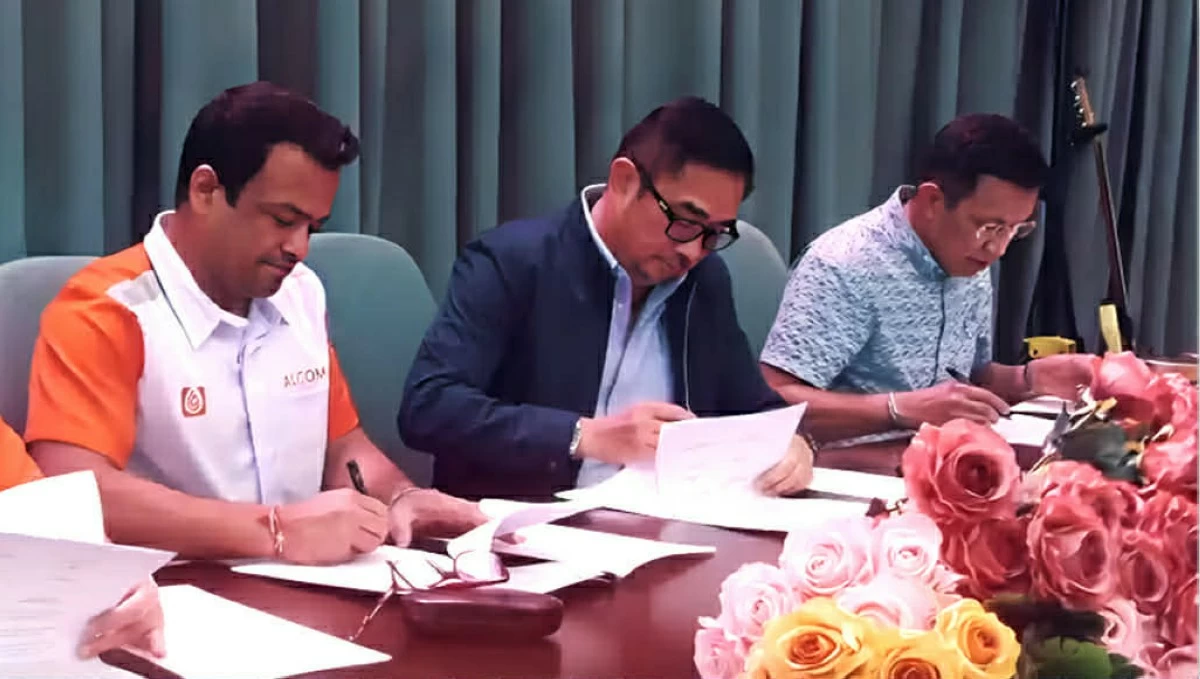
BIOCHAR PRODUCTION – The provincial government of Nueva Ecija led by Gov. Aurelio M. Umali (second from right) and the Singaporean renewable energy and carbon projects developer Alcom Pte Ltd. led by its founder and president Prateek Tiwari (second from left) signed on Feb. 1, 2023 a joint venture agreement for the operation of biochar production plant in Palayan City, Nueva Ecija. The project which turns rice husks to biological charcoal is seen to benefit farmers as well as the environment.
By JAYFERSON COMITAN
In Nueva Ecija, a carbon sequestration project called “Project NuevaChar,” launched in 2022 and initiated by Gov. Aurelio “Oyie” Matias Umali, is solidifying its position as a pioneer in sustainable agriculture, in partnership with Alcom Carbon Markets Philippines.
The facility combined green heat and biochar production and is considered the first of its kind not only in the Philippines but also in Southeast Asia.
It converted rice husks into soil enhancer and generated carbon credits to improve soil quality and support “climate-smart” agriculture, according to Umali.
The project has become operational across the Philippines, including Metro Manila, Oriental Mindoro, Davao, Isabela, Benguet, Baguio City, Mountain Province, Nueva Vizcaya, Pangasinan, Bulacan, and Negros Occidental.
In its first large-scale rollout, 363 metric tons of rice husk biochar were distributed to farmers across 32 cities and municipalities, which covered around 181 hectares of rice fields and other crops.
The distribution formed part of a “techno-farm trial,” which included farmer training and monitoring of soil performance in coordination with the Office of the Provincial Agriculturist to measure the effectiveness of the project.

Gov. Oyie Umali (right) and Alcom Pte Ltd. founder and president Prateek Tiwari
Umali said the province is continuing to anchor the project on “evidence-based” climate interventions to ensure measurable agricultural and environmental outcomes.
In 2023, the facility received an audit and validation by Puro.earth, a B2B market for carbon removal, to confirm its net carbon dioxide removal. The verification enabled the issuance of certified carbon credits linked to the project’s biochar production, which was first in Southeast Asia.
“This audit confirmed NuevaChar’s pioneering role in sustainable agriculture, biochar innovation, and regional carbon removal leadership,” the provincial government said.
The provincial government also conducted its first-ever Biochar study tour, attended by the agro-industry leaders, government officials, and carbon technology specialists. It showcased the innovations in the project through biochar, low-carbon cultivation, and circular agriculture.
A learning discussion was shared during the event with the scientific insights from International Rice Research Institute (IRRI), University of the Philippines-Los Banos, and Central Luzon State University (CLSU).
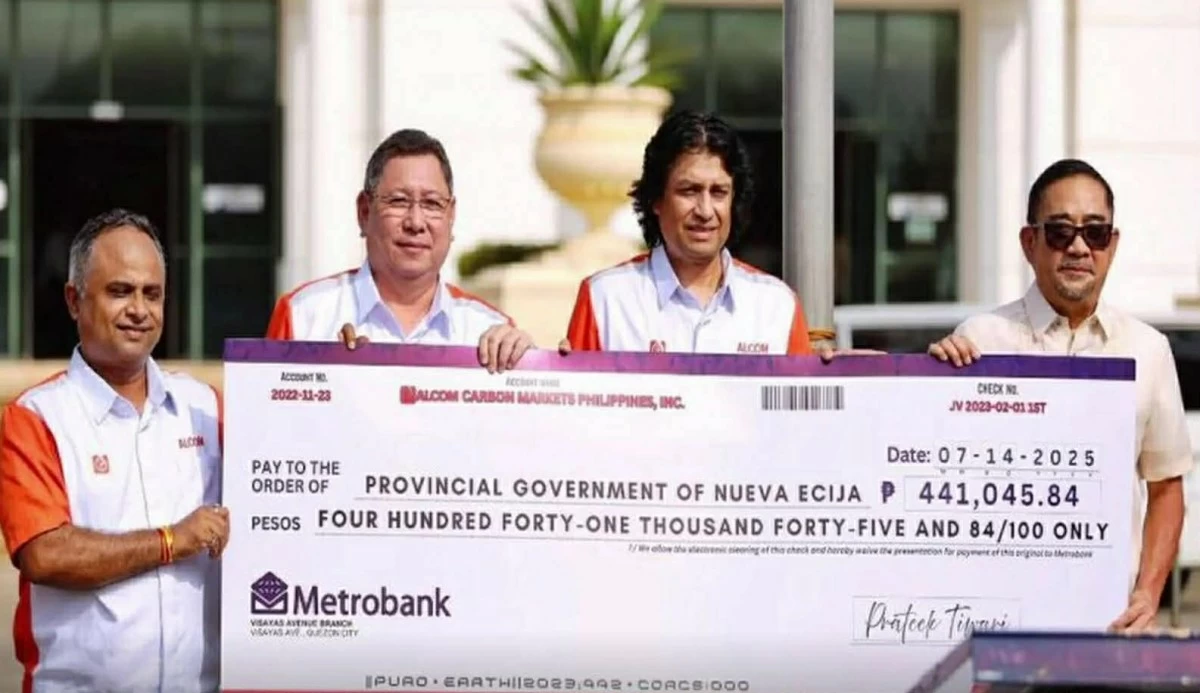
On July 14, 2025, Umali formally received carbon revenue derived from the verified credits during a ceremony at the Provincial Capitol. The turnover marked the first carbon revenue remittance to a local government unit from biochar-based carbon credits.
Provincial officials cited the development as a milestone in linking “agricultural waste” management with “climate finance.” The revenue was generated through structured carbon credit verification and issuance.
The province also launched a Technical and Vocational Education and Training (TVET) program on “climate-smart biochar applications” in partnership with Bulacan Agricultural State College and the Global Green Growth Institute. The program provided training on biochar production, soil application, and carbon accounting.
“Through practical field exercises, lab demonstrations, and real-world project modules, participants learn to convert agricultural residues into sustainable biochar solutions that improve soil health, increase crop yields, and reduce greenhouse gas emissions,” the province said.
In July 2025, the Climate Change Commission formally (CCC) recognized Project NuevaChar during activities held in Nueva Ecija, including facility visits and discussions on renewable energy integration and carbon removal initiatives.
Projet NuevaChar also collaborated with national and international institutions CCC, IRRI, Global Green Growth Institute, Puro.earth, Board of Investments-Philippines, National Development Company, Philippine Carabao Center, East West Seeds, CLSU, and Technological University of the Philippines.
“Under Umali’s decisive leadership, these partnerships have transformed NuevaChar into a globally benchmarked model of subnational climate action,” the provincial government said.