






 Philippines
National
Senators back proposal to give PBBM authority to suspend fuel excise tax
Philippines
National
Senators back proposal to give PBBM authority to suspend fuel excise tax
Senators back proposal to give PBBM authority to suspend fuel excise tax


At A Glance
- Some senators on Tuesday, March 3 supported the proposal to give President Ferdinand "Bongbong" Marcos Jr. the authority to reduce or suspend fuel excise taxes as global oil markets react to the escalating conflict in the Middle East.
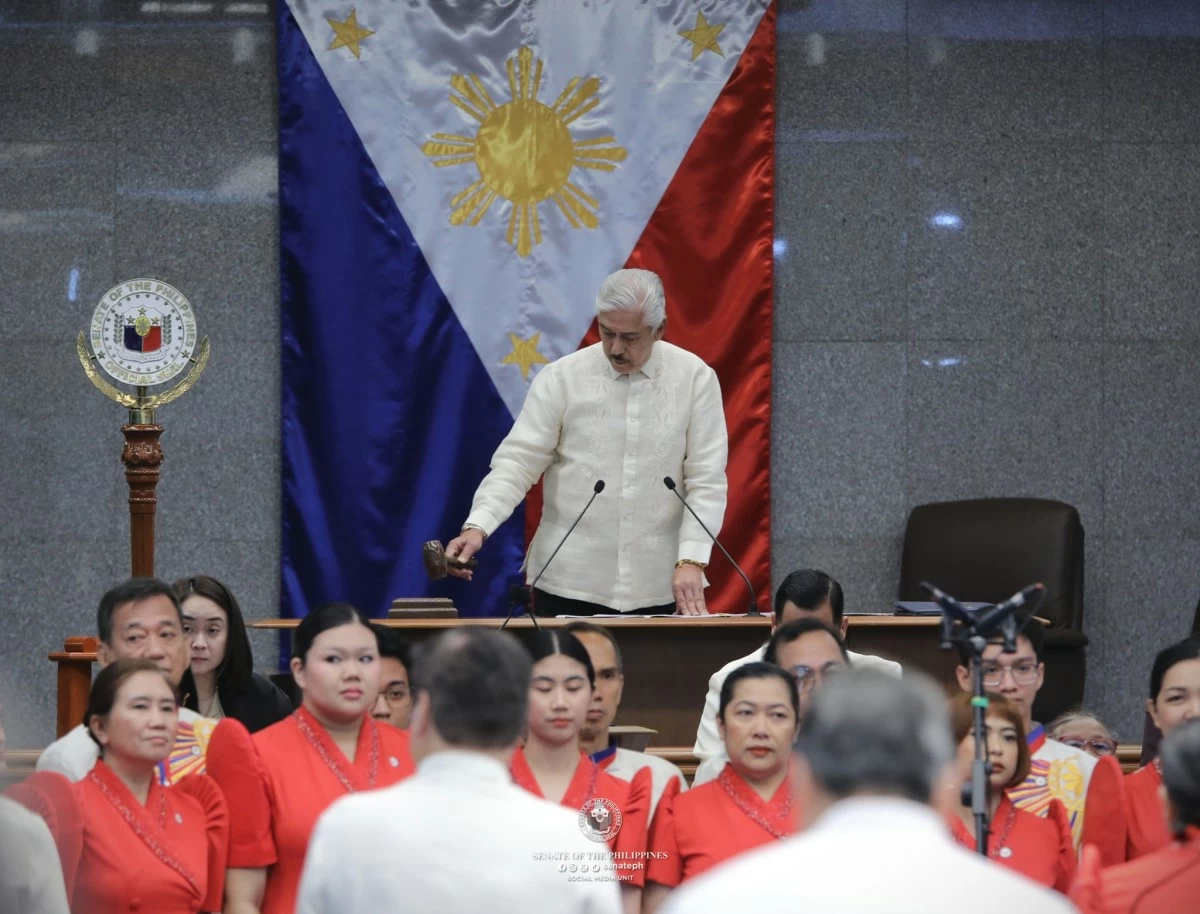
Senators on Tuesday, March 3 supported the proposal to give President Ferdinand “Bongbong” Marcos Jr. the authority to reduce or suspend fuel excise taxes as global oil markets react to the escalating conflict in the Middle East.
Senate Majority Leader Juan Miguel “Migz” Zubiri said lawmakers should treat the request as an urgent consumer protection measure, especially for commuters, farmers, fisherfolk and small businesses whose earnings suffer first when diesel and gasoline prices suddenly spike.
“I am in favor of granting the President those powers to be able to lower the excise tax on fuel. That move will definitely help cushion the impacts on high fuel cost due to the ongoing conflict in the middle east,” Zubiri expressed.
“We must act immediately so it can help temper sudden spikes on the prices of important commodities such as food and electricity. The President has my full support for that move and request,” he continued.
Earlier, President Marcos said he may ask Congress for emergency powers to reduce fuel excise taxes if the Middle East conflict drags on.
If the excise tax is reduced or suspended, Zubiri said the immediate savings at the pump can have a high impact because it lowers the tax component directly.
It can also trim the VAT portion tied to that tax, translating to a bigger per-liter relief than the excise amount alone in many cases.
“When the price of oil suddenly jumps, it's not just motorists who are affected. Even food prices, fares and electricity bills go hand in hand,” Zubiri stressed.
“Therefore, we must respond quickly to this scenario, and I believe granting the President the power to reduce or suspend excise tax on fuel is a good first step in addressing the potential crisis,” he further noted.
Zubiri said the Senate is prepared to move with urgency on measures that give the Executive branch defined, time-bound flexibility, provided the guardrails are clear and the goal is to shield families and keep the economy from absorbing unnecessary shocks.
Senate President Pro Tempore Panfilo “Ping” Lacson also said he is open to supporting Marcos’ request for Congress to grant him emergency powers to respond to global oil price hikes.
“Since the provision in the TRAIN Law that automatically suspends the imposition of the excise tax on fuel when the price of Dubai crude oil breaches US$80 is time bound and had actually expired in 2020 after its passage in 2018, PBBM’s request to Congress to grant him emergency powers should be given serious consideration in case the Middle East conflict continues to escalate,” Lacson said.
Lacson also said an amendment of the TRAIN Law to grant the Department of Finance (DOF) the authority to suspend the imposition of the excise tax anytime if the price of crude oil exceeds the same threshold of US$80 can also be considered.
“Anyway, it is prudent to await the official submission of Malacañang with specifics in this regard,” he said.
Senate President Vicente Sotto III, meanwhile, cautioned against rushing approval of such proposal, saying it is imperative for lawmakers to carefully study Palace’s proposal.
“As far as I know we still have at least two to three months reserve. This (conflict) might not last that long. We might be worried about something that we should not be worried about. So in the meantime, we will study the proposal,” he said.
Sen. Sherwin Gatchalian, chairman of the Senate Committee on Finance, warned of the repercussions if suspending excise fuel tax is the route the government would be taking.
“The government could lose around P300-billion per year. That’s a substantial amount,” he said.
“There is also the problem that it is not equitable because if you have many cars, you will also benefit from the elimination of tax-expectation,” he also warned.
Gatchalian said he finds it better for the government to tap the President’s contingency fund.
“Let’s tap the contingency fund. Because, I was looking at the numbers. From February to now, the price of petroleum increased about 15% globally. Our problem is that we have not yet increased the transport fare. So our drivers would really be affected.
“So, I think immediately, what we can do is support the PUV (private utility vehicle) drivers. Just to help them out with the 15% increase,” he said.
That’s why, he said the Department of Energy (DOE) should create a task force to look at the supply issue.
“I’m more worried on the supply side. So the oil companies should look for contingency…Almost 80 percent of our oil is from the Middle East, whether it’s from Saudi Arabia or other refineries there,” he pointed out.