






 Business
Philippines among 'worst' hit by oil price surge amid Middle East tensions—ING
Business
Philippines among 'worst' hit by oil price surge amid Middle East tensions—ING
Philippines among 'worst' hit by oil price surge amid Middle East tensions—ING
By Derco Rosal


At A Glance
- Amid limited subsidies and prices largely driven by market forces, the Philippines has emerged as a loser—among the "worst impacted"—by surging oil prices, with nearly 90 percent of its oil imports sourced from the Middle East, where a volley of missile attacks continues to escalate.
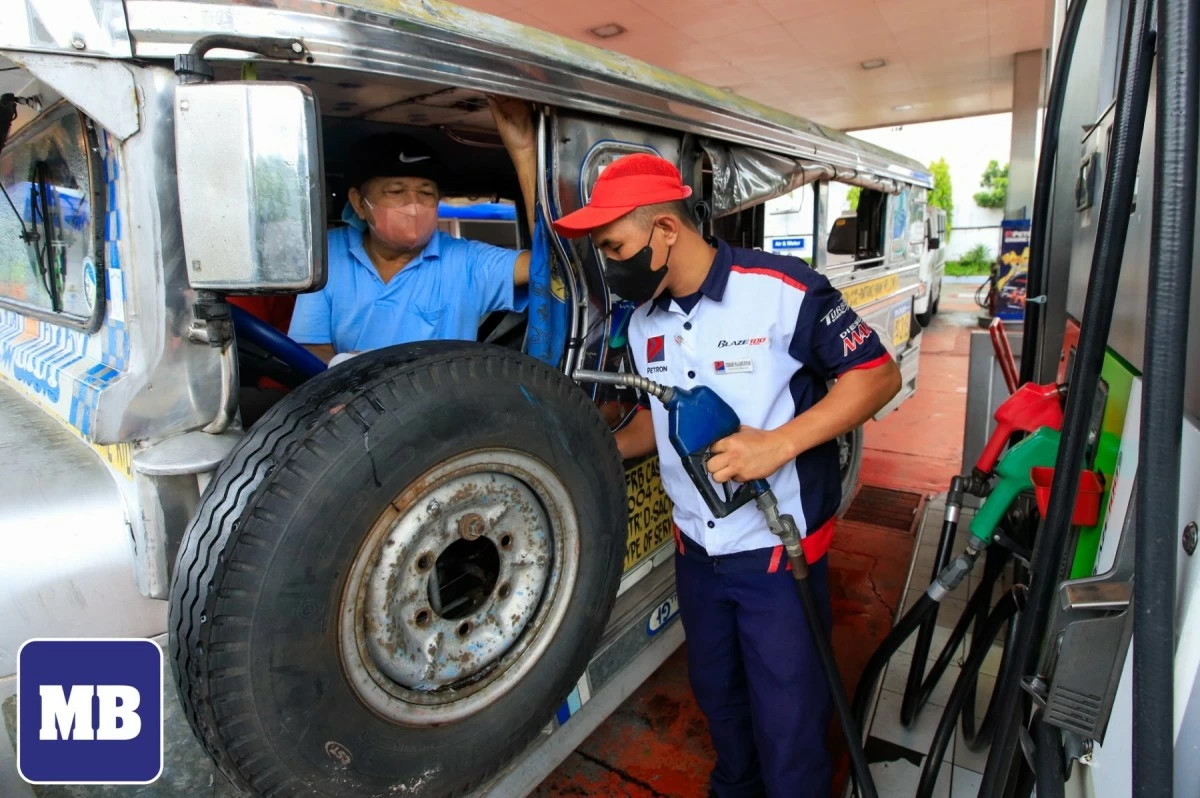
Amid limited subsidies and prices largely driven by market forces, the Philippines has emerged as a loser—among the “worst impacted”—by surging oil prices, with nearly 90 percent of its oil imports sourced from the Middle East, where a volley of missile attacks continues to escalate.
Dutch financial giant ING Group wrote in a commentary published on Monday, March 2, that several economies across Asia remain relatively insulated from the transmission of higher oil costs due to ample fuel subsidies and more regulated pricing mechanisms.
“Several economies like Indonesia, Thailand, and India are still partially shielded by fuel subsidies or regulated pricing, which dampens the direct pass-through from global oil markets,” said Deepali Bhargava, ING regional head of research for Asia-Pacific (APAC).
“On the other hand, the Philippines—also among the worst impacted by higher oil prices—tends to see a stronger inflation hit because retail fuel prices are more market-driven and subsidies are limited,” Bhargava said.
Bhargava noted that the Persian Gulf in the Middle East supplies nearly 90 percent of the crude oil imported by the Philippines and Japan. With Iran officially blocking the Strait of Hormuz, through which a fifth of the world’s oil passes, the Philippines could experience an oil supply shortage and faster inflation.
According to the economist, any disruption in the critical shipping passage would restrict supply, “potentially causing shortages that slow business activity and put pressure on manufacturing across Asia.”
Bhargava added that even without a physical supply disruption, the Philippines and its Southeast Asian peers are among the most exposed to rising global oil prices, which could hit trade balances and trigger price spikes.
Oversea-Chinese Banking Corp. Ltd. (OCBC), a Singapore-based lender, shared a similar assessment, saying that the Philippines, alongside India, Indonesia, Malaysia, Thailand, and Vietnam, is “exposed to a deterioration in trade balances.” These economies are all net importers of petroleum products.
To illustrate, a mere 10-percent increase in oil prices can cause a deterioration in current account balances by up to 60 basis points (bps). Domestically, this would mean widening the current account deficit further beyond three percent of gross domestic product (GDP), potentially expanding back to four percent.
“Prolonged increases would only deepen these deficits,” Bhargava said. As of end-September 2025, the Philippine current account deficit narrowed to $12.5 billion from $13.34 billion during the same nine-month period in 2024.
This was equivalent to 3.6 percent of the country’s output, narrower than four percent in the same period a year ago.
Moreover, domestic inflation could bear the brunt of a prolonged conflict, especially if compounded by a peso slump against the United States (US) dollar. A weaker peso means higher costs for imported oil, further pushing up fuel and transport prices.
Meanwhile, on food prices, the Philippines is also vulnerable when pump prices jump, as up to 45 percent of the local consumer price index (CPI) basket is composed of food. A 10-percent jump in oil prices could quicken inflation by as much as 40 bps.
While ING believes local inflation will likely hover within the Bangko Sentral ng Pilipinas (BSP) target of two to four percent, a prolonged price shock “of this magnitude,” compounded by peso weakness, could push inflation to the upper end of four percent.
Bhargava said this heightens pressure on monetary authorities to keep the key interest rate unchanged instead of easing further.
Estimates by economic think tank Capital Economics also suggest crude oil at around $80 per barrel could push headline inflation 50 bps higher. January inflation clocked in at two percent, with economists anticipating an uptick in February.
Despite inflation risks, the think tank asserted this should not be a “major concern,” as inflation in most economies stands below or within target. This leads them to still pencil in further policy easing beyond the freshly trimmed 4.25 percent.
“We would continue to expect further policy easing in several economies, most notably the Philippines and Thailand,” said Capital Economics Asia economist Gareth Leather and chief Asia economist Mark Williams.