ADVERTISEMENT

Macron says France will allow temporary deployment of nuclear-armed jets to European allies

Published Mar 3, 2026 12:28 am
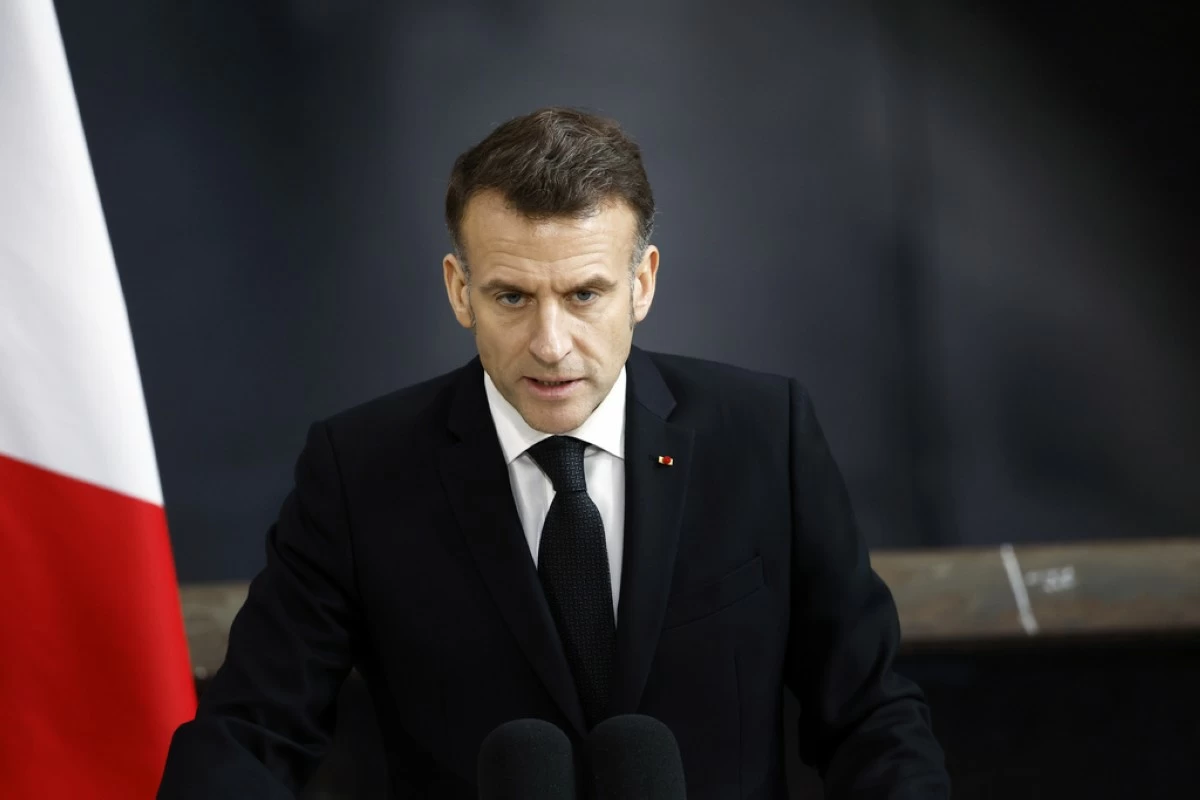
French President Emmanuel Macron delivers a speech next to the submarine 'Le Temeraire' (The Temerarious) at the Nuclear submarines Navy base of Ile Longue in Crozon, France, Monday March 2, 2026. (Yoan Valat/Pool Photo via AP)

L’ILE LONGUE, France (AP) — French President Emmanuel Macron announced Monday that France would allow the temporary deployment of its nuclear-armed aircraft to allied countries as part of its new nuclear strategy aimed at strengthening Europe’s independence.

Macron said the unprecedented new posture could “provide for the temporary deployment of elements of our strategic air forces to allied countries," but said there would be no sharing of decision-making with any other nation regarding the use of the nuclear weapons.

Talks about such arrangements have started with Britain, Germany, Poland, the Netherlands, Belgium, Greece, Sweden and Denmark, Macron said at a military base at L’Ile Longue in northwestern France that hosts the country’s ballistic missile submarines.

Macron’s long-planned speech, scheduled before the most recent outbreak of hostilities in Iran, was aimed at spelling out how French nuclear weapons fit into Europe’s security amid concerns raised on the continent by recurring tensions with U.S. President Donald Trump.

France also will allow partners to participate in deterrence exercises and allow allies’ non-nuclear forces to participate in France’s nuclear activities, said Macron, who is the commander-in-chief of the armed forces under the French constitution.

In a joint statement, Macron and German Chancellor Friedrich Merz welcomed a deeper Franco-German integration in the field of deterrence.

“France and Germany have agreed to take first concrete steps beginning this year, including German conventional participation in French nuclear exercises and joint visits to strategic sites as well as development of conventional capabilities with European partners,” they said.

Macron also announced that France will increase its number of nuclear warheads from the current level of below 300, but did not give a figure for the increase. It will be the first time France increases its nuclear arsenal since at least 1992.

“I have decided to increase the numbers of warheads of our arsenal,” Macron said. “My responsibility is to ensure that our deterrence maintains — and will maintain in the future — its assured destructive power."

European leaders have voiced growing doubts about U.S. commitments to help defend Europe under the so-called nuclear umbrella, a policy long intended to ensure that allies — particularly NATO members — would be protected by American nuclear forces in the event of a threat.

Macron said that recent changes in U.S. defense strategy amid the emergence of new threats have demonstrated a refocusing of American priorities and have encouraged Europe to take more direct responsibility for its own security. He said Europeans should take their destiny more firmly into their hands.

“To be free, one needs to be feared,” Macron said.

France is the only nuclear power in the European Unio n, following Britain's exit from the bloc in 2020.

“If we had to use our arsenal, no state, however powerful, could shield itself from it, and no state, however vast, would recover from it,” Macron said.

Some European nations have already taken up an offer Macron made last year to discuss France’s nuclear deterrence and even associate European partners in nuclear exercises.

Last month, Merz said he’d had “initial talks” with Macron on the issue and had publicly theorized about German Air Force planes possibly being used to carry French nuclear bombs. But Macron ruled out any such possibility in Monday's speech.

France and Britain also adopted a joint declaration in July that allows both nations' nuclear forces, while independent, to be “coordinated.” The U.K., no longer an EU member but a NATO ally, is the only other European country with a nuclear deterrent.

Macron has consistently insisted any decision to use France’s nuclear weapons would remain only in the hands of the French president.

Macron added that the evolution of France competitors’ defenses, the emergence of regional powers, the possibility of coordination among adversaries, and the risks linked to proliferation led him to the conclusion that it was essential for France to enhance its nuclear arsenal.

Related Tags

World news
ADVERTISEMENT
.most-popular .layout-ratio{ padding-bottom: 79.13%; } @media (min-width: 768px) and (max-width: 1024px) { .widget-title { font-size: 15px !important; } }

{{ articles_filter_1561_widget.title }}

.most-popular .layout-ratio{ padding-bottom: 79.13%; } @media (min-width: 768px) and (max-width: 1024px) { .widget-title { font-size: 15px !important; } }

{{ articles_filter_1562_widget.title }}

.most-popular .layout-ratio{ padding-bottom: 79.13%; } @media (min-width: 768px) and (max-width: 1024px) { .widget-title { font-size: 15px !important; } }

{{ articles_filter_1563_widget.title }}

{{ articles_filter_1564_widget.title }}

.mb-article-details { position: relative; } .mb-article-details .article-body-preview, .mb-article-details .article-body-summary{ font-size: 17px; line-height: 30px; font-family: "Libre Caslon Text", serif; color: #000; } .mb-article-details .article-body-preview iframe , .mb-article-details .article-body-summary iframe{ width: 100%; margin: auto; } .read-more-background { background: linear-gradient(180deg, color(display-p3 1.000 1.000 1.000 / 0) 13.75%, color(display-p3 1.000 1.000 1.000 / 0.8) 30.79%, color(display-p3 1.000 1.000 1.000) 72.5%); position: absolute; height: 200px; width: 100%; bottom: 0; display: flex; justify-content: center; align-items: center; padding: 0; } .read-more-background a{ color: #000; } .read-more-btn { padding: 17px 45px; font-family: Inter; font-weight: 700; font-size: 18px; line-height: 16px; text-align: center; vertical-align: middle; border: 1px solid black; background-color: white; } .hidden { display: none; }
function initializeAllSwipers() { // Get all hidden inputs with cms_article_id document.querySelectorAll('[id^="cms_article_id_"]').forEach(function (input) { const cmsArticleId = input.value; const articleSelector = '#article-' + cmsArticleId + ' .body_images'; const swiperElement = document.querySelector(articleSelector); if (swiperElement && !swiperElement.classList.contains('swiper-initialized')) { new Swiper(articleSelector, { loop: true, pagination: false, navigation: { nextEl: '#article-' + cmsArticleId + ' .swiper-button-next', prevEl: '#article-' + cmsArticleId + ' .swiper-button-prev', }, }); } }); } setTimeout(initializeAllSwipers, 3000); const intersectionObserver = new IntersectionObserver( (entries) => { entries.forEach((entry) => { if (entry.isIntersecting) { const newUrl = entry.target.getAttribute("data-url"); if (newUrl) { history.pushState(null, null, newUrl); let article = entry.target; // Extract metadata const author = article.querySelector('.author-section').textContent.replace('By', '').trim(); const section = article.querySelector('.section-info ').textContent.replace(' ', ' '); const title = article.querySelector('.article-title h1').textContent; // Parse URL for Chartbeat path format const parsedUrl = new URL(newUrl, window.location.origin); const cleanUrl = parsedUrl.host + parsedUrl.pathname; // Update Chartbeat configuration if (typeof window._sf_async_config !== 'undefined') { window._sf_async_config.path = cleanUrl; window._sf_async_config.sections = section; window._sf_async_config.authors = author; } // Track virtual page view with Chartbeat if (typeof pSUPERFLY !== 'undefined' && typeof pSUPERFLY.virtualPage === 'function') { try { pSUPERFLY.virtualPage({ path: cleanUrl, title: title, sections: section, authors: author }); } catch (error) { console.error('ping error', error); } } // Optional: Update document title if (title && title !== document.title) { document.title = title; } } } }); }, { threshold: 0.1 } ); function showArticleBody(button) { const article = button.closest("article"); const summary = article.querySelector(".article-body-summary"); const body = article.querySelector(".article-body-preview"); const readMoreSection = article.querySelector(".read-more-background"); // Hide summary and read-more section summary.style.display = "none"; readMoreSection.style.display = "none"; // Show the full article body body.classList.remove("hidden"); } document.addEventListener("DOMContentLoaded", () => { let loadCount = 0; // Track how many times articles are loaded const offset = [1, 2, 3, 4, 5, 6, 7, 8, 9, 10]; // Offset values const currentUrl = window.location.pathname.substring(1); let isLoading = false; // Prevent multiple calls if (!currentUrl) { console.log("Current URL is invalid."); return; } const sentinel = document.getElementById("load-more-sentinel"); if (!sentinel) { console.log("Sentinel element not found."); return; } function isSentinelVisible() { const rect = sentinel.getBoundingClientRect(); return ( rect.top < window.innerHeight && rect.bottom >= 0 ); } function onScroll() { if (isLoading) return; if (isSentinelVisible()) { if (loadCount >= offset.length) { console.log("Maximum load attempts reached."); window.removeEventListener("scroll", onScroll); return; } isLoading = true; const currentOffset = offset[loadCount]; window.loadMoreItems().then(() => { let article = document.querySelector('#widget_1690 > div:nth-last-of-type(2) article'); intersectionObserver.observe(article) loadCount++; }).catch(error => { console.error("Error loading more items:", error); }).finally(() => { isLoading = false; }); } } window.addEventListener("scroll", onScroll); });

Sign up by email to receive news.