






Manila Bulletin
 Business
The Stock Market
Stocks sink with peso as Mideast conflict spurs flight to safety
Business
The Stock Market
Stocks sink with peso as Mideast conflict spurs flight to safety
Business
The Stock Market
Stocks sink with peso as Mideast conflict spurs flight to safety
Stocks sink with peso as Mideast conflict spurs flight to safety
Published Mar 2, 2026 11:00 am


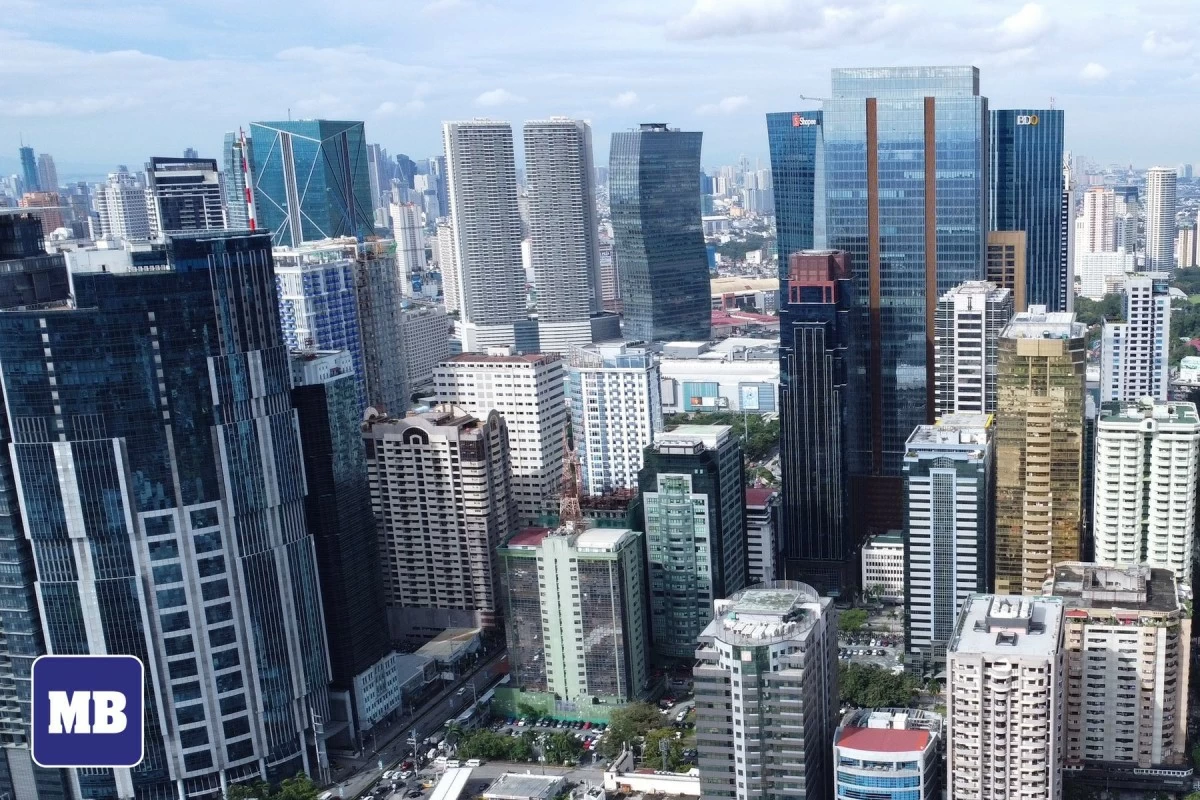
High-rise buildings in the Ortigas Business Center are seen on Wednesday, Nov. 5. In a report by Bloomberg, the Philippine Stock Exchange Index has dropped 20 percent over the past decade, ranking as the worst performer among major global benchmarks. In contrast, Asia-Pacific stocks climbed 72 percent, while Indonesia’s Jakarta Composite Index soared 82 percent. Photo by Santi San Juan | MB
Local stocks tumbled and the peso weakened as the escalation of conflict in the Middle East sparked retreat from riskier assets, fueled by concerns that surging energy costs will derail the central bank’s efforts to tame inflation.
The Philippine Stock Exchange index (PSEi) dropped as much as 1.9 percent to 6,483.32 as of 11:33 a.m., with nearly all sectoral gauges trading in the red.
The local currency slid to an intraday low of ₱58.03 against the United States (US) dollar, its weakest level in a week, as investors sought safety in the greenback following news of intensifying hostilities in Iran. The move follows the surge in global crude prices to eight-month highs, surpassing levels last seen in June 2025.
Michael Ricafort, chief economist at Rizal Commercial Banking Corp., said the geopolitical spike in oil prices is expected to translate into higher domestic pump prices and a potential pickup in headline inflation.
He noted that the sudden shift in sentiment is driving a “flight to safety” as investors look to hedge risk exposures until the volatility subsides. The uncertainty has also propelled gold prices higher for the fourth consecutive session, with the metal rising 1.1 percent to $5,342 per ounce.
The market impact extends beyond energy costs. Analysts are closely monitoring potential disruptions to the deployment of overseas Filipino workers (OFWs) and the subsequent flow of remittances, which serve as a critical pillar of the Philippine economy.
Travel disruptions in the Middle East and the suspension of connecting flights could reduce business activity and employment opportunities for Filipinos in the region.
Jonathan Ravelas, senior adviser at Reyes Tacandong & Co., said that while almost all sectors are reeling from the “risk-off” sentiment, oil companies remain the sole outliers.
He suggested the market volatility could persist for two to six weeks, drawing parallels to the brief but sharp market correction seen during the 12-day conflict between the US and Iran in mid-2025.
The selloff was particularly acute in the aviation and logistics sectors. Cebu Air Inc. plunged 6.9 percent, while PAL Holdings Inc. shed 3.7 percent on fears of ballooning fuel expenses.
International Container Terminal Services Inc., a bellwether for global trade, dropped 3.3 percent as investors weighed the risk of shipping delays in the Red Sea and Suez Canal. Even consumer giant Jollibee Foods Corp., which maintains a significant footprint in the Middle East, fell 2.9 percent.
Bucking the trend, the Mining and Oil counter rose 0.3 percent, led by 7.8 percent jump in Petron Corp. and a 4.4 percent gain for Pilipinas Shell Petroleum Corp. Nickel Asia Corp. saw a speculative surge of 30 percent, while gold miners like Apex Mining Co. and OceanaGold Philippines Inc. tracked the rise in bullion prices.